Ammonium Sulfate Solubility: What Buyers and Farmers Should Know
When buyers and farmers ask about ammonium sulfate solubility, they usually want to know two things: how much dissolves, and how fast. Both matter. They affect how you prepare a solution, how you plan fertigation, and how you judge a product’s physical form before you buy it. This guide explains ammonium sulfate solubility in plain terms, shows how temperature changes it, and covers what affects dissolution in real-world use.
Is Ammonium Sulfate Soluble in Water?
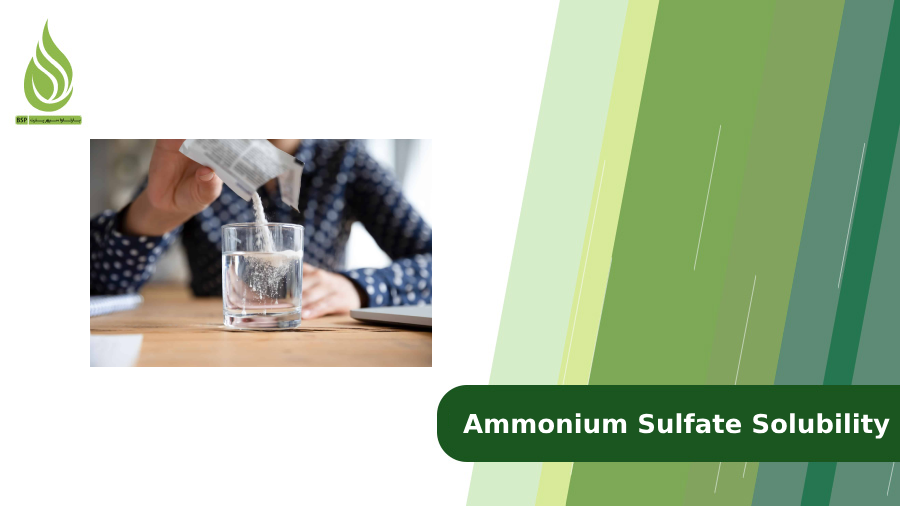
Yes. Ammonium sulfate is highly soluble in water. PubChem describes it as freely soluble in water, and it is a classic example of a soluble fertilizer. The reason is its ionic nature. When ammonium sulfate dissolves, it separates into ammonium ions and sulfate ions. Water molecules surround both ions and hold them in solution. The result is a clear aqueous solution that contains both nitrogen (as the ammonium ion) and sulfur (as the sulfate ion).
One important point is that ammonium sulfate solubility in water is not a single fixed number. It changes with temperature. As the water gets warmer, more ammonium sulfate can dissolve. Understanding this helps you avoid two common problems: undissolved material at the bottom of a tank, and crystals forming when a strong solution cools down.
Ammonium Sulfate Solubility at Different Temperatures
The table below shows ammonium sulfate water solubility at three temperatures. All values come from the same experimental data set listed in PubChem, so they can be compared directly.
| Water temperature | Solubility (g per 100 g water) |
|---|---|
| 0 °C (32 °F) | 70.6 |
| 25 °C (77 °F) | 76.7 |
| 100 °C (212 °F) | 103.8 |
The pattern is clear. Ammonium sulfate solubility temperature dependence is moderate across the normal range of irrigation water, and it rises more sharply in hot water. For most field work, the practical takeaway is that cold water holds somewhat less than warm water, so a solution prepared in warm conditions may crystallize if it cools.
Watch the Units
References express solubility in different ways, and mixing them causes errors. You may see:
- g per 100 g of water. This is the unit used in the table above.
- g per 100 g of solution. This compares the dissolved salt to the total weight of the saturated solution.
- g per liter (g/L). This depends on the final volume of the solution.
These are not interchangeable. For example, 76.7 g per 100 g of water at 25 °C works out to roughly 43% ammonium sulfate by weight in the saturated solution. Both numbers describe the same condition, but they look very different. You will also see searches for ammonium sulfate solubility g/100 ml. Be careful here. A figure in g per 100 mL describes a volume, while the table above uses weight of water. Some websites use the two loosely, so always check the unit before you compare numbers or calculate a stock solution.
What Affects Ammonium Sulfate Dissolution?
Before going further, it helps to separate two ideas that are often confused:
- Solubility is the maximum amount that can dissolve under given conditions. It describes the limit.
- Dissolution rate is how quickly the material dissolves. It describes the speed.
A product can have high solubility and still dissolve slowly if the conditions are poor. Here are the main factors that affect ammonium sulfate dissolution.
- Temperature. Warmer water raises both the limit and, usually, the speed. Note that dissolving ammonium sulfate can slightly cool the water, so a cold tank may get colder as you mix.
- Water volume. More water means more room for the salt. If you add too much product to too little water, you will reach the saturated solution point, and the rest will stay undissolved.
- Concentration. The closer a solution gets to saturation, the slower additional material dissolves. Working well below the limit is easier and safer.
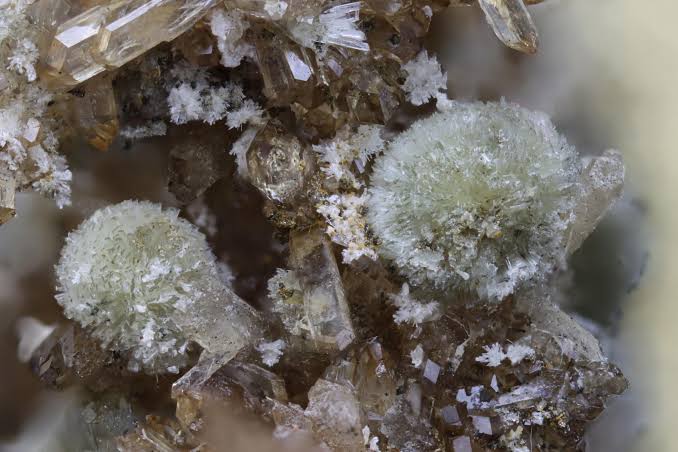
- Crystal and particle size. Smaller particles dissolve faster because they expose more surface area to the water.
- Agitation. Stirring or recirculating the tank brings fresh water to the particle surface and speeds up dissolution.
- Water quality. Dissolved salts, hardness, and temperature in your irrigation water can affect how the solution behaves. Calcium in hard water, for instance, can combine with sulfate and form a precipitate.
- Solution composition. If other fertilizers or additives are already in the tank, the final result depends on the whole mix, not on ammonium sulfate alone.
Crystalline vs Granular Ammonium Sulfate: Does Physical Form Affect Dissolution?
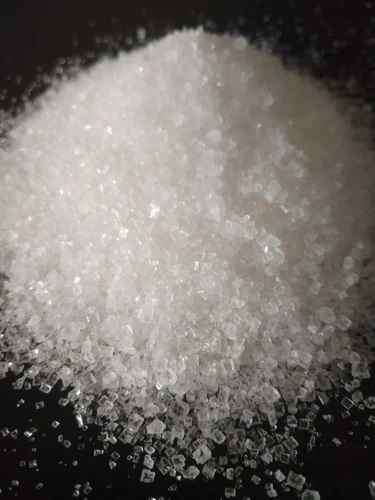
Physical form affects how fast the product dissolves, but not the basic solubility of the chemical. Smaller particles generally have greater surface area, so they tend to dissolve more quickly. Larger granules have less surface area for their weight, so they may need more time or more stirring. That is why crystalline ammonium sulfate solubility is often discussed in terms of speed, while granular ammonium sulfate solubility is usually a question of how long the granules take to break down.
The key technical point is this: total chemical solubility is a property of the substance and the solution conditions. It is not simply a label of “crystal” versus “granule.” Two samples of the same pure compound, one crystalline and one granular, have the same limit at the same temperature. They may differ in how quickly they reach it.
If you want a full comparison of the two forms, read our guide to crystalline vs granular ammonium sulfate. For buyers, the best approach is to confirm the grade and particle size in the specification. You can also review the ammonium sulfate 21-24 grade and the ammonium sulfate COA to see what each batch actually contains.
Ammonium Sulfate for Fertigation
Because it dissolves readily, ammonium sulfate for fertigation is a common choice where growers want to apply nitrogen and sulfur through irrigation water. This section is not a full fertigation guide. It covers only the solution-related points that depend on solubility.
- Solution preparation. Many growers make a stock solution first, then inject it into the irrigation line. Keep the concentration safely below saturation, especially if the stock tank may cool overnight.
- Adequate water volume. Add the product to enough water, and add it gradually.
- Agitation. Stir or recirculate the tank until the material has fully dissolved.
- Filtration. Filters protect emitters and sprinklers. Use them, and check them regularly, because insoluble impurities or undissolved particles can cause clogging.
- Avoiding undissolved particles. If you see solids settling, the solution may be too concentrated, too cold, or not mixed long enough.
- Checking compatibility. Test water and fertilizer combinations before you scale up.
A small jar test is a simple and low-cost way to catch problems early. Mix the same ratios you plan to use, wait a short time, and look for cloudiness or sediment.
Can Ammonium Sulfate Be Mixed With Other Fertilizers in Solution?
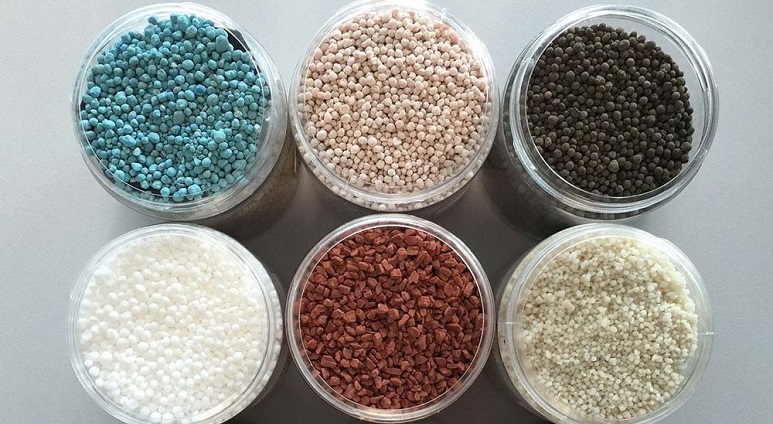
It depends on the fertilizer and the concentration. Many soluble fertilizers can share a tank with ammonium sulfate, but not all combinations work at every strength. Some pairings can form precipitates, especially those that bring calcium into a solution that already contains sulfate. When that happens, a solid can form and block filters or emitters.
Because results depend on the product, the water, and the concentration, we recommend checking before you mix. Our article on fertilizer compatibility and mixing explains the general rules, and our guide on combining ammonium sulfate with other fertilizers looks at this product in more detail.
Final Thoughts
Ammonium sulfate solubility is high, but it is not unlimited, and it changes with temperature. For buyers, the most useful approach is to separate the chemistry (how much can dissolve) from the practical question (how fast it dissolves in your system). Particle size, water volume, agitation, and water quality all play a role, and the right specification helps you plan for them. If you are looking for a product with consistent physical form for soluble applications, explore our Crystal Ammonium Sulfate range, and ask for the latest COA with your quotation.