Agriculture in Afghanistan: Major Crops, Soil Conditions and Fertilizer Needs
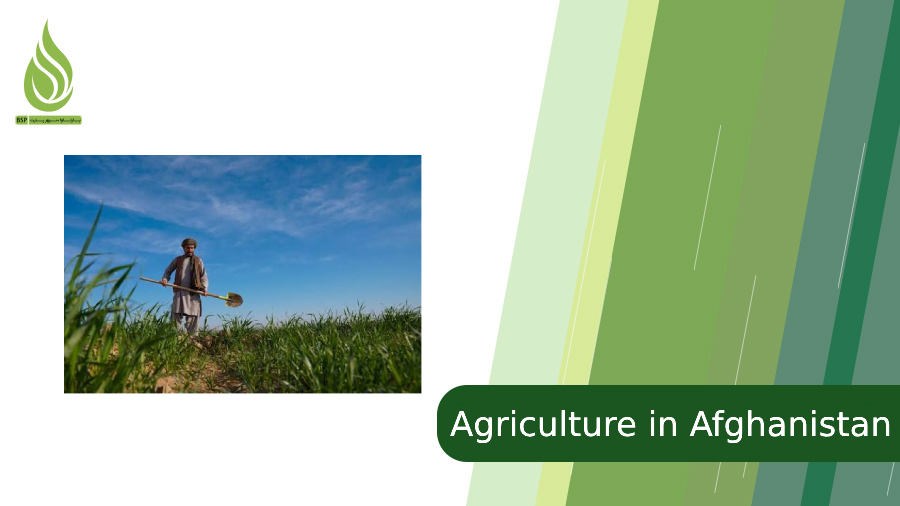
Agriculture in Afghanistan is far more varied than most people expect. Within one country, farmers grow irrigated wheat on river plains, rainfed grain on northern hillsides, grapes and pomegranates in the south, and saffron in the west. Each system faces different water limits, soil problems, and nutrient needs. This guide gives a practical overview of farming in Afghanistan: the main crops, the conditions that shape them, and how fertilizer decisions change from one crop and region to the next.
Overview of Agriculture in Afghanistan
The Afghanistan agricultural sector is the backbone of rural life. Estimates vary by source and year, but agriculture employs somewhere between 40 and 60 percent of workers and contributes a large share of national income. Roughly three-quarters of the population lives in rural areas, and most farms are small, family-run holdings. Smallholder farmers typically grow wheat and other food crops for their own households, then sell fruit, nuts, vegetables, or livestock products for cash.
Afghanistan agriculture also faces a basic limit: only a small part of the land is suitable for crops. Because wheat and other staples feed most households, a poor season quickly becomes a food security problem, and that makes steady yields important well beyond the farm gate. Livestock, including sheep, goats, and cattle, complements crop income for many families. Mountains and deserts cover much of the country, so agricultural production in Afghanistan is concentrated in river valleys, plains, and foothill areas where water is available.
Climate, Geography, and Farming Conditions
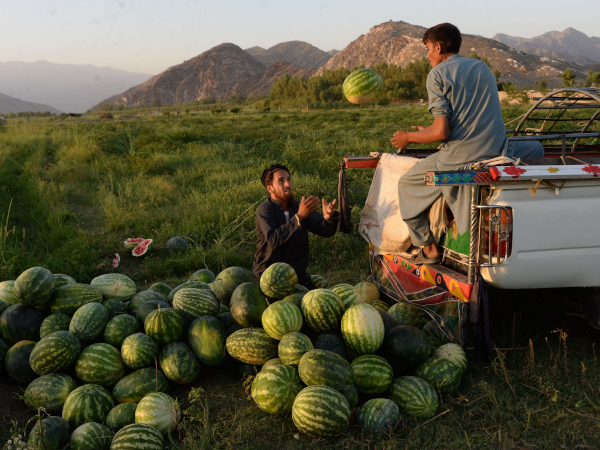
Agriculture in Afghanistan has no single profile. The Hindu Kush mountains divide the country into very different zones. The northern plains and foothills support rainfed wheat and irrigated crops. The southwest is hot and dry, with farming concentrated along rivers. The central highlands have cold winters and short growing seasons, while eastern valleys are warmer and wetter.
Most rain and snow arrive in winter and spring, and snowmelt feeds the rivers that irrigate summer crops. That makes the system sensitive to weather. Repeated drought conditions in recent years have cut yields, especially on rainfed land. When someone asks about farming in Afghanistan, the honest answer always starts with “where?”
Major Agricultural Crops
The crops grown in Afghanistan fall into four broad groups:
- Cereals: wheat, maize, barley, and rice.
- Fruit and nuts: grapes, pomegranates, apricots, apples, figs, and almonds.
- High-value crops: saffron and vegetables.
- Industrial crops: cotton cultivation in some irrigated lowland areas.
Cotton and vegetables are grown mainly where irrigation is dependable, since both need reliable water through the summer. Wheat dominates in area and importance. Fruit and nuts are smaller in area but valuable per hectare, which is why they attract attention for agricultural development in Afghanistan.
Wheat Production and Its Importance
Wheat production is the foundation of food security. FAO data indicate that wheat accounts for roughly a third of the arable land used, and it provides both food and work for most rural families. Winter wheat, sown in autumn, is the main staple crop.
In the north, rainfed wheat is common on rolling hills and steppe, while irrigated wheat dominates river valleys in the center, east, and south. At higher elevations, spring wheat is sown after snowmelt. The split between rainfed and irrigated wheat matters a great deal. Irrigated fields generally yield far more than rainfed ones, and older FAO estimates put the difference at about threefold. Rainfed agriculture depends on winter and spring moisture, so a dry year can mean very poor harvests. Irrigated farming is more reliable, but it depends on canals, karez systems, or wells. Wheat also drives fertilizer demand. FAO reports that winter wheat accounts for more than two-thirds of annual fertilizer demand in the country.
Fruit Production: Grapes, Pomegranates, Almonds, and More
Fruit production is one of the brightest spots in agriculture in Afghanistan. Grape cultivation is widespread, and many grapes are dried into raisins. Pomegranate production is centered in Kandahar, where Arghandab and nearby districts are known for large, red-fruited varieties. Almond farming, along with apricots, apples, figs, and pistachios, adds further variety.
Orchard crops can be more profitable per land unit than wheat, and surveys have identified grapes among the most profitable crops per unit of land. The drawbacks are start-up time, since young trees take years to bear, and market access. Storage, transport, and export disruptions can reduce farm-gate prices, as reports of growers turning fresh grapes into raisins have shown. Orchards have distinct nutritional needs, which are covered in the fertilizer section below. Young orchards, in particular, need small, regular doses and protection from salt and waterlogging.
Saffron Cultivation and High-Value Production
Saffron cultivation shows how small plots can generate high income. Herat Province produces the large majority of Afghanistan’s saffron, although farmers in many other provinces also grow it. The crop is planted from corms, flowers in autumn, and is harvested by hand. Because the flowers are small and labor-intensive, saffron suits household farms. It has long been promoted as an alternative to illegal crops, and trained farmer associations have helped improve quality and market access. Saffron needs well-drained soil, careful management of organic matter, and balanced nutrition. For a deeper look at the crop, see our guide to saffron cultivation.
Irrigation and Water Availability
Water availability sets the limits for agriculture in Afghanistan. Rivers fed by mountain snowmelt, such as the Helmand, Kabul, Hari Rud, and Amu Darya systems, supply most irrigation. Traditional karez tunnels, which carry groundwater by gravity from foothill aquifers to village fields, and groundwater wells add more. Many canals and structures are old, poorly maintained, or damaged, and irrigation infrastructure is a persistent weakness.
Irrigation challenges in Afghanistan include seepage losses, uneven water distribution, falling groundwater levels in some areas, and drought years when snowpack is thin. Poor drainage can also add to salt buildup in irrigated lowlands. Rainfed areas face a different problem: too little water in the critical growth period, which limits how much fertilizer pays off.
Soil Fertility and Common Soil Challenges
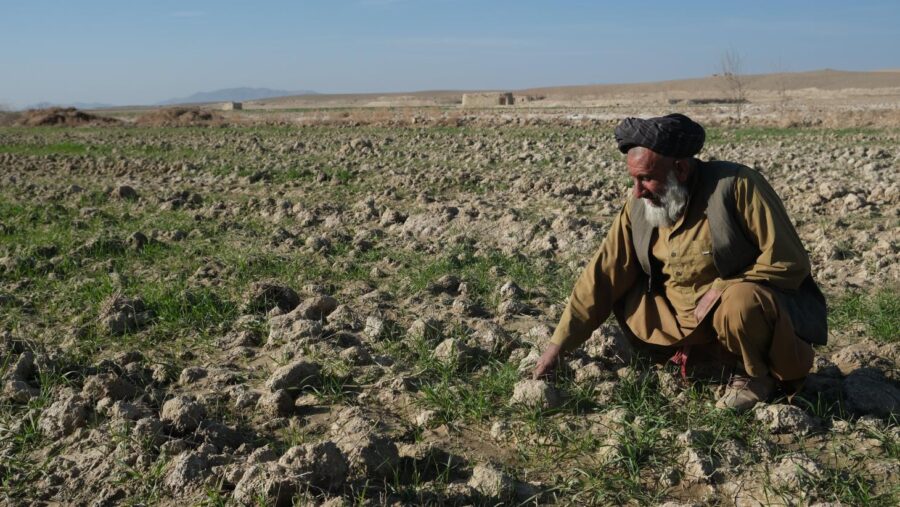
Soil conditions in Afghanistan vary by region, yet some patterns repeat. Soil is a quiet constraint on agriculture in Afghanistan. Many soils are alkaline and calcareous, with low soil organic matter. High pH reduces the availability of zinc and iron as well as phosphorus, so a field can contain nutrients that crops struggle to use. Studies in eastern Afghanistan found organic matter in a range of about 0.2 to 2.5 percent, low nitrogen, and variable phosphorus. Common problems include:
- Low soil fertility and nutrient depletion, because crop residues and manure are often used for animal feed or fuel instead of returning to the field.
- Limited phosphorus availability, since high pH and calcium bind phosphorus.
- Soil erosion on sloping and rainfed land, made worse by extensive tillage and little crop rotation.
- Soil salinity in some irrigated lowlands with poor drainage, although it is not a universal problem.
Fertilizer Requirements of Major Crops
Fertilizer needs in Afghanistan cannot be reduced to one national schedule. Crop type, soil testing, rainfall, irrigation, and local growing conditions all influence what is worth applying. The examples below show how needs differ.
- Wheat. Nitrogen and phosphorus are the main limiting nutrients, and urea and diammonium phosphate (DAP) are widely used. Nitrogen deficiency shows as pale, weak plants with poor tillering. Extension guidance commonly splits nitrogen across sowing, tillering, and before flowering, instead of one application. Nitrogen applied late, after jointing, usually adds less to yield. Irrigated wheat can justify higher inputs than rainfed wheat, where drought risk limits returns. Where soil tests show low sulfur, a source such as ammonium sulfate can supply nitrogen and sulfur together.
- Fruit crops. Grapes, pomegranates, and almonds need nitrogen for growth, but potassium management strongly influences fruit quality, and micronutrients such as zinc and iron matter on calcareous soils. Compost or manure helps soil structure and water holding.
- Saffron. Because the crop relies on corms, organic matter and balanced phosphorus and potassium are usually more important than heavy nitrogen, since excess nitrogen can favor leaves over corm growth and flowering. Keep rates conservative and check them locally.
Soil testing and rainfall shape every decision. Test before the season, and match rates to realistic yield. On rainfed land, apply fertilizer at sowing when soil moisture is adequate and keep rates modest, since drought can erase the return. On irrigated land, spread nitrogen across the season and time it with irrigation, because heavy water after a large dose can wash nitrogen out of the root zone. Symptoms can overlap, so confirm them with soil and leaf tests. For help, see our guide to nutrient deficiency in crops.
Challenges Affecting Fertilizer Access and Application
Knowing what a crop needs is only half the problem. Fertilizer use in Afghanistan is limited by cost, supply, and knowledge. In 2026, FAO warned that rising prices were threatening wheat planting and described the issue as one of affordability more than availability. Other constraints include limited credit, poor transport in mountain areas, uneven product quality, and little access to soil testing. Many farmers also apply urea once, even though splitting it across growth stages usually works better. Agricultural inputs also depend on imports and regional trade routes, so supply can shift quickly. Distributors and suppliers in the region can find general information in our Afghanistan fertilizer import guide.

Opportunities for Improving Agricultural Productivity
Practical steps can lift agricultural productivity and strengthen agriculture in Afghanistan over time:
- Expand soil testing so fertilizer rates match actual needs.
- Promote split nitrogen applications and balanced nutrition.
- Rebuild irrigation infrastructure and improve water efficiency.
- Increase organic matter with manure, compost, and residue management.
- Support orchard and saffron value chains with storage, grading, and market access.
- Train smallholder farmers in fertilizer application and crop rotation.
Conclusion
Agriculture in Afghanistan is a collection of local systems, not one uniform one. Wheat, fruit, and saffron each demand different water and nutrient strategies, and rainfed and irrigated farms need different approaches. The most reliable path to better yields combines soil testing, water management, balanced fertilizer use, and crop-specific advice. Anyone planning inputs, training, or supply for the country should start from this local variation and from what soil tests show, not from a single national recipe.