Aphids in Field Crops: How to Identify, Monitor and Control Infestations
Aphids in field crops are small insects, but they can cause big problems. A few colonies on a field edge can become a crop-wide infestation within weeks, and the damage goes beyond the sap they take. Good aphid control in field crops starts with knowing what you are looking at, checking fields regularly, and acting only when the numbers and the crop stage call for it. This guide explains how to identify aphids, understand the harm they do, and choose a sensible management plan.
What Are Aphids?
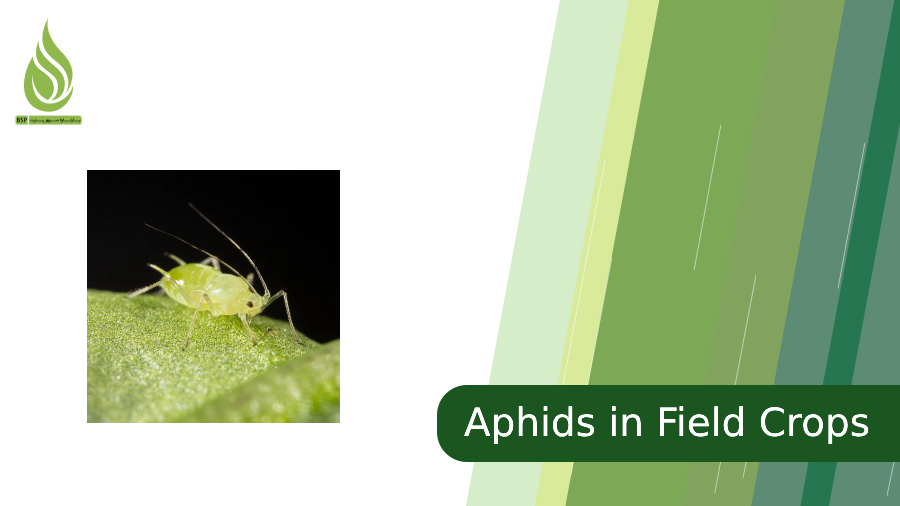
Aphids belong to the family Aphididae. They are soft-bodied, pear-shaped, piercing-sucking insects that depend on plant sap feeding. Most are only 0.04 to 0.15 inches long, and they range in color from green and yellow to black, brown, gray, or pink. Their biggest strength is how fast they multiply. In warm weather, many aphid species give birth to live young without mating, and the young mature in about a week. One female can start a colony of hundreds, which is why early detection matters so much.
The Aphid Life Cycle
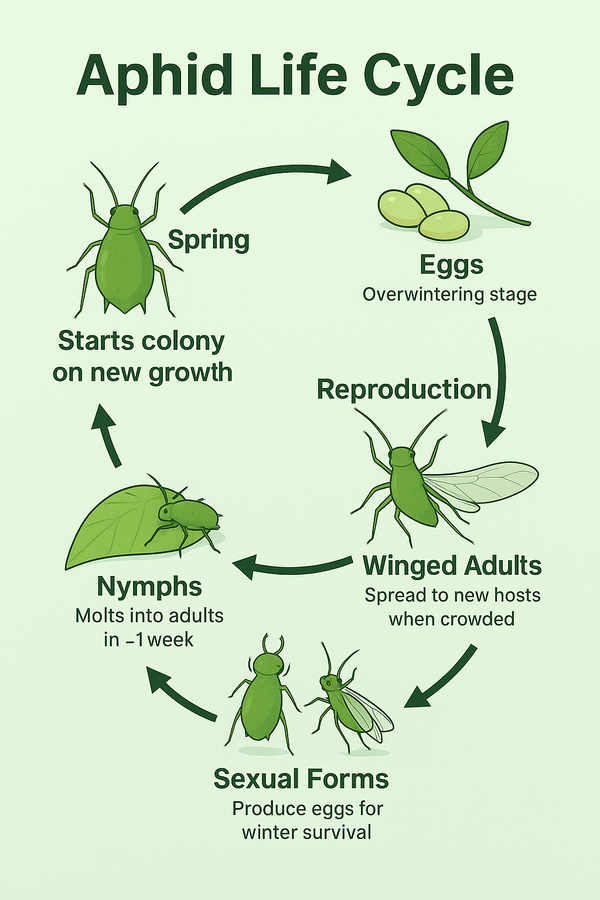
Understanding the aphid life cycle helps you predict when problems will appear. In spring and summer, wingless females produce live nymphs that molt several times before becoming adults. Colony formation begins on a single plant and expands quickly. When a colony becomes crowded or the host plant declines, some nymphs develop wings. These winged aphids fly to new plants and start fresh colonies, which is how infestations spread across a field or between farms. In cooler regions, many species produce males and egg-laying females in autumn. The eggs overwinter, often on woody plants or weeds, and hatch the next spring. In mild climates, aphids may keep breeding year-round.
How to Identify Aphids on Field Crops
Accurate identification is the first step in aphid control in field crops, and knowing how to identify aphids on crops takes only a few minutes of close observation. Look at the undersides of leaves, along stems, in curled leaf tissue, and around growing tips, since this is where colonies usually start. Key features include:
- Soft, pear-shaped bodies that move slowly.
- Two small tube-like structures (cornicles) at the rear of the abdomen. This is the clearest identifying feature.
- Clusters of insects of different sizes, including pale cast skins.
- Winged and wingless forms in the same colony.
Aphids are often confused with other small pests. Whiteflies are powdery white and fly up in a cloud when disturbed. Thrips are slender and fast-moving. Spider mites are tinier and often leave fine webbing. Leafhoppers are wedge-shaped and jump or run sideways. If the insects are soft, slow, and clustered, with cornicles visible under a hand lens, they are almost certainly aphids.
Common Aphid Species in Agricultural Crops
Hundreds of aphid species exist, but a handful cause most field problems:
- Green peach aphid: feeds on potatoes, vegetables, and many other crops, and is a major virus vector.
- Cotton (melon) aphid: attacks cotton, melons, and cucurbits.
- Bird cherry-oat aphid and English grain aphid: affect wheat, barley, and other cereals.
- Greenbug: a serious pest of sorghum and small grains.
- Soybean aphid: a key pest of soybeans in many regions.
- Cowpea aphid and pea aphid: attack legumes.
- Corn leaf aphid: common on corn and sorghum.
Species matter because they differ in host plants, preferred temperatures, and sensitivity to insecticides. Other pests need very different tactics. For example, rice stem borer management follows a different approach from the one described here.
Signs of Aphid Infestation in Agriculture
An aphid infestation in agriculture often shows up in the plant before you see the insects. Watch for:
- Curled, puckered, or distorted leaves.
- Yellowing or stunted growth.
- Sticky, shiny residue on leaves, known as honeydew.
- Black, sooty coating on leaves and stems.
- Ants moving up and down plants, since they protect aphids to harvest honeydew.
- White cast skins stuck to leaves.
- Patches of weak plants, often starting at field edges.
How Aphids Damage Crops
Aphid damage to crops comes in three main forms.
- Direct feeding. Aphids use needle-like mouthparts to feed on phloem sap. Heavy feeding drains the plant of sugars and nutrients, causing leaf curling, stunting, wilting, and reduced yield. Young plants and seedlings are especially vulnerable.
- Honeydew and sooty mold. Aphids excrete sugary liquid, called honeydew secretion. It coats leaves and supports the growth of sooty mold, a dark fungus that blocks sunlight and reduces photosynthesis. In some crops, honeydew also contaminates the harvested product.
- Plant virus transmission. This is often the most serious problem. Aphids spread many plant viruses as they probe plants, including barley yellow dwarf virus in cereals, potato virus Y, cucumber mosaic virus, and soybean mosaic virus. Some viruses are transmitted in seconds, so even a small number of winged aphids can introduce an infection. Because of this, the economic damage is not limited to direct feeding, and a field can suffer losses even when aphid counts look low.
How Weather and Crop Conditions Affect Infestations
Weather strongly shapes aphid populations. Warm, dry conditions generally favor rapid growth, while heavy rain and strong wind can knock colonies down. Extreme heat may also slow reproduction. Mild winters allow more aphids and eggs to survive, which can lead to earlier outbreaks the following season.
Crop conditions matter as well. Seedlings and young plants are often most at risk. Plants with lush, nitrogen-rich growth tend to support larger colonies, and drought-stressed plants can attract more aphids. Weedy field margins and volunteer plants serve as reservoirs where aphids survive and then move into the crop.
Natural Predators and Biological Control
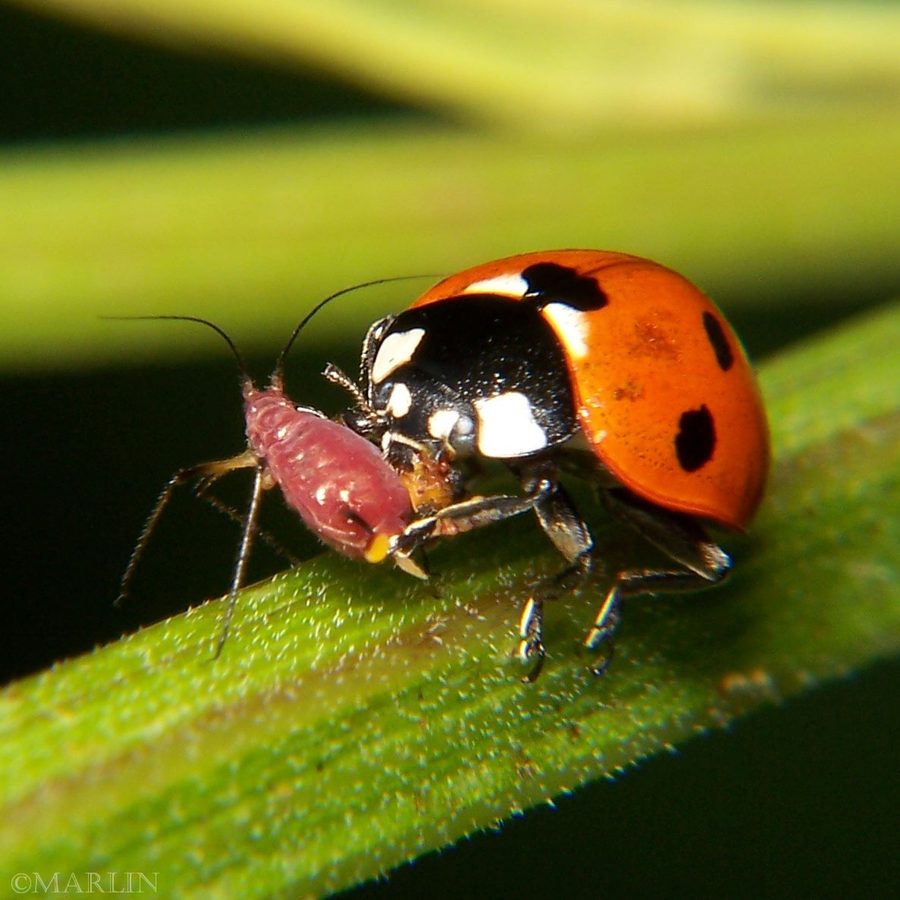
Biological control is one of the most valuable tools in aphid control in field crops, and it works best when you protect what is already in the field. Many beneficial insects feed on aphids:
- Lady beetles: both adults and larvae eat large numbers of aphids.
- Lacewings: their larvae are voracious aphid predators.
- Hoverfly larvae: common in flowering field margins.
- Parasitoid wasps: lay eggs inside aphids, which turn into swollen, tan or bronze “mummies.”
- Beneficial fungi: can cause outbreaks of disease in humid conditions.
During scouting, count these natural predators and look for mummies. A healthy population of natural enemies can bring an infestation under control without spraying. To protect them, avoid unnecessary broad-spectrum insecticides and consider flowering strips or hedgerows that supply nectar and shelter.
Cultural and Mechanical Management
Cultural steps are the foundation of aphid control in field crops. Aphid prevention in agriculture often happens before the pest arrives:
- Plant resistant or tolerant varieties where available.
- Adjust planting dates to avoid peak aphid flights, when local data supports this.
- Control weeds and volunteers that harbor aphids.
- Rotate crops to break pest cycles.
- Avoid excess nitrogen, which encourages soft growth that aphids prefer.
- Manage irrigation to prevent crop stress.
Balanced nutrition is part of this picture. A crop that is neither starved nor overfed grows more evenly and tolerates feeding better. Providing a balanced NPK fertilizer program supports healthy plant development, but it is not an aphid treatment. Pests need to be managed directly, and learning to recognize nutrient deficiency in plants also helps you separate nutrition problems from pest damage.
Mechanical options such as strong water sprays or removing infested plants work in gardens and small plots, but they are rarely practical across large fields.
Chemical Control and Insecticide Resistance
Chemical tools have a place in how to control aphids and in aphid control in field crops more broadly, but they should be a deliberate choice, not a reflex. Crop aphid treatment is most effective when infestations exceed the threshold and natural enemies cannot keep up. If you spray, follow these principles:
- Use selective insecticides that target aphids while sparing beneficial insects, where options exist.
- Follow the label for approved crops, rates, timing, and pre-harvest intervals.
- Protect pollinators by avoiding sprays during bloom and when bees are active.
- Ensure good coverage, since aphids hide on leaf undersides.
- Rotate modes of action to slow insecticide resistance.
Repeated use of the same product selects for resistant aphids. Resistance has been documented in several species, including the green peach aphid and cotton aphid. Spot-treating field edges is sometimes enough when infestations are localized. Always check which products are approved in your region, because registrations differ.
Integrated Pest Management Strategies
Aphid management strategies work best when integrated pest management for aphids combines several tactics, using chemicals as the last step. A practical framework looks like this:
- Prevent. Choose resistant varieties, manage weeds, and keep crops healthy.
- Monitor. Practice regular crop scouting.
- Set thresholds. Use local economic threshold guidelines.
- Conserve natural enemies. Count them during scouting.
- Control. Use cultural, biological, or selective chemical options, in that order of preference.
- Evaluate. Recheck fields a few days after any treatment.
For crop scouting, walk a pattern through the field and check at least 20 to 50 plants in several locations, including edges and the interior. Inspect leaf undersides and growing points. Record the percentage of infested plants or the number of aphids per plant or tiller, along with the number of predators and mummies. Scout weekly, and more often during warm weather or at sensitive crop stages. Yellow sticky traps or pan traps can help detect winged aphids early.
When Should Farmers Take Action?
Aphid control in field crops should never be automatic. Do not spray simply because aphids are present. Aphids are common, and low numbers often cause no economic loss. Instead, compare what you find with the economic threshold, which is the infestation level at which treatment cost is justified by the expected yield loss. Thresholds vary by crop, region, and growth stage, so use local extension guidance. Before acting, ask these questions:
- What is the crop stage? Some stages are more sensitive than others.
- Is the infestation above the threshold?
- Is it growing or declining? Check trends over several visits.
- Are natural enemies present? A rising predator or mummy count may signal that control is coming.
- What does the weather forecast say? Rain or heat can reduce populations.
- Is virus risk high? If so, earlier action or other tactics may be needed.
- What do local labels allow?
Conclusion
Effective aphid control in field crops depends on identification, monitoring, and good timing. Learn the signs, scout regularly, protect natural enemies, and treat only when thresholds and crop conditions justify it. A balanced approach protects yield, slows resistance, and keeps beneficial insects working for you year after year.