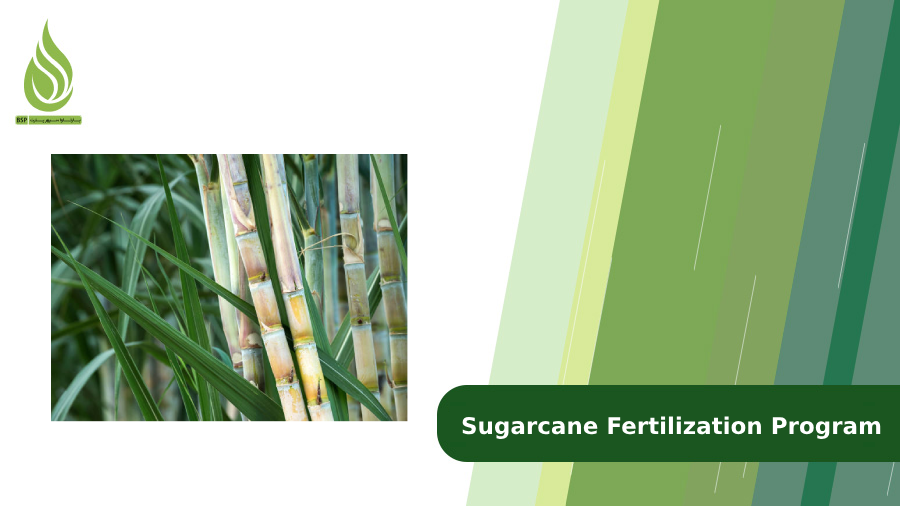
Sugarcane Fertilization Program: Nitrogen, Sulfur and Ratoon Crop Management
Sugarcane is a nutrient-demanding crop that needs a balanced supply of essential elements throughout its growing season. Its ability to develop strong stalks, produce healthy leaves, and accumulate sucrose depends on appropriate fertilizer management. A successful sugarcane fertilization program must account for these changing nutritional needs, as well as differences between newly planted sugarcane and ratoon crops.
Nitrogen and sulfur deserve particular attention because they support protein formation, leaf development, and important metabolic processes. However, phosphorus, potassium, and other nutrients are equally important for maintaining healthy growth and good yields. Understanding when and how to supply these nutrients helps growers improve fertilizer efficiency and maintain productivity across successive harvest cycles.
Understanding Sugarcane Nutritional Requirements
Sugarcane requires several nutrients to complete its growth cycle. Its nutritional needs change during establishment, tillering, stalk elongation, and cane maturity. The main nutrients include:
- Nitrogen (N): Supports chlorophyll production, leaf development, protein synthesis, and vegetative growth.
- Phosphorus (P): Encourages root development and supports energy transfer, particularly during early growth.
- Potassium (K): Regulates water movement, enzyme activity, and carbohydrate transport.
- Sulfur (S): Supports amino acid production, protein synthesis, and plant metabolism.
- Calcium and magnesium: Contribute to cell development, enzyme activity, and photosynthesis.
Micronutrients such as zinc, iron, manganese, and boron are also necessary, although sugarcane needs them in smaller quantities. Sugarcane fertilizer requirements depend on soil fertility, organic matter, rainfall, irrigation, expected yield, and previous harvests. Repeated cultivation and harvesting can cause soil nutrient depletion, making regular fertilizer management important.
The Importance of Nitrogen in Sugarcane Growth
Nitrogen supports sugarcane growth by promoting chlorophyll production, photosynthesis, leaf development, and stalk formation. It is particularly important during tillering, when new shoots develop, and the grand growth phase, when stalks elongate rapidly and biomass increases. Adequate nitrogen uptake helps maintain a healthy canopy and supports productive stalk development. However, excessive nitrogen, especially close to harvest, can delay cane maturity and interfere with sucrose accumulation. Therefore, nitrogen fertilizer for sugarcane should be applied according to crop growth stages, soil conditions, and the expected harvest date.
Why Sulfur Matters in Sugarcane Fertilization
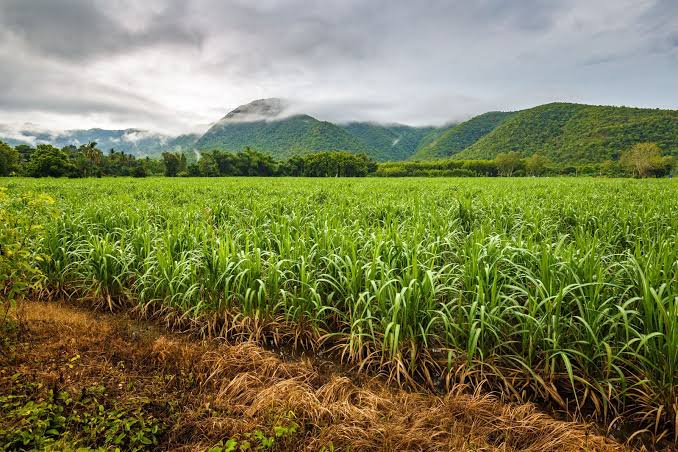
Sulfur is an essential secondary macronutrient that supports amino acid production, protein synthesis, enzyme activity, and normal plant metabolism. Sugarcane absorbs sulfur mainly through its roots as sulfate ions (SO₄²⁻), supplied by soil organic matter, irrigation water, and fertilizers. Sulfur deficiency can cause yellowish young leaves, thin stalks, slower growth, and reduced biomass, even when nitrogen is sufficient. Because sulfur is less mobile within plants than nitrogen, deficiency symptoms often appear first in younger leaves. The need for sulfur fertilizer for sugarcane depends on soil type, organic matter, rainfall, irrigation, and previous fertilizer applications, with sandy soils exposed to heavy rainfall being particularly vulnerable to sulfate leaching.
Balancing Nitrogen and Sulfur
Nitrogen and sulfur work together in protein synthesis and plant metabolism. An insufficient supply of either nutrient can reduce the plant’s ability to use the other efficiently. For example, applying additional nitrogen to a sulfur-deficient field may not produce the expected improvement in growth. Both nutrients must be available in suitable amounts to support healthy development.
Ammonium sulfate fertilizer is one option for supplying nitrogen and sulfur together. It provides ammonium nitrogen and sulfate sulfur, making it a useful fertilizer source when both nutrients are needed. However, its application should be based on actual soil and crop requirements. Growers should include its nitrogen and sulfur contributions when calculating total fertilizer applications. For more information, see our guide to nitrogen and sulfur management.
Fertilization During Land Preparation and Planting
Plant cane has different early nutritional needs from ratoon cane because it must establish a new root system and develop from planted stem cuttings. Before planting, growers should evaluate soil pH, organic matter, phosphorus, potassium, and other relevant nutrient levels.
Phosphorus is particularly important during establishment because it supports root development and energy transfer. Where soil tests indicate a deficiency, phosphorus fertilizer can be incorporated into the planting zone according to local recommendations. Nitrogen and potassium should also be included in the overall fertilization plan. Their application timing and placement should allow developing roots to access nutrients while reducing the risk of losses. A suitable fertilizer for sugarcane at planting should therefore be selected as part of a balanced nutrient management strategy rather than used as a standalone solution.
Fertilizer Management During Tillering and Stalk Elongation
After establishment, fertilizer applications should follow the crop’s changing nutrient uptake. During tillering, the priority is to support new shoots and establish enough productive stalks. Nitrogen and potassium are particularly important at this stage.
As stalk elongation begins, nutrient demand increases with rapid biomass production. Nitrogen supports leaf growth, while potassium contributes to water regulation and carbohydrate movement. A suitable sugarcane fertilizer schedule depends on soil characteristics, rainfall, irrigation, and the growing region.
Splitting nitrogen applications can improve fertilizer efficiency, particularly in sandy soils where heavy rainfall or excessive irrigation may cause nutrient leaching. Fertilizer placement also matters. Nutrients should be applied where active roots can access them. Irrigation should provide sufficient moisture for nutrient uptake without causing excessive water movement through the soil.
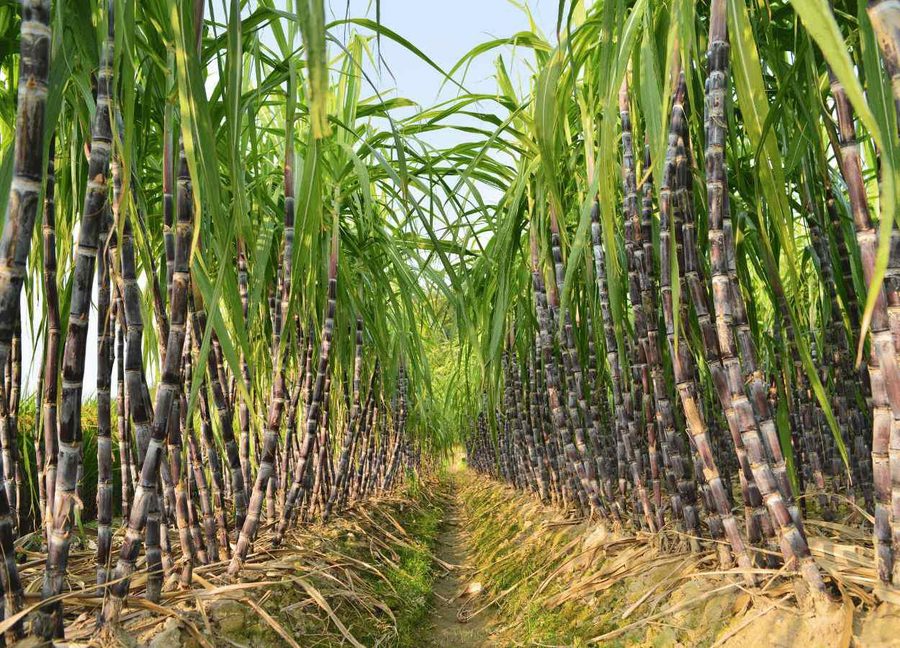
Ratoon Sugarcane Fertilization After Harvesting
Ratoon sugarcane grows from the underground stubble left after harvesting, using its existing root system to support regrowth. However, each harvest removes nutrients, so growers should assess soil fertility, moisture, remaining stools, and crop residues before fertilizing. Nitrogen supports new shoot development, while potassium helps regulate water and carbohydrate movement; phosphorus and sulfur should be applied when soil or crop assessments show a need. Fertilizer timing depends on the harvest season, soil conditions, and rainfall, but early application can support regrowth when conditions allow. Retaining suitable cane trash also helps protect the soil, conserve moisture, reduce erosion, and return organic matter. However, thick residue layers may interfere with fertilizer placement, so nutrients should reach the active root zone to maintain ratoon productivity across successive harvests.
Common Nutritional Problems and Yield Limitations
Nutrient deficiencies and imbalances can affect both stalk development and final sugar production.
| Nutritional problem | Possible effects |
|---|---|
| Nitrogen deficiency | Pale older leaves, weak tillering, and reduced growth |
| Sulfur deficiency | Yellowish young leaves and reduced plant vigor |
| Phosphorus deficiency | Poor root development and restricted early growth |
| Potassium deficiency | Impaired water regulation and carbohydrate movement |
| Magnesium deficiency | Yellowing between leaf veins, particularly on older leaves |
| Zinc deficiency | Restricted growth and abnormal leaf development |
Excessive fertilization can also reduce efficiency. Too much nitrogen may delay cane maturity, while unbalanced applications can increase nutrient losses and create additional soil fertility problems. Visual symptoms alone cannot always identify the exact cause. Soil testing and leaf analysis provide more reliable information. For further guidance, read our article on nutrient deficiency in plants.
Soil Testing and Practical Fertilizer Recommendations
An effective sugarcane fertilization program should be based on field conditions rather than a fixed fertilizer formula. Soil testing helps growers evaluate pH, organic matter, and available nutrients, including nitrogen, phosphorus, potassium, and sulfur. Leaf tissue analysis can provide additional information about the nutrients the crop is absorbing. The following practices can improve fertilizer management:
- Test the soil before planting: Identify nutrient limitations and determine suitable fertilizer requirements.
- Consider previous harvests: Account for nutrient removal and the number of ratoon cycles.
- Match nitrogen applications to growth: Supply nitrogen during periods of active vegetative development.
- Monitor sulfur availability: Consider soil texture, rainfall, and irrigation when deciding whether additional sulfur is necessary.
- Maintain balanced nutrition: Include phosphorus, potassium, calcium, magnesium, and micronutrients in the assessment.
- Improve fertilizer placement: Apply nutrients where developing roots can access them.
- Manage irrigation: Avoid excessive water movement that can increase nutrient losses.
These practices help growers make informed decisions and avoid unnecessary fertilizer applications.
Building a Sugarcane Fertilization Program for Long-Term Productivity
A successful sugarcane fertilization program must support the crop from initial establishment through successive ratoon harvests. For plant cane, the focus is on root development, early tillering, and healthy stalk formation. During later growth, nitrogen and potassium support biomass production, while sulfur contributes to protein synthesis and normal plant metabolism.
For ratoon crops, post-harvest management becomes particularly important. Timely nutrient replacement, effective fertilizer placement, suitable residue management, and proper irrigation all contribute to successful regrowth. There is no universal fertilizer rate or schedule for every sugarcane-growing region. Soil type, climate, irrigation conditions, crop variety, and expected yield all influence fertilizer requirements.
Ammonium sulfate can be a useful nitrogen and sulfur source when both nutrients are needed. BARNO’s crystalline ammonium sulfate fertilizer is an option for growers and agricultural fertilizer distributors seeking a combined nitrogen-sulfur fertilizer. By combining soil testing, balanced nutrition, and crop-stage-based applications, growers can improve fertilizer efficiency, maintain healthy stalk development, and support consistent sugarcane crop yield improvement across multiple harvest cycles.