Avocado Tree Fertilization: Nutrient Requirements at Every Growth Stage
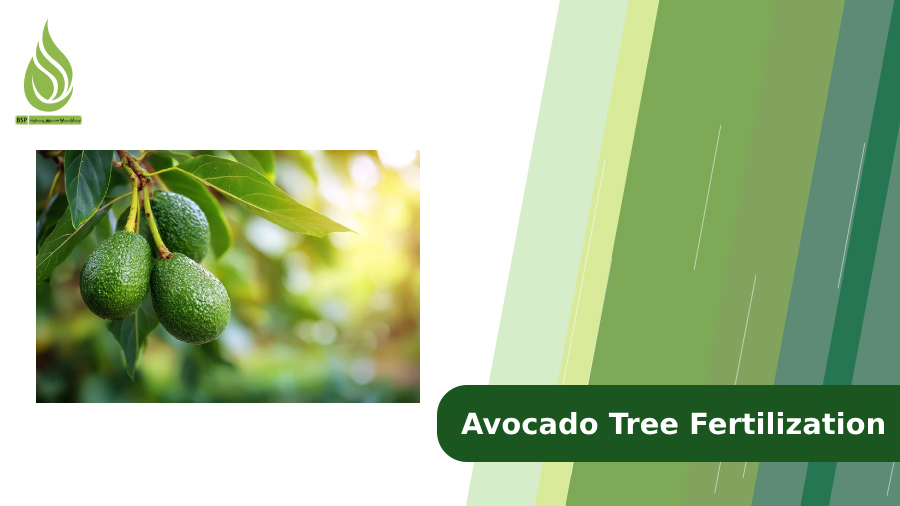
Avocado tree fertilization works differently from feeding most orchard crops. The avocado (Persea americana) has a delicate root system, a long fruiting cycle, and little tolerance for wet feet or salty soil. A program that ignores those traits can waste fertilizer or even harm the tree. This guide follows the tree through each growth stage, from planting to post-harvest recovery, and explains how to match nutrition to age, soil, and irrigation.
Understanding Avocado Nutritional Requirements
Avocado fertilizer requirements start with the roots. The avocado root system relies on shallow feeder roots that sit in the top layer of soil and mulch. They are efficient at absorbing nutrients but easily damaged by waterlogging, compaction, or concentrated fertilizer salts. Good soil drainage is therefore the first requirement, and any fertilizer for avocado trees has to work within these limits.
Soil pH matters too. Avocados generally prefer slightly acidic soil, since high pH can lock up zinc and iron. Root-zone salinity is another concern, because avocados are sensitive to salts and chloride in soil or irrigation water. Soil organic matter helps on all fronts by improving drainage, holding nutrients, and moderating root-zone temperature. Beyond these conditions, avocado tree nutrient requirements include nitrogen, potassium, calcium, magnesium, and micronutrients such as zinc, iron, and boron. Nitrogen is only one part of the picture.
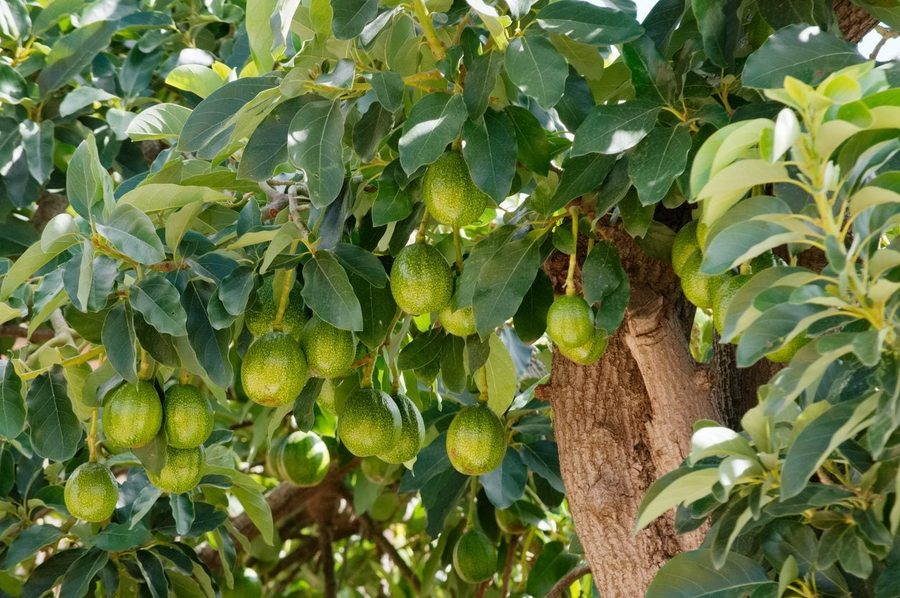
Young vs. Mature Avocado Trees
Young avocado trees are building roots and a framework, so they need small, frequent doses. Mature trees carry a crop, so their needs follow yield, irrigation, and growth flushes. Deciduous trees follow a different rhythm, as described in our guide to apple tree nutrition, but avocados are evergreen and active nearly year-round.
| Factors | Young avocado trees | Mature avocado orchard |
|---|---|---|
| Main goal | Roots, canopy, strong frame | Balanced growth and steady yield |
| Application style | Light, frequent, away from trunk | Split through the season |
| Key risk | Fertilizer burn, waterlogging | Salinity, nutrient imbalance |
Fertilization During Establishment
Fertilizing young avocado trees should be gentle. Wait until the tree has begun to grow, then apply small amounts spread around the canopy edge, not against the trunk. Concentrated fertilizer near young roots can burn them. Nitrogen supports early canopy growth, while zinc and phosphorus aid establishment where soil tests show a need. Keep the soil evenly moist and well drained, and add mulch to protect shallow roots.
Nutrient Management During Vegetative Growth
Avocado trees grow in flushes, with new leaves appearing in waves during spring and summer. Nitrogen uptake peaks during these flushes, so nitrogen fertilizer for avocado trees is usually timed to support them. Be careful, though. More nitrogen does not mean more fruit. Excess nitrogen encourages vegetative growth at the expense of balanced production, and it adds to leaching losses and salt load. Aim for steady, moderate supply based on leaf analysis, not a high rate by default.
Fertilization Before and During Flowering
The flowering and fruit set stage is sensitive, and avocado tree fertilization should ease off nitrogen before bloom. Avocado flowers are plentiful, but only a small share become fruit, so avoid anything that pushes strong vegetative growth at this time. Avoid heavy nitrogen, keep irrigation consistent, and make sure zinc and boron are adequate. Healthy potassium and calcium levels in the tree support the transition from flower to fruit.
Nutritional Requirements During Fruit Development
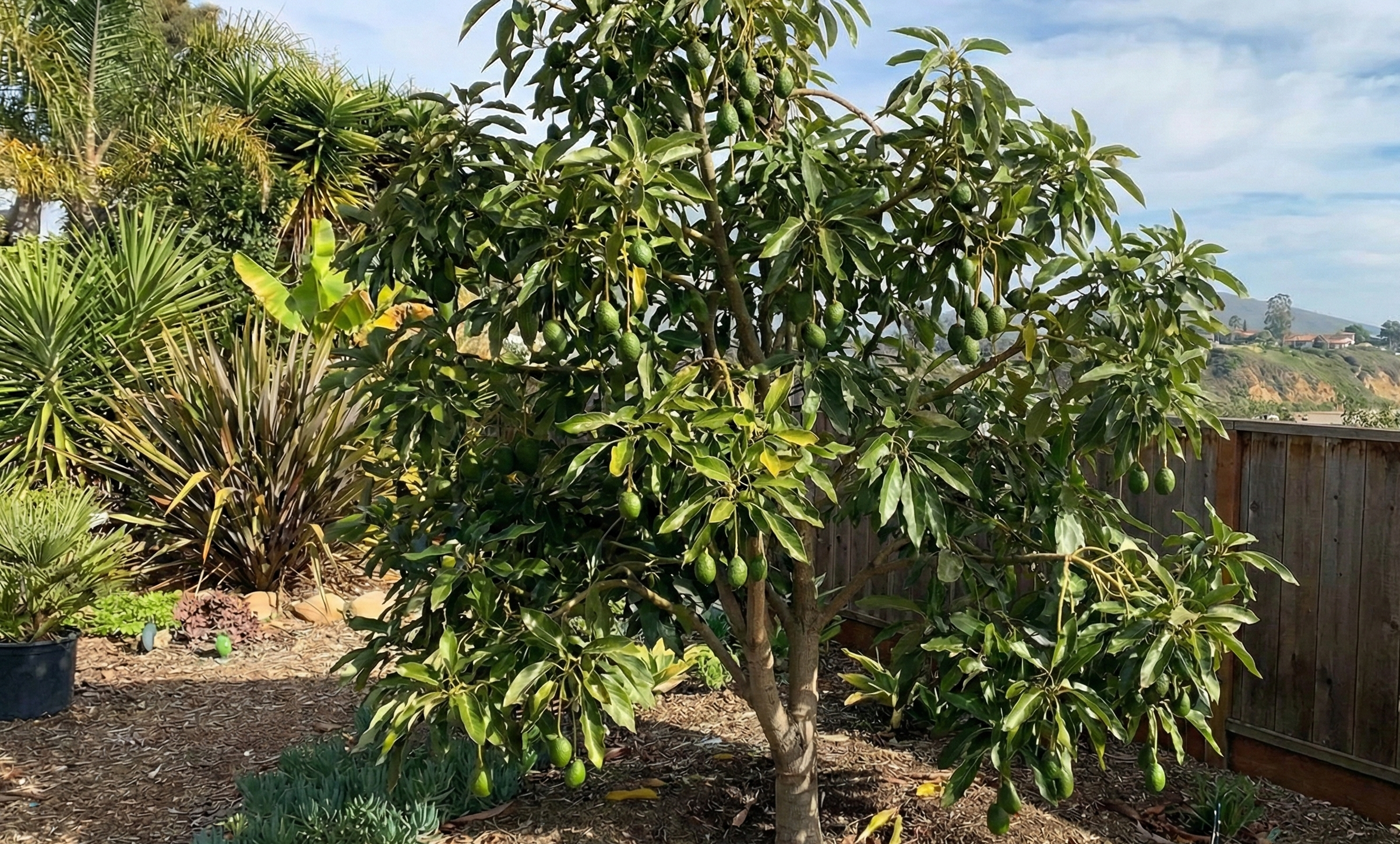
Avocado fruit development lasts many months, so avocado tree fertilization at this stage must support fruit and new growth at once. Potassium requirements rise as fruit enlarge, and calcium nutrition influences fruit firmness and storage quality. Magnesium supports leaf function throughout. Keep potassium, calcium, and magnesium in balance, since too much of one can crowd out the others. Steady irrigation helps calcium reach the fruit.
Post-Harvest Fertilization and Recovery
After harvest, the tree recovers and prepares for the next cycle. In avocado tree fertilization, post-harvest nutrition supports new root and leaf growth, so moderate nitrogen and balanced nutrients are appropriate. Where soil pH is high and sulfur is low, a source such as ammonium sulfate can supply nitrogen and sulfur, though you should weigh its salt load against your soil and irrigation water. Apply when roots are active and soil is moist, not during cool spells or drought.
Common Avocado Nutrient Deficiencies
Avocado nutrient deficiency often shows in the leaves first:
- Zinc deficiency: small, narrow, pointed leaves and short shoots.
- Iron chlorosis: yellowing between veins on young leaves, common on high pH or poorly drained soil.
- Nitrogen shortage: pale older leaves and weak growth.
- Potassium shortage: scorched leaf margins and small fruit.
- Salinity damage: brown leaf tips, which can look like a deficiency.
Many symptoms overlap, so confirm before treating. For more help, see our guide to nutrient deficiency in crops.
Soil Testing and Leaf Tissue Analysis
Soil tests reveal pH, salinity, organic matter, and nutrient levels. Leaf tissue analysis shows what the tree is actually taking up. Sample mature leaves from recent, non-fruiting shoots at the same time each year, and compare results with local guidelines. Also test irrigation water for salts and chloride. Together, these tests turn avocado tree fertilization from guesswork into a documented plan.
Building an Avocado Fertilization Program
A practical avocado fertilization program balances tree age, growth stage, and site conditions:
- Check drainage and salinity first, since fertilizer cannot fix a waterlogged or salty root zone.
- Test soil, water, and leaves to set your starting point.
- Divide nutrients into several light applications through the season to limit nutrient leaching.
- Match timing to growth stages, easing nitrogen before flowering and supporting recovery after harvest.
- Correct micronutrients such as zinc and iron where tests show a need.
- Keep records and adjust each year.
An avocado tree fertilizer schedule should never be copied from another orchard, because soils, climate, and irrigation differ. Rates depend on local conditions and test results.
Conclusion
Good avocado orchard management starts below ground. Healthy roots, good drainage, and low salinity come first, and fertilizer follows. With stage-by-stage nutrition, moderate nitrogen, and regular testing, avocado tree fertilization supports steady growth, reliable fruit set, and healthy trees for years.