What Are the Signs of Nutrient Deficiency in Plants?
Plants need a balanced supply of nutrients to develop healthy roots, leaves, stems, flowers, and fruits. When one or more essential nutrients are not available in sufficient amounts, plants may show visible changes such as yellowing leaves, slow growth, weak stems, poor flowering, or reduced yield. However, identifying a nutrient deficiency is not always as simple as looking for a yellow leaf. Different nutrient deficiencies can produce similar symptoms, and problems such as poor drainage, drought, disease, pests, root damage, and unsuitable soil conditions can also affect plant growth.
Understanding where symptoms appear, how they develop, and which part of the plant is affected can help narrow down the possible cause. Soil testing and, when appropriate, plant tissue testing can then provide a more reliable diagnosis. This guide explains the common signs of nutrient deficiency in plants, the main causes, how to distinguish nitrogen and sulfur deficiency, and how to approach correction safely and effectively.
Why Do Plants Develop Nutrient Deficiencies?
Nutrient deficiency occurs when a plant cannot obtain enough of an essential nutrient to support normal growth and development. This does not always mean that the nutrient is completely absent from the soil. A soil may contain a nutrient but still fail to supply enough of it to the plant because of soil pH, moisture conditions, root problems, nutrient interactions, or other factors. Soil testing can help determine the plant-available levels of several nutrients and can also provide information about soil pH and other properties. Common causes of nutrient deficiency include:
- Nutrient removal by crops: Harvesting removes nutrients from the field, especially when crop residues are also removed.
- Soil Leaching: Heavy rainfall or excessive irrigation can move some nutrients below the main root zone.
- Soil pH: Very high or very low pH can affect the availability of certain nutrients.
- Low organic matter: Poor soil condition can affect nutrient cycling and root development.
- Excessive or insufficient moisture: Waterlogged or very dry soils can interfere with nutrient uptake.
- Root problems: Compaction, root disease, physical damage, and restricted root growth can reduce access to nutrients.
- Nutrient imbalance: An excess of one nutrient can sometimes interfere with the uptake or use of another.
- High crop demand: Rapidly growing crops may require more nutrients than the soil can supply at a particular stage.
For this reason, a visible symptom should be treated as a warning sign rather than an automatic diagnosis.
Macronutrient Deficiency Symptoms in Plants
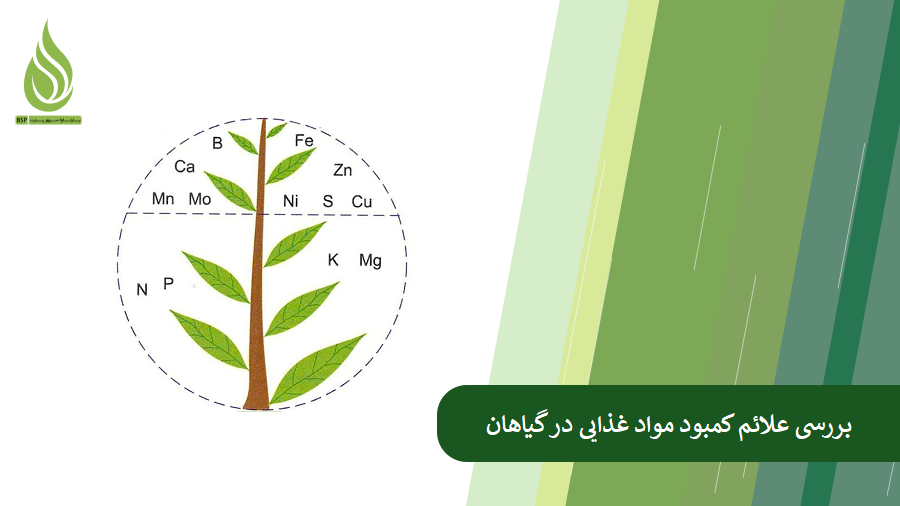
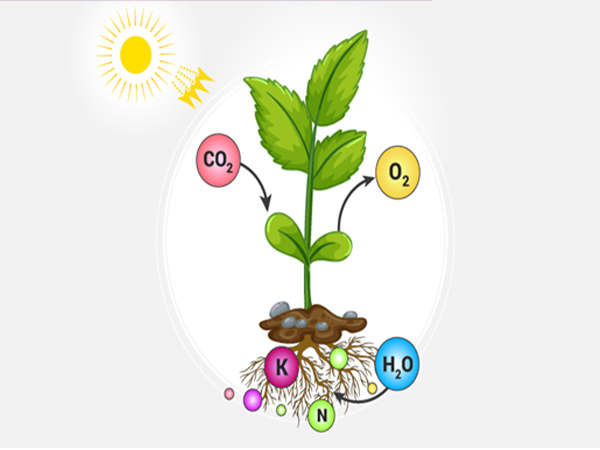
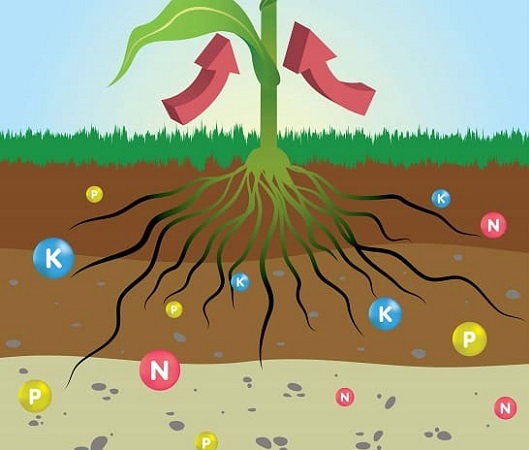
Macronutrients are nutrients that plants require in relatively large amounts. The primary macronutrients are nitrogen (N), phosphorus (P), and potassium (K). Plants also require secondary macronutrients such as sulfur (S), calcium (Ca), and magnesium (Mg). The symptoms of deficiency vary by nutrient, crop, growth stage, and growing conditions.
Nitrogen Deficiency in Plants
Nitrogen is essential for plant growth and is involved in the formation of proteins, chlorophyll, and other important plant compounds. Because nitrogen is highly mobile within plants, a deficiency often becomes visible first in older leaves as the plant moves available nitrogen toward newer growth. Common signs of nitrogen deficiency include:
- Pale green to yellow older leaves
- General chlorosis that can become more widespread as deficiency progresses
- Slow or weak growth
- Smaller leaves
- Thin stems
- Reduced plant size and vigor
- Lower yield or poorer crop development in severe cases
The location of the yellowing is particularly useful. When nitrogen is limited, older lower leaves generally become pale or yellow before younger leaves. Nitrogen deficiency can occur for several reasons, including low soil nitrogen, nutrient losses, restricted root growth, or conditions that reduce nutrient availability.
When a nitrogen deficiency is confirmed, the appropriate fertilizer should be selected according to the crop, soil conditions, existing nutrient levels, and fertilizer program. For situations where both nitrogen and sulfur are required, a fertilizer supplying both nutrients can be considered. Ammonium sulfate is one such fertilizer and provides nitrogen together with sulfur in sulfate form.
Phosphorus Deficiency in Plants
Phosphorus supports energy transfer, root development, plant growth, and reproductive processes. Plants with insufficient phosphorus may show slow development and reduced overall vigor. Possible symptoms include:
- Slow or stunted growth
- Poor root development
- Delayed maturity or flowering
- Dark green or dull foliage
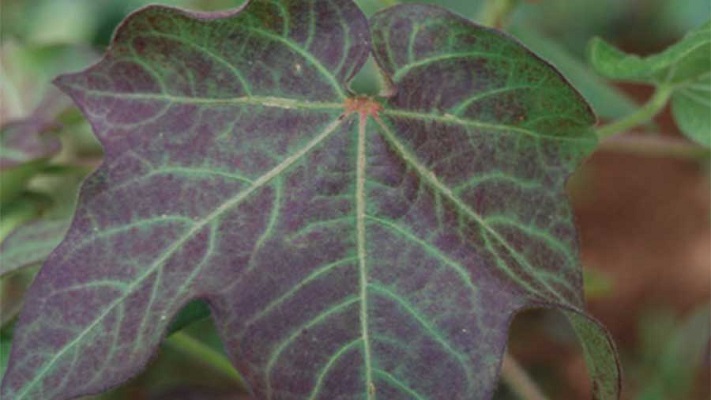
- Purple or reddish coloration in some crops or under certain conditions
- Reduced flower, fruit, or seed development
Purple or reddish leaves should not automatically be interpreted as phosphorus deficiency. Temperature, crop type, variety, growth stage, and other stresses can also influence leaf color. A soil test can help determine whether phosphorus availability is actually limiting plant growth before additional phosphorus fertilizer is applied.
Potassium Deficiency in Plants
Potassium plays an important role in water regulation, enzyme activity, and several physiological processes involved in plant growth and stress response. Potassium deficiency often produces symptoms on older leaves because potassium is relatively mobile within the plant. Common symptoms can include:
- Yellowing along leaf margins
- Brown or scorched leaf edges
- Leaf curling in some crops
- Weak or reduced growth
- Poor plant vigor
- Reduced crop quality or yield
The exact appearance of potassium deficiency varies considerably between crops. Leaf-edge scorching can be a useful clue, but it should be considered together with the crop, growth stage, soil conditions, and other symptoms.
Magnesium Deficiency in Plants
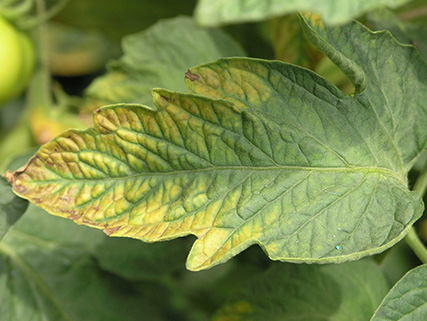
Magnesium is an essential part of chlorophyll and plays an important role in photosynthesis and other plant processes. A common sign of magnesium deficiency is interveinal chlorosis, where the tissue between the leaf veins becomes yellow while the veins remain greener. Typical symptoms may include:
- Yellowing between leaf veins
- Symptoms that begin on older leaves
- Progressive chlorosis
- Reduced plant growth
- Premature leaf drop in severe cases
Because magnesium deficiency can resemble other nutrient problems, visual symptoms alone may not always be enough to identify the cause.
Calcium Deficiency in Plants
Calcium contributes to cell wall structure and is particularly important for actively growing tissues. Because calcium is not readily redistributed within the plant, symptoms often become visible in younger tissues and growing points. Possible signs include:
- Distorted young leaves
- Poor development of growing points
- Weak or damaged young tissues
- Poor root development
- Problems with fruit or vegetable quality in susceptible crops
Calcium-related disorders can also be strongly influenced by water availability and root conditions. Correcting the underlying growing conditions may therefore be just as important as supplying additional calcium.
Sulfur Deficiency in Plants
Sulfur is an essential plant nutrient required for proteins, certain amino acids, vitamins, and other compounds involved in plant growth. Plants primarily take up sulfur from the soil in the sulfate form. Sulfur deficiency can be confused with nitrogen deficiency because both can cause leaves to become pale or yellow.
The key difference is often where the symptoms appear first. Because sulfur is less mobile within the plant than nitrogen, sulfur deficiency commonly affects younger, upper leaves first. Older leaves may remain relatively green during the early stages. Possible signs of sulfur deficiency include:
- Pale green or yellow younger leaves
- General chlorosis of new growth
- Slow or stunted growth
- Thin stems
- Reduced plant development
- Lower yield when deficiency is severe
Sulfur deficiency is particularly important to consider when crop demand is high and the soil does not provide enough available sulfur. Crops do not all have the same sulfur requirements or sensitivity, so fertilizer decisions should be based on crop needs and soil conditions.
Nitrogen vs. Sulfur Deficiency: How to Tell the Difference
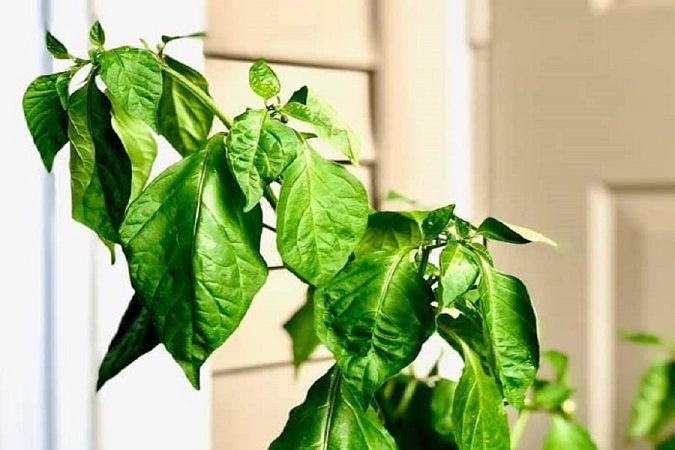
Nitrogen and sulfur deficiency are two of the most easily confused nutrient problems because both can cause pale green or yellow leaves. The most useful initial distinction is the age and position of the affected leaves.
| Feature | Nitrogen Deficiency | Sulfur Deficiency |
|---|---|---|
| Leaves affected first | Older, lower leaves | Younger, upper leaves |
| Typical color | Pale green to yellow | Pale green to yellow |
| Nutrient mobility | Highly mobile | Relatively immobile |
| Growth | Slow or stunted | Slow or stunted |
| Main visual clue | Yellowing begins on older growth | Yellowing begins on newer growth |
| Diagnostic challenge | Can resemble sulfur deficiency | Can resemble nitrogen deficiency |
| Confirmation | Soil or tissue testing when needed | Soil or tissue testing when needed |
This distinction is useful, but it should not be treated as an absolute rule. Nutrient symptoms can overlap, especially when a deficiency is severe or when several stresses occur at the same time. Iowa State Extension specifically notes that nitrogen and sulfur deficiency can be difficult to distinguish from visual symptoms alone. This is why the best approach is to combine visual observations with soil or plant tissue analysis when the diagnosis is uncertain.
Micronutrient Deficiency Symptoms in Plants
Plants require micronutrients in much smaller amounts than macronutrients, but these elements are still essential for normal growth and development. Important micronutrients include iron, zinc, manganese, copper, boron, and molybdenum.
Iron Deficiency
Iron deficiency commonly causes chlorosis in younger leaves. The tissue between the veins may become yellow while the veins remain greener. Iron availability is strongly affected by soil conditions, including pH. Therefore, adding more iron is not always the complete solution; the underlying soil conditions may also need attention.
Zinc Deficiency
Zinc deficiency can affect leaf development and plant growth. Depending on the crop, symptoms may include small leaves, shortened internodes, chlorosis, and general stunting.
Manganese Deficiency
Manganese deficiency may produce interveinal chlorosis and, in some crops, small necrotic spots. Symptoms vary with crop and growing conditions.
Copper Deficiency
Copper is involved in several plant processes. Deficiency may affect growth, leaf development, and reproductive performance, although symptoms differ among crops.
Boron Deficiency
Boron is particularly important for growing points and reproductive development. Deficiency can affect new growth, flowers, fruits, and seeds in susceptible crops.
Molybdenum Deficiency
Molybdenum is involved in nitrogen metabolism. Deficiency is relatively uncommon but can interfere with normal nitrogen use and plant development. Because micronutrient deficiencies can be difficult to diagnose visually, testing is particularly valuable when symptoms are unclear.
Nutrient Deficiency Symptoms by Nutrient
The following table provides a quick overview of common deficiency patterns. These are general indicators rather than universal diagnostic rules because symptoms can vary between crops.
| Nutrient | Common Visual Symptoms | Where Symptoms Often Appear First | General Correction |
|---|---|---|---|
| Nitrogen | Pale green to yellow leaves, slow growth, reduced vigor | Older leaves | Apply an appropriate nitrogen fertilizer based on crop and soil needs |
| Sulfur | Pale green or yellow leaves, slow growth, thin stems | Younger leaves | Apply an appropriate sulfur source when deficiency is confirmed |
| Phosphorus | Slow growth, dark green foliage, purple or reddish coloration in some crops | Often older growth | Apply phosphorus according to soil and crop requirements |
| Potassium | Yellowing or scorching along leaf margins, weak growth | Older leaves | Apply potassium when a deficiency is confirmed |
| Magnesium | Interveinal chlorosis | Older leaves | Apply an appropriate magnesium source |
| Calcium | Distorted young growth, weak growing points, poor root development | Young tissues | Address calcium supply and root-zone conditions |
| Iron | Interveinal chlorosis | Younger leaves | Correct iron availability and the underlying soil conditions |
| Zinc | Small leaves, shortened internodes, chlorosis, stunted growth | Young growth | Apply zinc where deficiency is confirmed |
| Manganese | Interveinal chlorosis and possible necrotic spotting | Young to intermediate leaves | Apply manganese where required |
| Boron | Poor growing-point and reproductive development | Young tissues | Apply boron carefully according to crop requirements |
The table is useful for narrowing down possible causes, but it should not replace soil testing, tissue testing, or professional diagnosis when the problem is unclear.
How to Identify Nutrient Deficiency in Plants
A practical diagnosis should combine several observations rather than relying on one symptom.
1. Look at Which Leaves Are Affected
Start by checking whether symptoms appear on older leaves, younger leaves, or the entire plant. For example, yellowing that begins on older leaves can be consistent with nitrogen deficiency, while yellowing that begins on younger leaves can point toward sulfur or iron deficiency.
2. Look at the Pattern of the Symptoms
Check whether the entire leaf is changing color or whether symptoms occur between the veins, around the margins, or near the tips. The pattern can help distinguish between possible nutrient problems.
3. Consider the Crop and Growth Stage
Nutrient requirements differ among crops and growth stages. A symptom that is common in one crop may be unusual in another.
4. Check Soil and Growing Conditions
Consider recent rainfall, irrigation, drought, soil compaction, drainage, root damage, and other factors that may affect nutrient uptake.
5. Test the Soil
Soil testing is one of the most useful tools for evaluating soil fertility. Depending on the test, it can provide information about plant-available nutrients, pH, organic matter, and other soil properties.
6. Consider Plant Tissue Testing
Plant tissue analysis can provide information about the nutrients that the plant has actually taken up. It can be especially useful when visual symptoms are unclear or when a grower wants to monitor nutrient status during the season. The important principle is simple: a yellow leaf is a symptom, not a diagnosis.
How to Correct Nutrient Deficiency in Plants
Once the likely deficiency has been identified, the next step is to correct the nutrient supply without creating a new imbalance.
Soil Testing Before Fertilization
Before applying significant amounts of fertilizer, evaluate the soil and crop requirements. A soil test can help determine whether additional nutrients are needed and can support a more appropriate fertilizer program.
Choose the Right Fertilizer
The fertilizer should match the nutrient that is actually limiting plant growth.
For example, applying additional phosphorus will not solve a confirmed sulfur deficiency. Likewise, applying nitrogen alone may not fully address a crop that is deficient in both nitrogen and sulfur.
Fertilizer rates should be based on the crop, soil test results, growth stage, expected yield, existing nutrient levels, and the fertilizer product being used.
Correcting Nitrogen and Sulfur Deficiency
When a crop requires both nitrogen and sulfur, using a fertilizer that supplies both nutrients can be a practical option.
Ammonium sulfate supplies nitrogen and sulfur in one fertilizer. Its sulfur is provided in sulfate form, which is the form plants take up from the soil.
However, ammonium sulfate should not be treated as a universal solution for every yellowing plant. The appropriate fertilizer depends on the confirmed nutrient requirement, soil conditions, crop, and application program. You can get more information about BARNO ammonium sulfate and its specifications.
How to Prevent Nutrient Deficiency in Plants
Preventing deficiencies is generally more effective than trying to correct severe symptoms after they appear. A good nutrient management program can include:
Test the Soil Regularly
Soil testing provides information that can guide fertilizer decisions and help identify changes in nutrient availability over time.
Match Fertilizer to Crop Requirements
Different crops remove different amounts of nutrients from the soil. Fertilizer programs should therefore be based on the crop and its expected nutrient demand rather than a fixed application schedule.
Maintain Suitable Soil Conditions
Soil pH, moisture, drainage, organic matter, and root health all influence nutrient availability and uptake.
Manage Irrigation Carefully
Both excessive and insufficient water can affect root activity and nutrient uptake. Good irrigation management helps maintain conditions in which roots can access available nutrients.
Monitor Crops Throughout the Season
Regular observation makes it easier to notice changes before a deficiency becomes severe. Pay attention to leaf color, growth rate, new shoots, root development, flowering, and fruit or seed development.
Consider Nutrient Removal at Harvest
When crops are harvested, nutrients leave the field with the harvested material. Fertilizer planning should take nutrient removal and the next crop’s requirements into account.
Key Points on Nutrient Deficiency Management in Plants
Nutrient deficiency in plants can reduce growth, crop quality, and yield, but visible symptoms alone are not always enough to identify the problem. The most useful points to remember are:
- Nitrogen deficiency commonly causes pale or yellow older leaves and reduced growth.
- Sulfur deficiency commonly affects younger leaves because sulfur is less mobile within the plant.
- Nitrogen and sulfur deficiency can look very similar, so their location on the plant is an important diagnostic clue.
- Phosphorus deficiency can affect growth and may cause purple or reddish coloration in some crops.
- Potassium deficiency often causes yellowing or scorching along leaf margins.
- Magnesium deficiency commonly causes interveinal chlorosis on older leaves.
- Calcium deficiency often affects young tissues and growing points.
- Micronutrient deficiencies can produce a wide range of symptoms and may be difficult to identify visually.
- Soil and plant tissue testing can help confirm suspected nutrient problems.
- Fertilizer should be selected according to the confirmed nutrient requirement, crop, soil conditions, and application program.
- When both nitrogen and sulfur are deficient, a fertilizer such as ammonium sulfate can supply both nutrients in one product.
The goal is not simply to react to a yellow leaf. A better approach is to identify the pattern, consider the crop and growing conditions, confirm the nutrient problem where necessary, and then choose a fertilizer program that addresses the actual deficiency.