What is Soil Nutrient Leaching & How to Prevent It?
Soil nutrient leaching happens when water moving through the soil carries dissolved nutrients below the crop root zone. Nitrate is especially vulnerable, while other nutrients behave differently depending on soil type and chemistry.
For farmers, excessive leaching means lower fertilizer-use efficiency, higher input costs, and a greater risk of groundwater contamination. The main causes are excessive rainfall or irrigation, sandy or low-CEC soils, poor fertilizer timing, and applying more nutrients than crops can use.
This guide explains which nutrients are most at risk, what causes leaching, how to recognize the conditions that favor it, and the most effective ways to reduce nutrient losses.
In short: Nutrient leaching occurs when water carries dissolved nutrients below the plant root zone. Nitrate is usually the greatest concern because it moves easily with soil water. The main ways to reduce unwanted leaching are proper irrigation, matching fertilizer rates and timing to crop demand, maintaining soil structure, and using cover crops or enhanced-efficiency fertilizers where appropriate.
What Is Soil Nutrient Leaching?
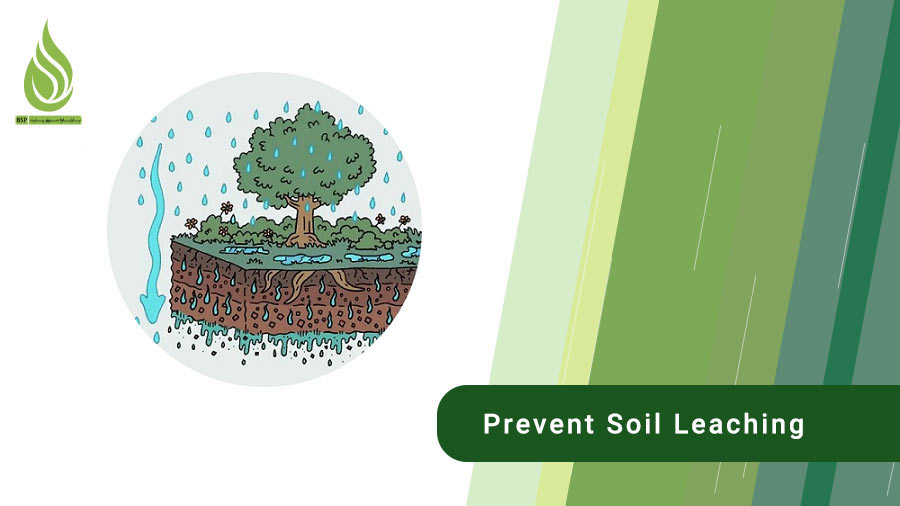
Soil nutrient leaching occurs when water moves downward through the soil profile and carries dissolved nutrients below the effective root zone. Nitrate (NO₃⁻) is particularly vulnerable because it is highly mobile in most soils. Sulfate (SO₄²⁻) can also be relatively mobile, while positively charged nutrients such as potassium, calcium, magnesium, and ammonium are generally retained more strongly by soil particles, although losses can still occur, especially in sandy or low-CEC soils. Excessive nutrient leaching can reduce fertilizer-use efficiency, contribute to nutrient deficiencies, and increase the risk of groundwater contamination.
Not all leaching is harmful. In irrigated agriculture, controlled leaching is sometimes deliberately used to move excess soluble salts below the crop root zone and manage soil salinity. Nutrient leaching, however, becomes undesirable when valuable plant nutrients move below the effective root zone before crops can absorb them. This can reduce fertilizer-use efficiency, increase production costs, and contribute to groundwater or surface-water pollution.
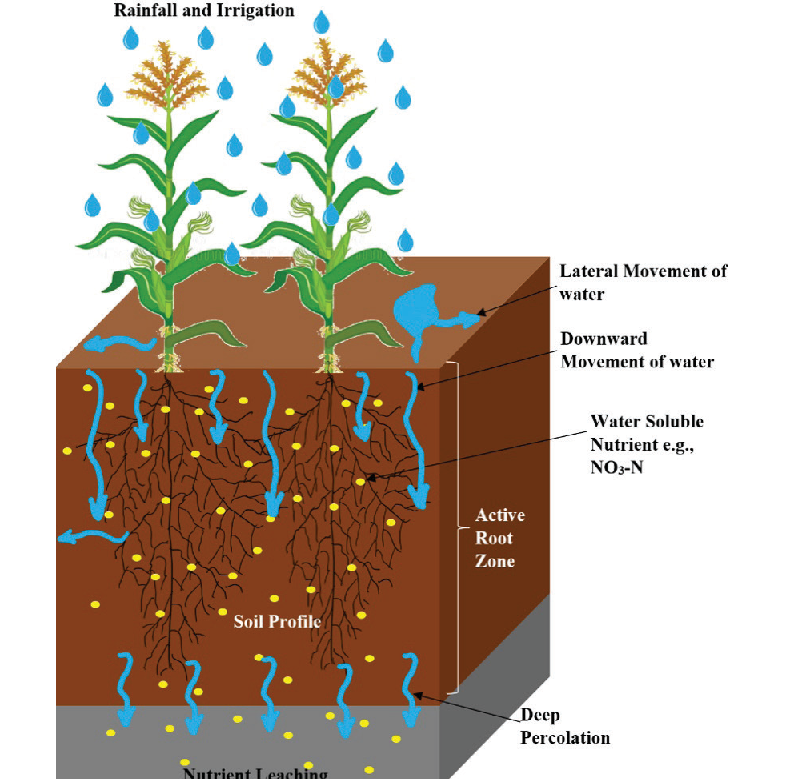
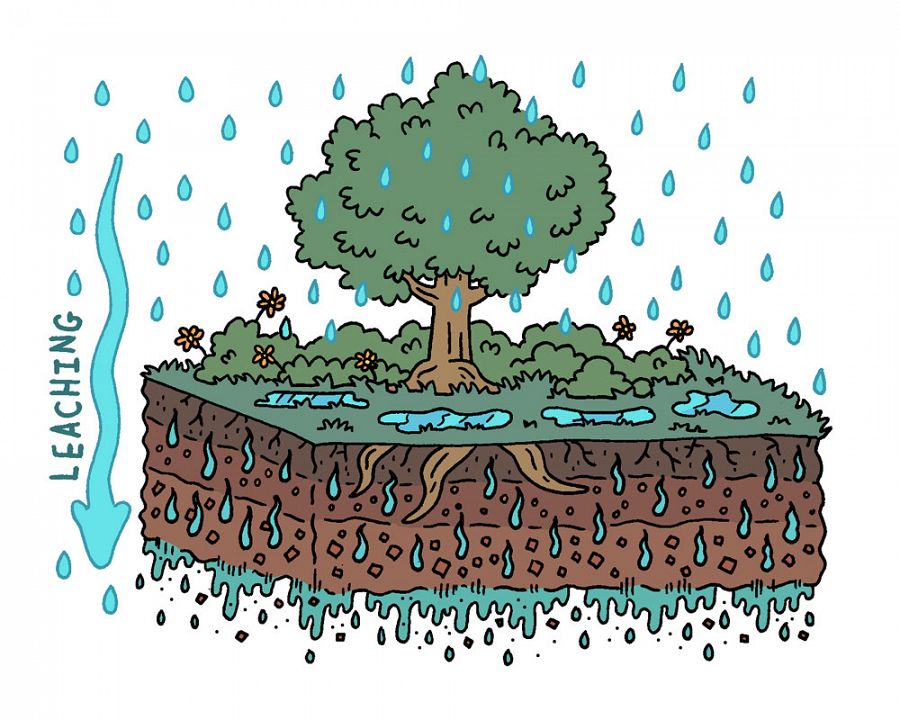
What is Leaching? During soil nutrient leaching, rainwater or irrigation water dissolves nutrients from the soil and washes them down into deeper soil layers or groundwater.
| Nutrient/Form | Relative leaching risk | Why |
|---|---|---|
| Nitrate (NO₃⁻) | 🔴 High | Highly mobile and weakly retained by most soils |
| Sulfate (SO₄²⁻) | 🟠 Moderate–High | Relatively mobile, especially in sandy soils |
| Ammonium (NH₄⁺) | 🟢 Lower initially | Positively charged and retained on soil exchange sites |
| Potassium (K⁺) | 🟡 Low–Moderate | Retained by CEC but more vulnerable in sandy soils |
| Calcium / Magnesium | 🟡 Low–Moderate | Retained as exchangeable cations |
| Phosphorus | 🟢 Usually Low | Often strongly retained by soil; runoff/erosion is usually a greater concern |
What Are Soil Nutrients?
Plants need a mix of nutrients to grow strong and produce well. They pull carbon, oxygen, and hydrogen from air and water, but the rest come from the soil. Key essential nutrients include macronutrients like nitrogen (N), phosphorus (P), potassium (K), calcium, magnesium, and sulfur, plus micronutrients such as iron, manganese, copper, zinc, boron, and molybdenum. These elements help with everything from building plant tissues to fighting diseases.

Key Point: During nutrient leaching, dissolved nutrients move downward with percolating water and may be transported below the effective crop root zone, where plants can no longer readily access them.
The amount and balance of these nutrients directly affect plant health and output. For example, nitrogen boosts leaf growth and protein production, while phosphorus supports root development and energy transfer. If there’s an imbalance; like too little potassium; plants might show stunted growth or poor fruit quality. Keeping soil fertile ensures plants get what they need for top yields.
How Are Nutrients Removed from the Soil?
Nutrients don’t stick around forever; they leave the soil through natural and human-influenced processes. Here’s how it typically happens:
- Plant Uptake: Roots absorb nutrients as plants grow, using them for leaves, stems, and fruits. When you harvest crops, those nutrients go with them.
- Leaching: Water from rain or irrigation dissolves soluble nutrients (like nitrate nitrogen) and carries them deep into the soil or into groundwater, out of reach for plant roots.
- Erosion and Runoff: Wind or water can wash away topsoil, taking bound nutrients like phosphorus with it. This is worse on sloped land or bare fields.
- Volatilization: Some nitrogen fertilizers can lose nitrogen to the atmosphere as ammonia gas. This is particularly important with surface-applied urea and urea-containing fertilizers. Ammonia loss is influenced by factors such as soil pH, temperature, moisture, wind, crop residue, and how quickly the fertilizer is incorporated into the soil by rainfall, irrigation, or tillage.
- Denitrification: In waterlogged soils, bacteria convert nitrate to nitrogen gas, releasing it to the atmosphere.
These losses deplete soil fertility over time. To keep things balanced, farmers often add fertilizers or organic matter, but the goal is to minimize unnecessary removals through smart management.
What Causes Soil Nutrient Leaching?
Leaching isn’t random; several factors team up to make it happen. Recent studies highlight how climate, soil traits, and farming choices all play a part. Let’s break them down:
Climatic Factors
Heavy or prolonged rainfall can increase nutrient-leaching risk when enough water infiltrates the soil and drains below the crop root zone. The total amount of water moving through the soil is especially important. Very intense rainfall does not always cause greater leaching because, when rainfall exceeds the soil’s infiltration capacity, part of the water may instead leave the field as surface runoff.
Excessive Irrigation
Overwatering floods the soil, especially in sandy types, pushing nutrients beyond roots. Flood irrigation is a common culprit; switching to drip or sprinkler systems helps control this.
Soil Texture and Structure
Sandy soils generally have low water- and nutrient-holding capacity, allowing water and mobile nutrients such as nitrate to move downward relatively quickly. Fine-textured soils usually retain water and positively charged nutrients more strongly, although cracks and preferential flow pathways can sometimes carry water and dissolved nutrients rapidly through the profile. Soil compaction typically reduces infiltration and increases surface runoff, while poor soil structure can create uneven water movement and restrict root development.
Terrain Slope and Runoff
Steep slopes can increase surface runoff and soil erosion, carrying nutrients away from the field before water infiltrates the soil. This is different from leaching, which involves dissolved nutrients moving downward through the soil profile. Maintaining ground cover, improving infiltration, and using appropriate erosion-control practices can reduce nutrient losses on sloping land.
Excessive Fertilizer Use
Applying too much, especially fast-release nitrogen like urea, leads to surpluses that leach easily. Nitrogen has the highest risk. Conventional ammonium sulfate is a readily soluble, quick-release nitrogen and sulfur fertilizer. Its ammonium-N is initially less susceptible to leaching than nitrate because NH₄⁺ can be retained on soil exchange sites. However, ammonium is gradually converted to nitrate through nitrification, after which the nitrogen becomes more vulnerable to leaching. Controlled-release fertilizers are specially formulated products designed to delay nutrient release. We also suggest you take a look at our guide to Urea and Ammonium Sulfate comparison.
Management Factors
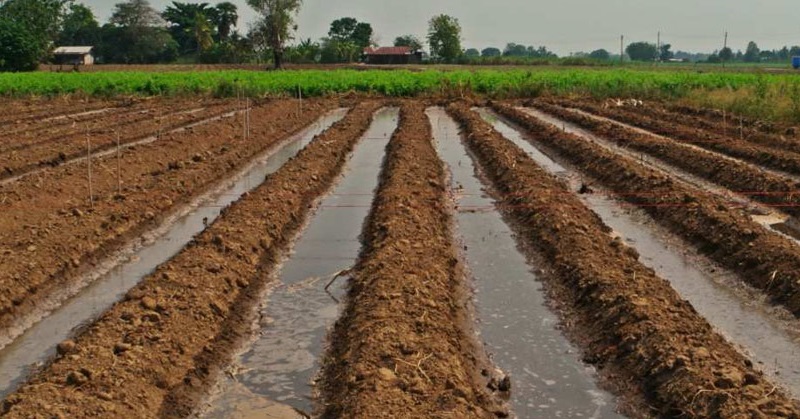
Tip: To prevent soil nutrient leaching, avoid flood irrigation as much as possible. Instead, use drip irrigation or sprinklers.
Poor irrigation timing, lack of cover crops, wrong pH (acidic or alkaline soils lock up nutrients), or ignoring soil tests all contribute. Combined, they create perfect conditions for loss.
Understanding these helps target fixes; recent research stresses how climate change amps up rainfall intensity, making prevention even more crucial.
Your field may have a high leaching risk if…
| Condition | Risk |
|---|---|
| Sandy soil | Higher |
| Heavy rainfall | Higher |
| Excessive irrigation | Higher |
| Large pre-plant nitrate application | Higher |
| Low crop uptake | Higher |
| Bare soil between crops | Higher |
| Shallow root system | Higher |
How to Prevent Soil Nutrient Leaching
Stopping leaching involves smart practices that keep nutrients where plants can use them. Based on 2024-2025 guidelines from the USDA and EPA, here are effective methods:
- Irrigation Management: Water only as needed—use soil moisture sensors or apps to time it right. Drip or precision irrigation minimizes excess water, cutting leaching risk.
- Improve Soil Structure: Add organic matter like compost or manure to boost water-holding capacity. Reduced tillage preserves structure, reducing runoff. Plant cover crops (e.g., rye or legumes) to hold soil and absorb extras.
- Use Slow-Release or Enhanced Efficiency Fertilizers: Use Controlled-Release or Enhanced-Efficiency Fertilizers Where Appropriate: Coated, controlled-release, or stabilized fertilizer products can help improve synchronization between nutrient availability and crop demand under suitable conditions. Their effectiveness depends on the fertilizer technology, crop, soil, weather, irrigation, and management system, so they should be selected according to local agronomic conditions rather than treated as a universal solution.
- Correct Soil pH: Test and adjust soil pH with lime (for acidity) or sulfur (for alkalinity) to optimize nutrient availability; ideal range is 6-7 for most crops.
- Add Buffer Strips and Cover Crops: Grassy or vegetated buffer strips along fields and waterways can help reduce nutrient losses associated with surface runoff. Cover crops can also capture residual soil nitrogen during periods when the main crop is absent. Non-legume species such as cereal rye are particularly effective nitrate scavengers. Winter oilseed crops such as camelina and pennycress have also substantially reduced nitrate losses in some studies, although the effectiveness of any cover crop depends on climate, soil, establishment, rooting, and management conditions.
Combining these practices is generally more effective than relying on a single measure.
Methods to Detect Nutrient Deficiencies in Plants
Leaching often shows up as nutrient shortages, so early detection is key. Modern tools make it easier:
- Visual Inspection: Look for signs like yellow leaves (nitrogen lack), purple stems (phosphorus), or brown edges (potassium). Mobile nutrients affect older leaves first; immobile ones hit new growth.
- Soil Testing: Sample soil (15-20 cm deep, multiple spots) and lab-analyze for nutrients, pH, and organic matter. Do it every 3-5 years or post-harvest.
- Leaf or Tissue Analysis: Test plant leaves at key growth stages to measure absorbed nutrients—compares to crop standards for precise fixes.
- Field Observations: Compare plant growth to healthy nearby areas; use sensors for real-time soil data.
- Innovative Tech: Drones, remote sensors, or digital mapping track nutrient status across fields for targeted tweaks.
Combine methods for accuracy; if tests show leaching, adjust management pronto.
How to Solve Soil Nutrient Leaching on a Farm
Tackling leaching farm-wide needs a holistic plan. Start with regular soil tests to monitor nitrogen and other levels. Then, apply these strategies:
- Balanced Nutrient Supply: Match P, K, and S to optimize N uptake—avoid excesses that leach.
- Boost Root Systems: Choose deep-rooted crops or varieties to grab nutrients better.
- Precise Fertilizer Application: Use soil data for site-specific rates and timing; split applications to sync with crop needs.
- Maintain Buffers and Green Cover: Keep strips along water edges and cover fields post-harvest to soak up extras and curb erosion.
- Soil Structure Care: Avoid compaction with controlled traffic; add organics for better infiltration on heavy soils.
- Fall Guidelines: Time manure/fertilizer apps to minimize off-season losses; follow EPA tips for wet periods.
Monitor yearly and tweak as needed. These steps promote sustainable farming, cutting costs and protecting water.
Written by: Barsava Sepehr Editorial Team
Updated: September 2026