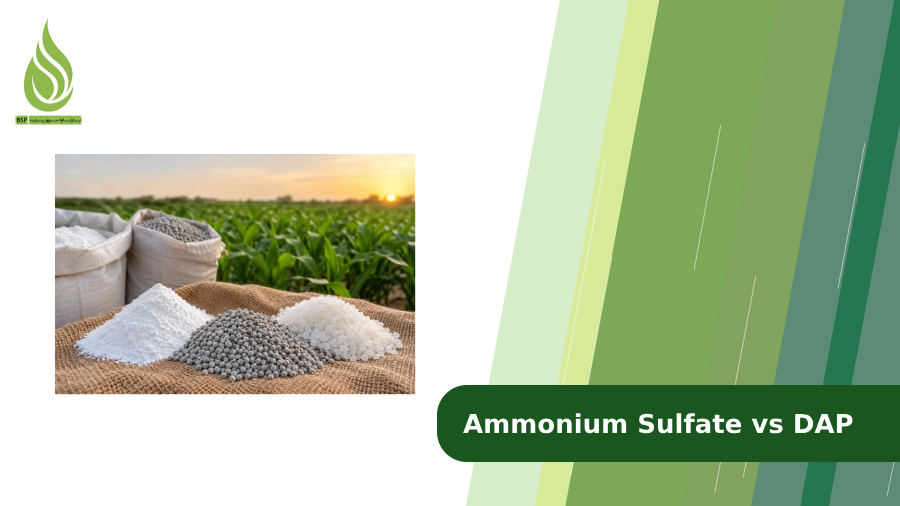
Ammonium Sulfate vs DAP: Which Fertilizer Fits Your Nutrient Needs?
The ammonium sulfate vs DAP question usually starts the same way: “I need nitrogen, but should I get it with sulfur or with phosphorus?” Both products supply ammonium nitrogen, but they are built for different jobs. Ammonium sulfate is an N-S fertilizer. Diammonium phosphate (DAP) is an N-P fertilizer. This guide compares ammonium sulfate vs DAP by nutrient content, soil conditions, crop situations, and application. It also explains when using ammonium sulfate and DAP together makes sense.
Ammonium Sulfate vs DAP at a Glance
| Feature | Ammonium Sulfate | DAP |
|---|---|---|
| Main nutrients | Nitrogen + sulfur | Nitrogen + phosphorus |
| Common grade | 21-0-0 + S | 18-46-0 |
| Sulfur | Yes | Very little in standard DAP |
| Phosphorus | No | Yes |
| Nitrogen form | Ammonium | Ammonium |
| Main use | N + S nutrition | N + P nutrition |
| Best choice when | N and S are required | N and P are required |
These figures are typical grades, not fixed specifications. Extension sources list ammonium sulfate at roughly 21-0-0-24S and DAP at roughly 18-46-0. Always check the fertilizer analysis on the product you are actually buying. Our guide to the ammonium sulfate 21-24 grade explains how to read it.
What Is the Difference Between Ammonium Sulfate and DAP?
The difference between DAP and ammonium sulfate comes down to one idea:
- Ammonium sulfate: nitrogen + sulfur
- DAP: nitrogen + phosphorus
Both deliver nitrogen. What changes is the second nutrient riding along with it. This matters because sulfur and phosphorus do different work in the plant. Sulfur is part of amino acids and proteins, so it is closely tied to how efficiently a crop uses nitrogen. Phosphorus, supplied as phosphate, drives energy transfer, early root growth, and crop establishment. Applying the wrong one will not fix the deficiency you actually have. The practical rule is simple. Pick the fertilizer whose second nutrient matches your crop nutrient requirements, and let a soil test confirm it.
Ammonium Sulfate vs DAP for Nitrogen
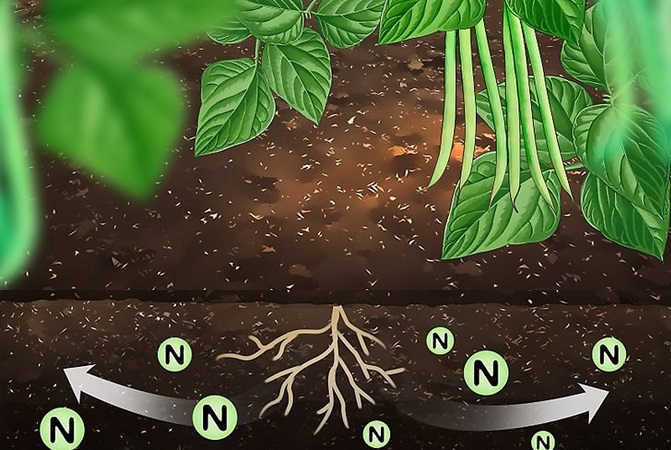
If your only goal is nitrogen, ammonium sulfate vs DAP is not a contest with an obvious winner. Both supply ammonium nitrogen, and in both cases soil microbes gradually convert it to nitrate. The products differ in what they deliver alongside the nitrogen, not in the nitrogen form. That is why extension programs treat them as tools for different purposes. Penn State Extension, for example, lists both among common fertilizer materials and stresses that the fertilizer analysis you choose should follow your soil-test recommendations. Two points are worth keeping in mind:
- Nitrogen concentration differs. Ammonium sulfate is about 21% nitrogen, while DAP is about 18%. But DAP’s nitrogen comes bundled with a large dose of phosphate, so it should not be bought as a nitrogen source alone.
- Your nitrogen requirement should be met with the right companion nutrient. If the soil already has plenty of phosphorus, adding DAP just to get nitrogen can stack up phosphate you do not need. If sulfur is short, ammonium sulfate fills two gaps at once.
Think of nitrogen as the shared ground. The real decision comes from the second nutrient.
Ammonium Sulfate vs DAP for Sulfur and Phosphorus
This is where the choice becomes practical. If sulfur is the limiting nutrient, ammonium sulfate becomes the more relevant product. Sulfur deficiency often shows up as pale, yellowing new leaves, and it can look like nitrogen deficiency. Crops that lack sulfur also use nitrogen less efficiently. Standard DAP contains very little sulfur, so it will not correct the problem. If you want to learn what to look for, see how to identify nutrient deficiencies in plants.
If phosphorus is the limiting nutrient, DAP becomes the more relevant product. Ammonium sulfate contains no phosphorus, so it cannot raise a low soil test phosphorus level. Phosphorus deficiency typically appears as stunted growth, slow early development, and sometimes purplish leaves. Soil pH also plays a role. Phosphorus availability depends heavily on soil pH, and phosphate tends to be most available in a slightly acidic to near-neutral range. Ammonium sulfate is acidifying over time, which can be useful on high-pH soils but is something to watch on soils that are already acidic. DAP creates a temporary zone of higher pH right around the granule. Placed too close to seed, that can injure seedlings because of free ammonia.
Keep the first decision simple: what does the soil test say is short, sulfur or phosphorus? A crop can need both. In that case, a nutrient management plan may include more than one product, each chosen for what it adds.
Which Is Better for Different Crops?

There is no single “better” fertilizer across all crops, and a universal crop table would be misleading, since needs vary with soil, yield goal, and rotation. It is more useful to think in situations.
- Crops with high sulfur demand. Some crops pull a lot of sulfur from the soil. Canola, alfalfa, onions, and other crops with high protein or oil production often respond to sulfur, particularly on sandy, low-organic-matter soils. Where sulfur is the constraint, an N-S fertilizer like ammonium sulfate fits the need better than DAP.
- Crops that need phosphorus for establishment. Young plants rely on phosphorus for root development and early vigor. This is why DAP is widely used as a phosphorus source at planting for crops like wheat, corn, and many vegetables.
- Phosphorus-deficient soils. When a soil test shows low phosphorus, a phosphorus fertilizer is required. DAP is a common choice because it delivers phosphate and nitrogen together in one granule.
- Sulfur-deficient soils. Sulfur deficiency is more common than it used to be. Cleaner air means less atmospheric sulfur is deposited on fields, and sandy or low-organic-matter soils hold little reserve. On these soils, ammonium sulfate fertilizer supplies sulfur in a plant-available sulfate form, along with ammonium nitrogen.
- Starter fertilizer situations. A starter fertilizer is placed near the seed or row to give seedlings an early boost. DAP is a familiar choice when phosphorus is needed early. But rate and placement matter, because nitrogen near the seed can cause injury. Ammonium sulfate can also work in a starter program when early nitrogen and sulfur are the need. Follow local fertilizer application rate guidance either way.
In short, DAP is commonly used as a phosphorus source and ammonium sulfate as an N-S source. The crop and soil decide which fits.
Can Ammonium Sulfate and DAP Be Used Together?
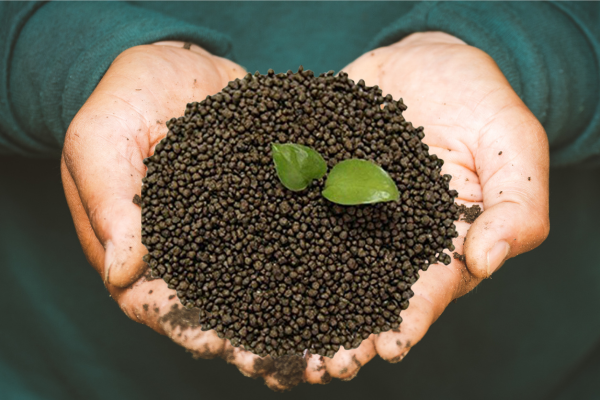
Yes, potentially. But that is a different question from whether you should always mix them. Using both in a fertilizer program is straightforward. If your soil test and crop plan call for nitrogen, phosphorus, and sulfur, one product alone may not cover everything. DAP can supply the phosphorus, ammonium sulfate the sulfur, and together they contribute to the nitrogen requirement. In that case, ammonium sulfate and DAP complement each other.
Physically mixing the two products is a separate matter. Whether a blend works depends on the formulation, the moisture content and particle size of each material, the application equipment, and physical and chemical compatibility. Some combinations store and spread well. Others can clump or segregate. If you plan to blend rather than apply separately, read our guide to fertilizer compatibility and mixing first. Whichever route you take, calculate the combined nutrients carefully. Both products carry nitrogen, so adding them together raises total nitrogen. You should account for that before settling on a rate. Our resource on the ammonium sulfate application rate can help you work it out.
Ammonium Sulfate or DAP: Which Should You Choose?

When you are weighing ammonium sulfate or DAP, this framework keeps the decision grounded in your actual nutrient needs.
Choose ammonium sulfate when:
- Sulfur is required
- Nitrogen and sulfur are needed together
- The soil and crop program does not need additional phosphorus from that product
Choose DAP when:
- Phosphorus is required
- Nitrogen and phosphorus are needed together
- DAP fits the recommended nutrient balance for your crop
Use a combination when:
- Soil and crop recommendations call for nitrogen, phosphorus, and sulfur
- The combined rates are calculated correctly
- The products are suitable for your intended application system
One more tip: a soil test removes most of the guesswork. It shows which nutrients are low, and that tells you whether you are shopping for an N-S fertilizer, an N-P fertilizer, or both.
Final Thoughts
The ammonium sulfate vs DAP decision is not about which product is stronger. It is about which second nutrient your crop is missing. Ammonium sulfate pairs nitrogen with sulfur, and DAP pairs nitrogen with phosphorus. Match the product to the deficiency, confirm it with a soil test, and calculate rates so you do not overapply nitrogen. If sulfur is on your list, explore our crystalline ammonium sulfate fertilizer to see how it fits your nutrient management plan.