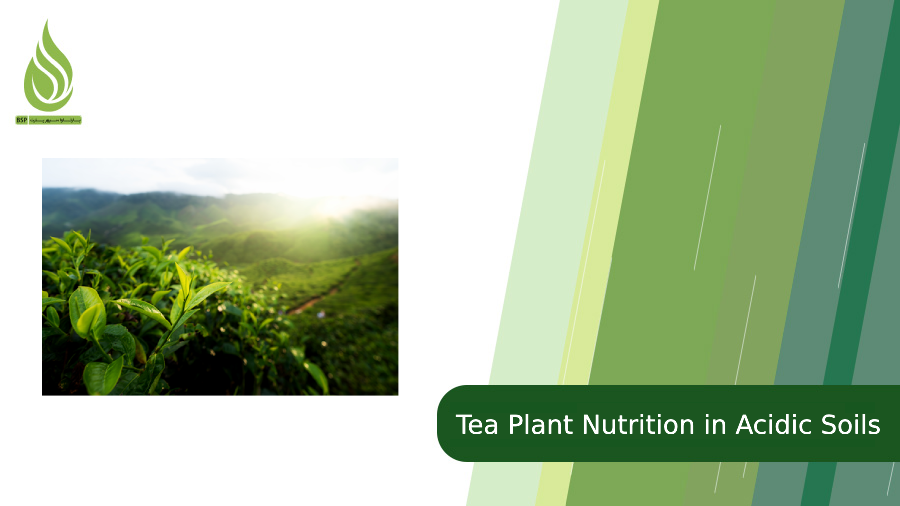
Tea Plant Nutrition in Acidic Soils: Essential Nutrients and Fertilization Practices
Tea is one of the few major crops that thrives in acidic ground. That makes tea plant nutrition in acidic soils different from feeding most other crops. The goal is not to “fix” the soil’s acidity. It is to supply the right nutrients while keeping the natural soil chemistry that Camellia sinensis prefers. This guide covers why tea likes acidic soil, which nutrients matter most, how needs change with plant age, and how to manage fertilizer wisely.
Why Tea Plants Prefer Acidic Soils
Camellia sinensis evolved in acidic, humus-rich forest soils. Under these acidic soil conditions, the plant performs best. The optimal soil pH for tea is generally around 4.5 to 5.5, and many plantations produce well in that range. Because of this, you should not raise soil pH toward neutral. Liming a tea field to pH 6.5 or higher can cause problems, including poorer growth and reduced tea leaf quality. Tea soil pH management is about keeping the soil in its comfortable range, not moving it out of it. Good tea soils usually share a few traits: high soil organic matter, good drainage, and deep, loose root-zone conditions that let roots spread easily.
Soil pH and Nutrient Availability
Soil pH controls how available nutrients are. In acidic soil, some nutrients become easier for roots to take up, while others can become scarce.
- Micronutrient availability is generally good. Iron, manganese, and zinc dissolve more readily at low pH.
- Phosphorus availability can drop in very acidic soils, because phosphorus binds with iron and aluminum.
- Calcium and magnesium can be low, since acidic soils tend to be leached of them.
- Nutrient leaching is a real concern in high-rainfall tea regions, where heavy rain washes mobile nutrients like nitrogen and potassium below the roots.
The aim is soil nutrient balance. Tea does not need a “perfect” pH so much as a steady, appropriate one, with nutrients supplied in the right proportions.
Essential Macronutrients for Tea: Nitrogen, Phosphorus, and Potassium

- Nitrogen is the most important nutrient for tea. Because growers harvest new shoots again and again, nitrogen drives yield and leaf production. Tea plant nitrogen requirements are high compared with many crops. Tea takes up nitrogen well in its ammonium form, and it tolerates ammonium nitrogen better than many plants. Good nitrogen uptake supports vigorous flushes, deeper green color, and better tea leaf quality.
- Phosphorus supports root growth and overall plant energy. Needs are smaller than for nitrogen, but phosphorus availability should still be monitored in strongly acidic soils.
- Potassium helps the plant manage water, resist stress, and build quality in the leaf. Adequate potassium uptake is linked to better disease resistance and drought tolerance.
Together, these three are the backbone of fertilizer requirements for tea. When people discuss nutrients for tea plants, N, P, and K come first. They are also the ones most affected by leaching and by crop removal at harvest.
The Role of Sulfur in Tea Plant Nutrition
Sulfur is often overlooked, but it matters. Sulfur nutrition affects protein formation, and tea is a high-protein, leaf-harvested crop. Sulfur for tea plants also supports the amino acids that shape flavor and quality. Sulfur deficiency can look like nitrogen deficiency, with pale, yellowing young leaves. That is why it is easy to miss. In many regions, less sulfur now arrives from the atmosphere, and sandy or low-organic-matter soils hold little reserve. For a deeper look at this nutrient in general, see our guide on sulfur fertilizer impact. Here, the point is simple: nitrogen and sulfur work together, so a tea program that ignores sulfur can waste its nitrogen.
Micronutrients and Their Importance
Tea needs small amounts of micronutrients, including zinc, manganese, iron, copper, and boron. Because acidic soil usually keeps these available, deficiencies are less common than in neutral or alkaline soils. Even so, problems can appear on leached or depleted soils. Zinc is a frequent concern in some tea regions. Magnesium, a secondary nutrient, also deserves attention because it is central to chlorophyll. A balanced program checks these through soil testing and leaf analysis instead of guessing.
Fertilization Requirements at Different Growth Stages
Needs change as the plant grows.
- Young tea plants are establishing roots and framework. They need modest nitrogen, enough phosphorus to support root development, and careful placement. Fertilizer should be applied away from the stem to avoid burn. Overfeeding young plants is a common mistake.
- Mature tea bushes are harvested repeatedly and remove nutrients with every pluck. They need higher, regular nitrogen, along with potassium, sulfur, and the other nutrients lost in the harvested leaf. Nutrient application is usually split into several rounds across the growing season, which reduces leaching and matches supply to flush cycles.
- Pruned or rejuvenated bushes need extra support to regrow, particularly nitrogen and phosphorus.
Applying fertilizer in smaller, well-timed doses is usually safer and more efficient than one large application.
Soil Testing and Leaf Tissue Analysis

Two tools make tea plantation soil nutrition far less of a guessing game.
- Soil testing shows soil pH, organic matter, and levels of key nutrients. Test regularly, and sample consistently from the same areas and depths so results can be compared over time.
- Leaf tissue analysis shows what the plant has actually absorbed. It can reveal hidden deficiencies or imbalances that soil tests miss. Used together, the two methods give the clearest picture.
Use the results to set a fertilizer program, then retest to confirm that it is working.
Common Nutrient Deficiencies in Tea Plantations
Tea plant nutrient deficiency usually shows up in the leaves:
- Nitrogen: pale green or yellow older leaves, slow growth, low yield
- Sulfur: yellowing of young leaves, often confused with nitrogen shortage
- Phosphorus: stunted growth and weak roots
- Potassium: scorched or browned leaf edges
- Magnesium: yellowing between the veins of older leaves
Symptoms can look alike, so confirm with testing before acting. Our guide to identifying nutrient deficiencies in plants helps you read these signs more accurately, and the nutrient requirements of tea plants section above explains what each nutrient does.
Practical Fertilizer Management Recommendations
Here is a simple approach to nutrient management in tea plantations:
- Test first. Use soil and leaf analysis to find out what is actually needed.
- Protect the pH. Do not lime tea soils out of habit. Keep them in the acidic range the crop prefers.
- Split applications. Apply fertilizer in several smaller rounds to limit leaching.
- Build organic matter. Mulch, pruning residue, and compost improve soil structure and nutrient holding.
- Balance nutrients. Do not push nitrogen alone. Support it with potassium, sulfur, and other nutrients.
- Follow local guidance. Rates vary by region, yield, and soil.
Ammonium sulfate for nitrogen and sulfur supply. It helps to separate two ideas: supplying nutrients and changing soil chemistry. Ammonium sulfate provides both nitrogen and sulfur in one product, and tea responds well to ammonium nitrogen. During nitrification, it also has an acidifying effect. In tea soils, which are already acidic, this is usually not a goal and should be watched over time. Its use should still be based on soil tests and crop needs. If you want a nitrogen and sulfur source, consider crystalline ammonium sulfate fertilizer as part of a balanced program, and monitor soil pH.
Frequently Asked Questions
Most tea grows best at a soil pH of about 4.5 to 5.5.
Usually not, unless a soil test and local advice show a specific need. Tea prefers acidic soil.
Sulfur supports protein and amino acid formation, which affects both growth and tea leaf quality.
Yes, it can supply nitrogen and sulfur, but base the decision on soil tests, current pH, and crop needs.
Mature bushes are usually fed in split applications during the growing season, following local recommendations.
Combine soil testing with leaf tissue analysis, and compare results against visible symptoms.
Final Thoughts
Successful tea plant nutrition in acidic soils comes down to working with the soil, not against it. Keep the pH in the range tea likes, supply nitrogen, phosphorus, potassium, and sulfur in balance, and use soil testing and leaf analysis to guide every decision. Done well, this protects the soil and rewards you with healthier bushes and better leaf quality.