Ammonium Sulfate Caking: Causes, Prevention, and Storage
Few things frustrate a fertilizer buyer more than opening a bag and finding a solid block. Ammonium sulfate caking is one of the most common handling complaints for this product, and it can affect farmers, distributors, and importers alike. The good news is that most caking is predictable. If you understand what causes it, you can reduce the risk at every step, from loading to the warehouse. This guide explains why ammonium sulfate cakes, how moisture and humidity play a role, and what buyers can do to keep the product free-flowing.
What Is Ammonium Sulfate Caking?
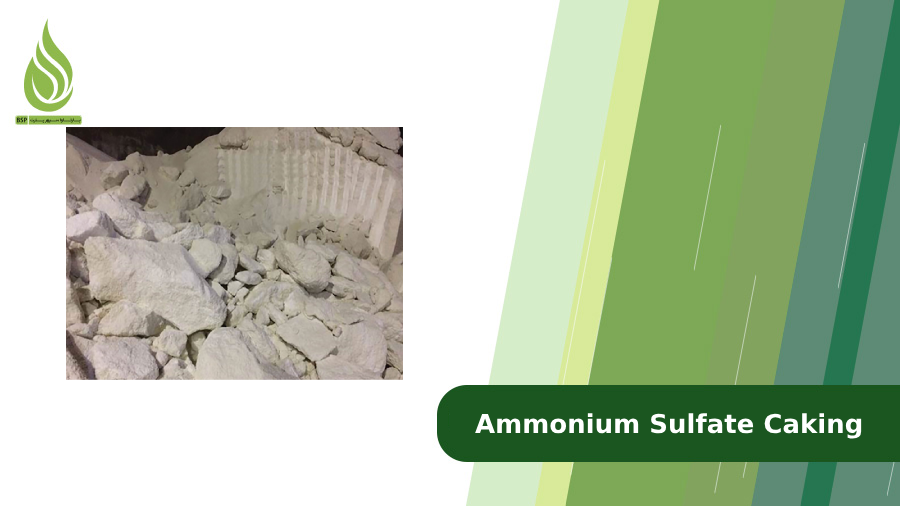
Caking happens when individual particles stick together and form larger masses. The product loses its free-flowing quality. Instead of pouring or spreading easily, it forms lumps, crusts, or even hard blocks. You may also hear it called ammonium sulfate clumping or, for granular material, ammonium sulfate granules clumping. The terms are close, but the idea is the same. Ammonium sulfate fertilizer caking makes handling harder, slows down application, and can cause problems in spreaders and feeding equipment. Caking is a physical problem, not a sign that the product is a different chemical. We will come back to that point below.
Why Does Ammonium Sulfate Cake?
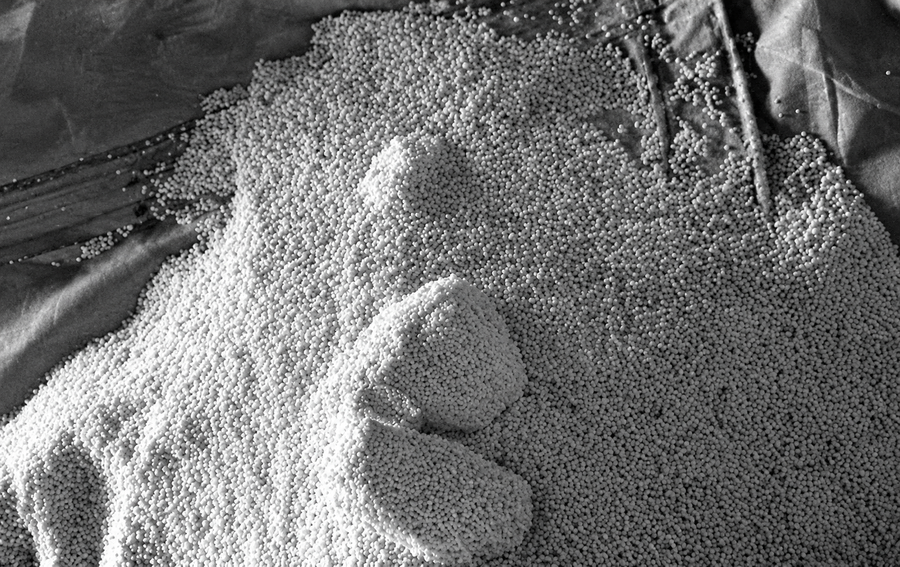
Ammonium sulfate caking rarely has a single cause. Usually, several factors work together. Industry references such as the UNIDO Fertilizer Manual stress uniform crystal size, low fines, low free moisture, and controlled cooling and storage conditions. Those points hint at the main causes.
- Moisture. This is the major factor. Ammonium sulfate moisture can come from the product itself, from the air, or from water entering the packaging. Even a small amount of free moisture can start the process.
- Humidity. Ammonium sulfate is hygroscopic, which means it can take up water from the surrounding air under the right conditions. When particle surfaces absorb moisture, they can partly dissolve. If the air later dries out, the dissolved material recrystallizes and forms bridges between neighboring particles. Crystal growth at these contact points is what locks the particles together.
- Temperature changes. Warm days and cool nights can cause condensation inside bags, containers, or storage areas. Condensation puts liquid water right where the product is sitting, even if the room air is not especially humid.
- Particle size and fines. Fines are very small particles or dust. They increase the contact area between particles, which gives moisture and crystal bridges more places to form. A product with uneven particle size and many fines is often more likely to cake than one with uniform particles.
- Storage pressure. Bulk storage piles and stacked bags put weight on the material underneath. Compaction pushes particles closer together and makes bridges stronger. That is why the bottom bags on a tall pallet stack are often the first to harden.
- Product moisture at loading. This one matters a great deal for exporters and buyers. If the product leaves the plant with too much free moisture, or is still warm when packed, the problem may begin before the shipment even leaves port.
How Humidity Affects Ammonium Sulfate
Hygroscopicity is the tendency of a material to absorb water vapor. Each soluble fertilizer has a humidity level above which it starts to pull moisture from the air. This level is called the critical relative humidity. Scientific literature shows that pure ammonium sulfate has a distinct humidity threshold for hygroscopic growth. However, commercial fertilizer is not always pure, and its behavior can differ depending on formulation, impurities, and temperature. Critical relative humidity also changes with temperature.
Because of this, we do not recommend relying on one universal number such as “keep the warehouse below a fixed percentage of relative humidity.” A safe figure for one product, temperature, and storage setup may not apply to another. Instead, ask your supplier for product-specific storage guidance, and treat the ammonium sulfate COA as a way to confirm moisture content for each batch. The practical lesson is simple. The less the product is exposed to humid air, and the fewer temperature swings it experiences, the lower the risk of caking.
How to Prevent Ammonium Sulfate Caking
If you are wondering how to prevent ammonium sulfate caking, think in three stages: before shipment, during transport, and in storage. Each stage matters, and a weak link in any one of them can undo the work done in the others.
Before Shipment
- Control product moisture. Low free moisture at packing is one of the best defenses.
- Cool the product properly. Packing warm material can create moisture and condensation inside the package.
- Control fines. Screening out dust and very small particles reduces contact area.
- Maintain appropriate particle size. Uniform particles tend to behave better. If you are comparing forms, see our comparison of crystalline vs granular ammonium sulfate.
- Use suitable packaging. Moisture-resistant bags and liners help protect the product. Our guide to ammonium sulfate packaging for export covers this in more detail.
During Transport
- Protect from water. Rain, spray, and wet container floors can all start the process.
- Avoid damaged packaging. Torn bags let humid air in.
- Prevent condensation. Watch for temperature swings and poorly ventilated containers.
- Avoid unnecessary mechanical damage. Rough handling creates fines and can break bags.
In Storage
- Keep bags sealed until you need them. Reseal partly used bags tightly.
- Use pallets. Keeping bags off the floor helps them stay clear of ground moisture.
- Keep product away from direct moisture, such as leaks, wet walls, and open doors during rain.
- Control warehouse conditions. A dry, well-ventilated warehouse with stable storage temperature is ideal.
- Avoid condensation. Do not store product where hot and cold surfaces meet, such as under metal roofs in direct sun.
- Limit stack height. This reduces pressure on the bottom layers, especially for jumbo bags.
- Follow supplier storage instructions. These are the best guide for your specific product.
Good ammonium sulfate storage conditions are not complicated, but they do require consistency. For a wider overview of storage practices across fertilizer types, read our article on storing agricultural fertilizers safely. This article focuses only on what is specific to ammonium sulfate.
Does Caking Mean Ammonium Sulfate Has Lost Its Nutrient Value?

Not necessarily. It helps to separate physical quality from chemical nutrient content. Caking is mainly a physical change. The particles have stuck together, but the nitrogen and sulfur in the product have not simply disappeared. A caked product may still contain its nutrients. That said, we cannot say caking never affects quality. The right answer depends on the extent and the cause. Severe caking can create practical problems with:
- Spreading. Lumps do not spread evenly.
- Feeding equipment. Hard pieces can block hoppers and meters.
- Dissolution. Large lumps dissolve more slowly.
- Uniform application. Uneven particle sizes lead to uneven nutrient distribution.
- Handling. Breaking blocks takes time and creates extra dust.
Also, if the cause was water entering the package, the product may have other problems, such as partial dissolution or contamination. If you are unsure, check the batch records and the ammonium sulfate COA, and consider testing a sample.
Why Does Ammonium Sulfate Cake During Long-Distance Shipping?
For importers, this is often the most important question. Think of the journey as a chain: loading, voyage, unloading, and warehouse. Each step adds its own risks. During loading, any moisture already in the product or packaging travels with it. During the voyage, the cargo may spend weeks in changing climates. Humidity, temperature cycles, and condensation can all build up, especially inside closed holds or containers. The same applies whether the cargo moves in bags, in jumbo bags, or as bulk vessel shipment, although the points of exposure are different. Bulk cargo can be affected at the top surface and at hatch openings, while bagged cargo depends heavily on the quality of the bag and liner.
Compression adds to the problem. Heavy loads in the hold or stacked pallets in a container press particles together over many days. Longer voyages and longer storage duration give the process more time to work. Unloading and warehousing come next. Rain during discharge, wet trucks, or humid port warehouses can undo good work done earlier. Even a short delay at the port can matter if the cargo sits in poor conditions.
Because so many variables are involved, the best defense is planning. Agree on moisture and packaging requirements in advance, request a recent COA, and make sure the receiving warehouse is ready. For a closer look at the product itself, see our page on crystalline ammonium sulfate fertilizer.
Final Thoughts
Ammonium sulfate caking is a common problem, but it is not a mystery. Moisture, humidity, temperature swings, fines, and pressure are the main drivers, and good control at each step of the supply chain can reduce the risk. For buyers, the key is to look beyond the nutrient analysis and ask about moisture, particle size, packaging, and storage guidance before the order is placed. A product that arrives free-flowing and stays that way is easier to handle, easier to apply, and easier to trust.