Ammonium Sulfate Packaging for Export: Bags, Jumbo Bags, and Bulk Vessel Shipment Explained
Ammonium sulfate can be prepared for international shipment in different formats depending on order volume, handling equipment, destination port, and buyer requirements. Getting ammonium sulfate packaging export right matters because bagged product works well for distribution and smaller commercial orders, while jumbo bags and bulk vessel shipment suit larger buyers moving hundreds or thousands of metric tons at a time. Here’s how each format actually works.
Why Does Ammonium Sulfate Packaging Matter for Export?
Ammonium sulfate packaging export decisions aren’t just about getting the product from point A to point B; they directly affect moisture control, caking, handling costs, and how efficiently your cargo moves through the port on both ends. A shipment that’s packed correctly for its destination arrives dry, free-flowing, and ready to use. One that isn’t can arrive caked into a solid block, contaminated with moisture, or held up in customs because the packaging specification didn’t match the buyer’s import requirements.
This matters more for ammonium sulfate specifically because it’s hygroscopic; it absorbs moisture from the air. Whether the product is crystalline or granular, poor packaging or long transit in humid conditions can lead to caking, reduced flowability, and product loss during unloading.
The right packaging format also determines what handling equipment you need at the destination port and how quickly you can turn the product around to your own customers. This is why serious buyers evaluate ammonium sulfate packaging export options alongside price and quality when choosing an ammonium sulfate exporter.
Common Ammonium Sulfate Export Packaging Options
| Packaging Format | Typical Weight | Best For | Handling Requirement |
|---|---|---|---|
| Woven polypropylene bags | 25 kg | Retail distribution, small agricultural buyers, blending in small batches | Manual handling, palletized |
| Woven polypropylene bags | 50 kg | Standard commercial orders, agri-input distributors | Manual or light mechanical handling, palletized |
| Jumbo bags (FIBC) | 500 kg – 1,000 kg | Mid-to-large commercial buyers, fertilizer blenders, warehousing operations | Forklift, crane, or hoist required |
| Bulk vessel shipment | Full cargo hold (typically thousands of MT) | Large-scale importers, national distributors, port-side bulk terminals | Specialized bulk unloading equipment (grabs, conveyors, pneumatic systems) |
Each of these formats serves a different point on the buyer spectrum; from a small distributor restocking retail bags to a national importer clearing an entire vessel at once. Planning your ammonium sulfate packaging export around order size, available unloading infrastructure at the destination port, and how the product will move once it’s in-country usually settles which option makes sense.
What Are Jumbo Bags for Ammonium Sulfate?
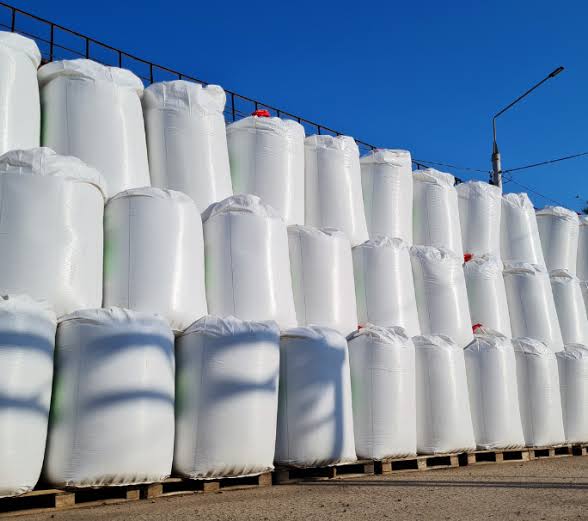
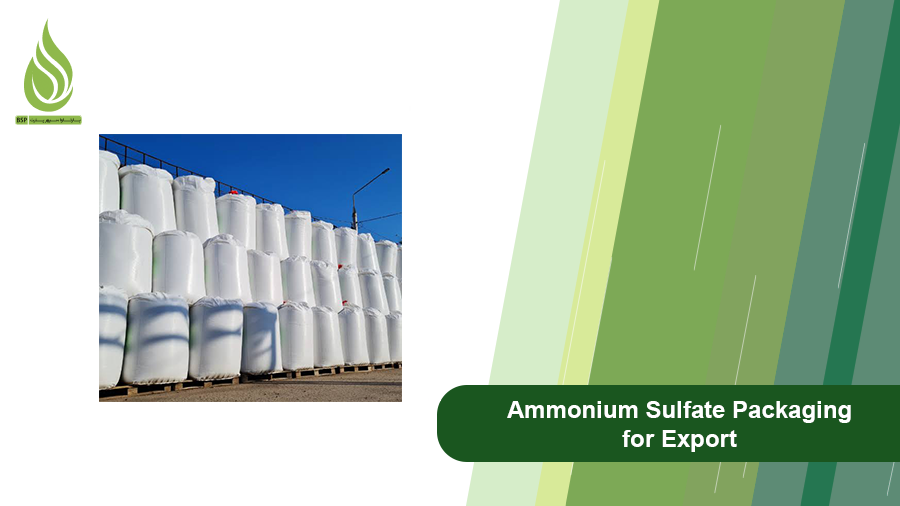
Jumbo bags, also called FIBC bags (Flexible Intermediate Bulk Containers), are large woven polypropylene sacks typically holding 500 kg to 1,000 kg of product each. They sit in the middle ground between small retail bags and full bulk shipment, which is exactly why they’ve become the standard packaging choice for mid-to-large ammonium sulfate orders.
The woven polypropylene construction is what makes jumbo bags practical for export. It’s strong enough to handle the weight and stacking pressure of ocean freight, resistant to tearing during loading and unloading, and when properly UV-stabilized and sealed; offers reasonable protection against moisture during transit. Most jumbo bags used for fertilizer export include an inner liner for additional moisture protection, which matters a great deal for a hygroscopic product like ammonium sulfate.
Jumbo bags load efficiently into standard shipping containers, stack cleanly on pallets, and can be moved with a forklift or crane rather than requiring specialized bulk-handling equipment at the port. This makes them the preferred choice for buyers with decent warehouse infrastructure who aren’t set up for full bulk vessel unloading. Ammonium sulfate jumbo bags are also easier to portion out to downstream customers than a bulk shipment, since each bag is already a manageable, weighed unit.
What Is Bulk Vessel Shipment for Ammonium Sulfate?
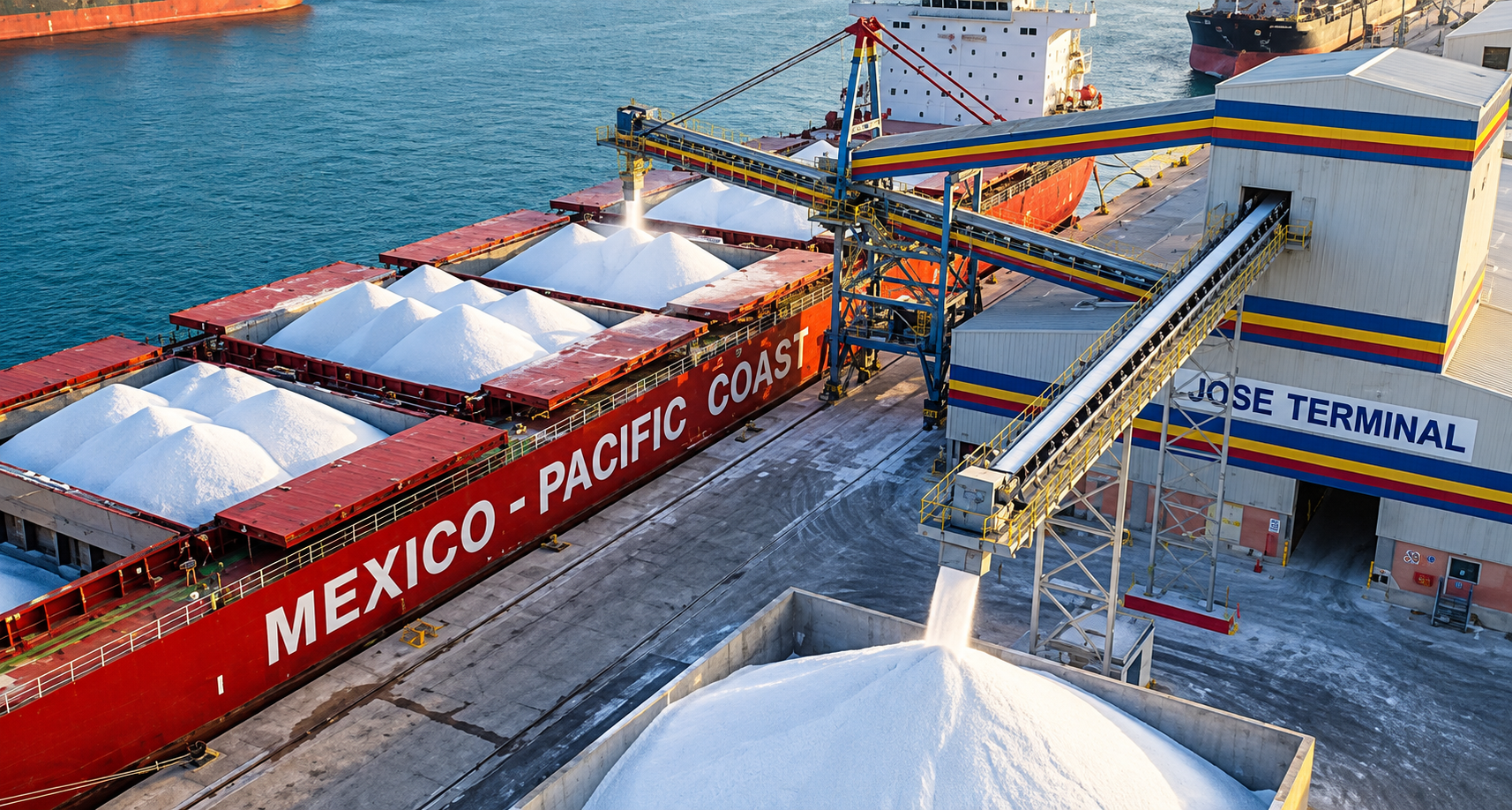
Bulk vessel shipment means the ammonium sulfate is loaded directly into the cargo hold of a bulk carrier; no bags, no containers, just the raw product moved as loose cargo. This is the most cost-efficient way to move large volumes, since it eliminates packaging material costs entirely and maximizes how much product fits into a given amount of cargo space.
This format only makes sense for buyers who have the infrastructure to receive it. Bulk vessel shipment requires port-side unloading equipment, grabs, conveyors, or pneumatic systems, along with warehousing or silo capacity to store the product once it’s off the ship. National fertilizer distributors, large agricultural cooperatives, and port-side bulk terminals are the typical buyers for this format, since they’re moving volumes in the thousands of metric tons per order rather than hundreds.
Freight economics favor bulk shipment heavily at scale: no packaging cost, faster loading and unloading with the right equipment, and better use of vessel capacity per ton of cargo. It does put more responsibility on the buyer’s side to manage moisture and caking after unloading, since there’s no bag or liner offering interim protection once the product is out of the hold.
Bagged vs Jumbo Bag vs Bulk Shipment
Choosing between these three formats comes down to a few practical questions:
- How much are you ordering? Small-to-mid orders (a few tons to a few dozen tons) are almost always handled in 25 kg or 50 kg bags. Mid-to-large orders (tens to a few hundred tons) fit well into jumbo bags. Large-scale orders (thousands of tons) are where bulk vessel shipment becomes cost-effective.
- What unloading equipment do you have at the destination port? Bagged product and jumbo bags can generally be handled with standard forklifts, cranes, or manual labor. Bulk shipment requires specialized unloading infrastructure; if your port or terminal doesn’t have it, bulk isn’t workable regardless of order size.
- How will the product move after it clears the port? If you’re redistributing to smaller buyers, pre-bagged or jumbo-bagged product is easier to manage than a bulk pile that needs re-bagging. If you’re feeding directly into your own silos or a blending plant, bulk streamlines the process.
- How exposed will the product be to moisture during storage? Bags and jumbo bags with proper liners offer built-in protection against moisture absorption and caking. Bulk shipment offers none of that once it’s off the vessel.
There’s no universal “best” format; it’s a function of your order size, infrastructure, and what happens to the product after it arrives. Whichever route you take, this is the core decision at the center of any ammonium sulfate packaging export plan.
Does Packaging Affect Ammonium Sulfate Price Per Ton?
Yes, it does affect Ammonium Sulfate price per ton to a meaningful degree. Packaging materials and labor add cost, and that cost scales inversely with order size; bulk vessel shipment carries no packaging cost at all, jumbo bags add a moderate cost per ton, and small bags carry the highest cost per ton because of the labor and material needed to fill, seal, and palletize thousands of individual sacks. For buyers comparing quotes, it’s worth confirming whether a price is FOB bulk, FOB bagged, or FOB jumbo-bagged, since these aren’t directly comparable. Our dedicated pricing guide covers current FOB figures in more detail.
How Should Ammonium Sulfate Be Prepared for International Shipment?
Regardless of packaging format, a few preparation steps matter for every export order:
- Moisture content verification. The product should be tested and confirmed within acceptable moisture specifications before loading, since moisture drives both caking risk and potential customs issues at the destination.
- Proper sealing. Bags and jumbo bags need to be fully sealed, heat-sealed liners where applicable, to prevent moisture ingress during a multi-week ocean transit.
- Correct palletizing and stacking. For bagged and jumbo-bagged cargo, proper pallet arrangement and stacking height prevent bag damage and uneven container loading.
- Container or hold inspection. Containers or vessel holds should be checked for cleanliness and moisture before loading, since a compromised container can undo careful packaging before the cargo even leaves port.
- Documentation matching the packaging format. Bills of lading, packing lists, and certificates of analysis should clearly state the packaging format, unit weights, and total shipment weight, since discrepancies here are a common source of customs delays.
A supplier that handles these steps consistently, rather than treating packaging as an afterthough, is generally a safer long-term partner for repeat export orders. This is exactly what a well-run ammonium sulfate packaging export process looks like from the outside.
What Should an Importer Ask About Ammonium Sulfate Packaging?
Before finalizing an order, it’s worth getting clear answers on a handful of specifics:
- What packaging formats does the supplier actually offer, and do they match your destination port’s unloading capability?
- What is the bag material and liner specification, and is it rated for your shipment’s transit time and climate?
- What is the maximum stacking height and pallet configuration for bagged or jumbo-bagged cargo?
- Does the quoted price reflect bulk, bagged, or jumbo-bag packaging?
- Can the supplier provide a certificate of analysis confirming moisture content at the time of loading?
- What is the supplier’s track record shipping to your region; for example, if you’re an Ammonium Sulfate Supplier Afghanistan or working an Import Ammonium Sulfate Oman route, has this exporter handled that corridor before?
These questions apply whether you’re a first-time importer or an established Ammonium Sulfate Supplier Tajikistan sourcing a new supply line; packaging specifics are easy to overlook until a shipment arrives damaged or delayed, and getting the ammonium sulfate packaging export details right up front avoids most of those problems entirely.

Frequently Asked Questions
Ammonium sulfate is typically exported in 25 kg or 50 kg woven polypropylene bags for smaller orders, jumbo bags (FIBC) of 500 kg to 1,000 kg for mid-to-large orders, or as bulk vessel shipment for large-scale buyers with the infrastructure to receive it.
Jumbo bags, or FIBC bags, move mid-to-large ammonium sulfate orders, typically 500 kg to 1,000 kg per bag, without requiring the specialized unloading equipment that full bulk vessel shipment needs. They’re a common choice for fertilizer blenders and warehousing operations with forklift or crane access.
Yes. Bulk vessel shipment is common for large-scale orders, typically in the thousands of metric tons, and is the most cost-efficient format since it eliminates packaging costs. It requires the buyer to have port-side bulk unloading equipment and adequate storage capacity.
Yes. Packaging materials and labor add cost per ton, and that cost is highest for small bags, moderate for jumbo bags, and effectively zero for bulk shipment. It’s important to confirm whether a quoted price is FOB bulk, bagged, or jumbo-bagged before comparing supplier quotes.
For very large orders (thousands of metric tons), bulk vessel shipment is generally the most cost-effective option, provided the destination port has the necessary unloading infrastructure. For large but not vessel-scale orders, jumbo bags offer a practical middle ground.
Preparation includes verifying moisture content, properly sealing bags or liners, correctly palletizing and stacking bagged cargo, inspecting containers or vessel holds before loading, and ensuring shipping documentation accurately reflects the packaging format and weights.
Ready to place an order or discuss packaging options for your region?