Ammonium Sulfate Price Per Ton: What Determines FOB Pricing (and How to Get an Accurate Quote)
If you are checking the ammonium sulfate price per ton in Q3 2026, there is no single global price. Recent public benchmarks show standard ammonium sulfate around $182.50/MT FOB China and about $307/MT FOB Northwest Europe, while Iranian offers can differ because of product form, delivery basis, packaging, freight, and local market conditions. These figures are market references, not BARNO’s binding quotation.
What Factors Actually Move Ammonium Sulfate Price Per Ton?
The price quoted by an ammonium sulfate supplier is not determined by the fertilizer’s nutrient content alone. Production costs, product form, packaging, order size, freight, port conditions, currency movements, and the delivery term can all change the final number. This is particularly important when comparing offers from different countries. A low FOB price may not be the cheapest option after freight and other costs are added, while a higher-looking quotation may include services or specifications that another supplier does not.
For international buyers, the most useful approach is to compare quotations on the same basis: the same product specification, quantity, packaging, destination, and Incoterms.
Natural Gas and Feedstock Cost
Energy and feedstock costs can influence fertilizer production economics. Nitrogen fertilizers are closely connected to the cost of producing nitrogen-based intermediates, while sulfur-related costs can also affect the economics of products containing sulfur.
For Iranian producers, access to domestic energy and industrial feedstocks can support a competitive production cost structure. However, it is not accurate to assume that every Iranian ammonium sulfate quotation will automatically be cheaper than every international alternative. Export costs, market conditions, currency movements, logistics, and product specifications still matter.
The natural gas feedstock cost is therefore one part of the wider production-cost picture rather than a direct formula for calculating the selling price.
Crystalline vs Granular Pricing Gap
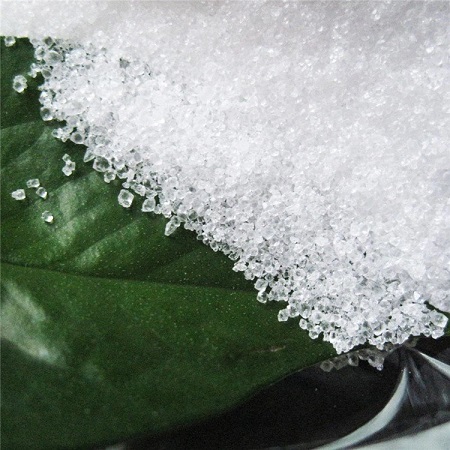
The physical form of ammonium sulfate can affect its price. Crystalline ammonium sulfate and granular ammonium sulfate can have different production, handling, particle-size, and packaging requirements. Buyers should therefore avoid comparing a crystalline product with a granular product as if they were identical commodities.
For example, a buyer looking for material for direct agricultural application may have different requirements from a fertilizer blender that needs a particular particle size and physical quality for mechanical blending. When comparing quotations, check:
- Product form
- Particle size
- Nutrient specification
- Moisture and other agreed quality parameters
- Packaging
- Order quantity
- Delivery term
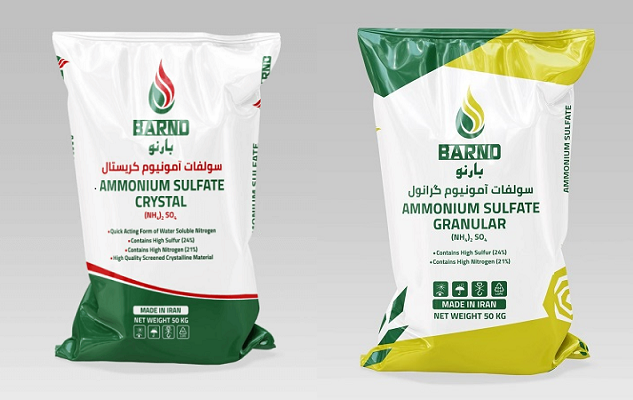
For buyers interested specifically in crystalline material, BARNO Ammonium Sulfate can be reviewed alongside the quotation requirements.
Packaging Format: 25 kg Bags, Jumbo Bags, or Bulk Vessel
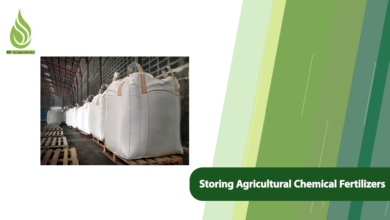
Packaging can have a noticeable effect on the ammonium sulfate price per ton. Bagged material requires packaging materials, filling, handling, storage, and additional loading operations. Jumbo bags can offer a different balance between handling efficiency and packaging cost. For very large orders, bulk vessel shipment can reduce the need for individual packaging, but it requires suitable port and handling arrangements.
A buyer should therefore specify the required format before asking for a firm quotation. Common options can include:
| Packaging format | Typical advantage | Main pricing consideration |
|---|---|---|
| Small bags | Easy distribution and handling | Higher packaging and handling cost per ton |
| Jumbo bags | Efficient for larger commercial orders | Requires suitable lifting and handling equipment |
| Bulk vessel | Suitable for very large shipments | Depends heavily on vessel, port, and loading arrangements |
The actual available packaging should always be confirmed with the supplier before an order is placed.
One of the biggest mistakes buyers make is comparing prices with different delivery terms. An FOB price generally relates to the seller’s obligations up to the agreed FOB delivery point, while CFR and CIF quotations also incorporate ocean freight, with CIF additionally including the seller-arranged insurance required under that term.
This means an FOB quotation and a CIF quotation should not be compared as if they represent the same cost. For example, a supplier may quote an attractive ammonium sulfate FOB price from the port of loading, but the buyer still needs to consider ocean freight and other destination-side costs when calculating the total landed cost.
Freight, Port, and Incoterm Chosen
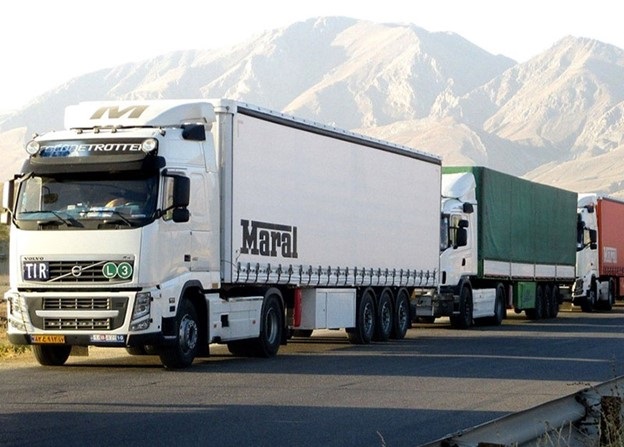
For Iranian exports, the port and shipping route also matter. FOB Bandar Abbas may be relevant for a buyer sourcing Iranian fertilizer for an international shipment, but the exact logistics cost will depend on the destination, vessel availability, shipment volume, and market conditions. If you want to understand the difference between FOB, CFR, and CIF in more detail, see our guide to FOB vs CFR vs CIF when buying fertilizer from the Middle East.
Order Volume and MOQ Discounts
Quantity can also influence the price offered by a supplier. A buyer ordering a large bulk shipment may receive a different price per ton from a buyer requesting a smaller packaged order. This is because production planning, packaging, loading, documentation, and logistics can be handled more efficiently at larger volumes.
The MOQ, or minimum order quantity, should therefore be discussed before comparing supplier offers. For example, two suppliers may appear to offer similar prices, but one may require a much larger order to provide that price. Another may offer smaller quantities at a higher price per ton. For a fair comparison, always compare:
Price + quantity + specification + packaging + delivery term
rather than looking at the price alone.
Ammonium Sulfate Price by Region
There is no single ammonium sulfate price in Iraq or ammonium sulfate price in Europe because regional prices depend on product grade, import costs, freight, duties, currency, local supply, and demand. Current public market references illustrate this difference. ECHEMI reported standard caprolactam-grade ammonium sulfate at approximately $184.50/MT FOB China on August 31, 2026, compared with approximately $307/MT FOB Northwest Europe. It also reported Northwest Europe granular caprolactam material at about $390/MT FOB.
These are useful market benchmarks, but they should not be presented as direct Iranian supplier quotations.
| Market | What mainly drives the buyer’s final cost |
|---|---|
| Iraq | Iranian or regional supply price, border/logistics costs, quantity, packaging, and local distribution |
| Central Asia | Freight route, land or multimodal transport, border costs, product form, and order size |
| India | Ocean freight, import conditions, supplier origin, grade, and local demand |
| Europe | Global benchmark prices, freight, import costs, product grade, and regional supply |
| UK | International price, ocean freight, import costs, currency, and domestic distribution |
For this reason, a buyer looking for an Iranian ammonium sulfate price should request a quotation for the exact destination and shipment conditions rather than relying on a general internet price. Public market data also shows that ammonium sulfate prices can move significantly over relatively short periods. For example, one tracked China FOB standard series moved from $275/MT in May 2026 to $182.50/MT by August 20, showing why an old quotation should not be treated as a current market price.
How Does BARNO’s FOB Price Compare?
BARNO’s final export price should be quoted according to the buyer’s required product, quantity, packaging, port, and delivery terms rather than presented as a universal fixed price. This approach allows buyers to receive a quotation based on their actual requirements. For product specifications and available ammonium sulfate options, visit BARNO Ammonium Sulfate.
How to Get an Accurate, Binding Ammonium Sulfate Quote
The fastest way to obtain a useful quotation is to give the supplier enough information to calculate the shipment correctly. A buyer should normally provide the following:
- Required quantity: State the approximate quantity in metric tons. If you are planning recurring purchases, mention the expected monthly or annual volume as well.
- Product form: Specify whether you need crystalline or granular ammonium sulfate. If you require a specific particle size or physical specification, include it in the inquiry. You can compare the two forms in our guide to Granular Ammonium Sulfate and crystalline ammonium sulfate.
- Packaging: Tell the supplier whether you require bags, jumbo bags, or bulk shipment. If a specific bag size is required, include it in the request.
- Destination port: For an FOB quotation, identify the intended port of loading. For CFR or CIF pricing, provide the destination port so the supplier can calculate the relevant freight.
- Incoterm: State whether you want an FOB, CFR, CIF, or another agreed delivery term. This prevents suppliers from quoting different cost structures that are difficult to compare.
- Delivery schedule: Mention when you need the shipment. Freight availability and vessel schedules can affect the final quotation.
- Required documentation: If your company or destination requires specific quality or shipping documents, mention them when requesting the quotation.
Once these details are available, the supplier can prepare a quotation that is much closer to the buyer’s actual purchasing conditions. For international buyers looking for a reliable source, Ammonium Sulfate Exporter provides more information about BARNO’s export supply and capabilities.
Ammonium Sulfate Price FAQ
The market has not followed one simple direction throughout 2026. Public price series show significant movement during the year. For example, tracked China FOB standard ammonium sulfate moved from around $275/MT in May to $182.50/MT by August 20. Other markets have remained substantially higher, particularly for granular products in Northwest Europe. The direction of the ammonium sulfate market price in 2026 depends on supply, demand, production economics, freight, trade conditions, and regional market balance. Buyers should therefore use recent benchmarks rather than an old quotation.
An FOB price and a CFR price use different delivery arrangements. With FOB, the quotation is based on the agreed FOB delivery point, while the buyer generally arranges the main ocean freight. With CFR, the seller arranges and pays for the main carriage to the named destination port, while the allocation of risk and other responsibilities follows the applicable Incoterm. Because freight is included differently, an FOB quotation can appear lower than a CFR quotation without necessarily being cheaper overall.
There is no universal packaging charge that applies to every ammonium sulfate shipment. The effect depends on the package type, material, size, quantity, filling process, handling, and loading requirements. Small bags generally involve more packaging and handling per ton than a large bulk shipment. Jumbo bags sit between packaged and bulk logistics in terms of handling requirements. For this reason, packaging should be specified before requesting a firm ammonium sulfate price per ton.
Yes. Crystalline and granular ammonium sulfate can have different production and handling requirements, and their market prices can differ. Current market data illustrates that physical form can matter. For example, ECHEMI listed Northwest Europe standard caprolactam ammonium sulfate at about $307/MT FOB on August 31, 2026, while its granular caprolactam assessment was about $390/MT FOB. These figures are market references, not universal prices for every supplier. Buyers should compare products with the same specification and physical form before deciding which quotation is more competitive.
Regional prices reflect more than the production cost of the fertilizer. Freight, port charges, import requirements, local supply and demand, currency exchange rates, taxes or duties, packaging, and distribution can all affect the final price. This is why the ammonium sulfate price in Iraq may differ from the price paid by a buyer in Europe or India, even when both buyers purchase a similar product.
Urea and ammonium sulfate are different fertilizers, so their prices do not move in a fixed one-to-one relationship. However, they compete in parts of the nitrogen fertilizer market, and buyers may compare their cost per unit of nutrient. Changes in the wider fertilizer commodity cycle can therefore influence purchasing decisions across both products. Production costs, nitrogen supply, agricultural demand, and regional availability can also affect their relative pricing.
Compare quotations on the same basis. Check the product form, N-S content, quantity, packaging, delivery term, port, freight assumptions, and included documentation before comparing the price per ton. A quotation of $X/MT FOB is not directly comparable with $Y/MT CIF unless the additional freight, insurance, and other costs are taken into account.
Get an Accurate Ammonium Sulfate Quote
The most useful ammonium sulfate price is not simply the lowest number you find online. It is a quotation based on the right product, quantity, packaging, destination, and delivery term. Market benchmarks can help buyers understand the general direction of the market, but a firm purchase decision requires a supplier quotation based on the actual shipment. For bulk supply, contact BARNO with your required volume, product form, packaging, destination port, and preferred Incoterm.