Why Burning Crop Residues on Your Farm Is Damaging Your Soil?
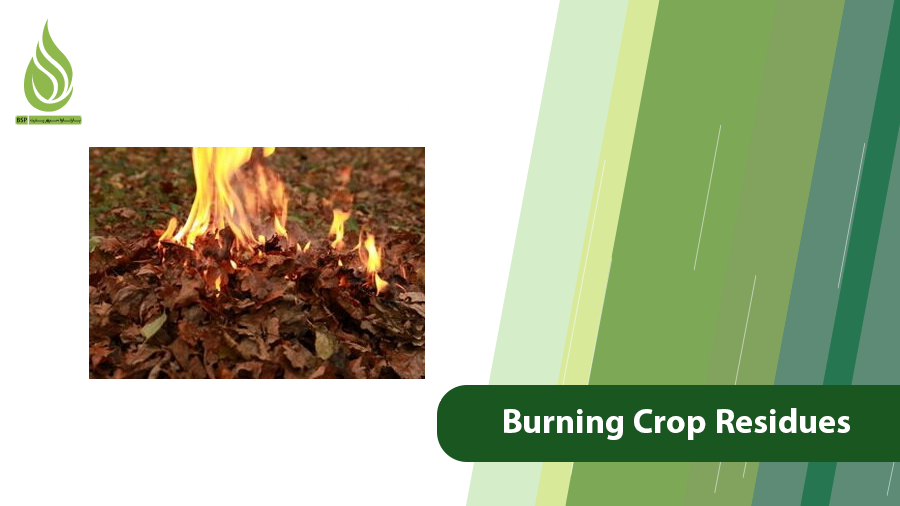
In many traditional farming cultures, burning crop residues, setting fire to leaves, branches, and leftover plant material at the end of harvest, has been a routine act. It was widely believed that torching the fields cleaned up the land, killed pests, and enriched the soil with nutritious ash. But this idea couldn’t be further from the truth.
Burning crop residues does nothing beneficial for your soil. In fact, it inflicts lasting damage on soil structure, destroys the microbial life your crops depend on, and creates serious environmental problems. In this article, we’ll examine exactly what makes burning crop residues so harmful and, more importantly, explore five smart, profitable alternatives that turn field waste into a resource instead of smoke and ash.
Burning Crop Residues Is Against the Law
Before we get into the agronomic reasons, it’s worth knowing that in many parts of the world—including Iran and the United States—openly burning crop residues is illegal. Under agricultural waste management directives and specific environmental laws, setting fire to plant remains is a punishable offense. The reasoning is simple: the thick smoke produced pollutes the air, contributes to respiratory illness, adds to greenhouse gas emissions, and endangers public health. This legal framework exists because the practice is inherently destructive, not because it’s a reasonable management tool.
Why Do Farmers Still Burn Crop Residues?
Farmers who burn crop residues usually have a few motives. The most common is simply to clear the land quickly after harvest. Others believe—incorrectly—that the fire eliminates overwintering pests and diseases. Some lack the equipment to chop or incorporate the heavy residue into the soil, so a match feels like the easiest solution. While the method is fast, the hidden costs are high: reduced soil fertility, higher fertilizer bills in the following seasons, and long-term degradation of the field.
What Actually Happens When You Burn Crop Residues? The Real Damage
Let’s break down the specific harms of burning crop residues so you can see exactly what’s lost when a field goes up in flames.

1. Destruction of Organic Matter and Soil Structure
Leaves, stalks, and leftover plant parts are the primary source of carbon and organic matter for your soil. When you set them on fire, the carbon they contain is released into the air as carbon dioxide instead of being incorporated into the soil. The consequences include:
- Loss of 80 to 95 percent of the potential soil organic matter.
- Disrupted soil aeration and reduced water-holding capacity.
- Increased risk of nutrient leaching from the soil.
- Accelerated soil erosion. Without organic matter, soil particles don’t bind together, and wind and water quickly carry them away. This forces you to apply more fertilizer and more irrigation the next season just to compensate for the weakened soil.
In short, burning crop residues steals your soil’s future productivity.
2. Death of Beneficial Soil Microorganisms
Healthy soil is alive. It teems with bacteria, beneficial fungi, earthworms, and countless other organisms that break down organic matter and release plant-available nutrients. The heat from a fire penetrates several centimeters into the ground, and that heat is lethal. Burning crop residues can wipe out massive populations of these beneficial microbes, leaving the soil “dead.” Without them, decomposition halts, and your plants become entirely dependent on synthetic fertilizers for their nutrition. The smoke and ash also create dust and pollution that further harm the small creatures and insects essential for natural processes like photosynthesis and pollination.
3. Loss of Nitrogen and Sulfur, Plus Soil Alkalinization
This is one of the most costly misconceptions among farmers who burn crop residues. Many think the ash left behind is rich in plant nutrients. While it’s true that ash can contain concentrated potassium, calcium, and magnesium, it’s what disappears that hurts you most. Nitrogen, present in the leaves and stalks, volatilizes during burning and escapes as ammonia gas. Sulfur is also lost, turning into sulfur dioxide and drifting away. You are literally burning up the most expensive components of your future fertilizer and watching them disappear into the atmosphere.
To make matters worse, the ash that remains is strongly alkaline. When this ash mixes into the soil, it raises the soil pH. In already alkaline or calcareous soils—common in many farming regions, including much of Iran and the Middle East—this pH spike further locks up essential micronutrients like iron and zinc. Plants then develop chlorosis (yellowing leaves), become weaker, and are more susceptible to disease.
So the cycle created by burning crop residues looks like this:
Burning → Weakened soil → Slower growth → More fertilizer required → Higher costs
To correct the soil pH after burning, you’ll need an acidifying amendment. That’s where ammonium sulfate fertilizer comes in. Ammonium sulfate contains 21% nitrogen and 24% sulfur—exactly the two nutrients that your fire just sent into the sky. When applied, it lowers the pH in the root zone, unlocking iron, zinc, and phosphorus, while simultaneously replenishing the nitrogen and sulfur your soil desperately needs. For farmers who need a reliable, high-purity ammonium sulfate, Barno crystalline ammonium sulfate, fills that gap.
4. Air Pollution and Health Hazards
The smoke from burning crop residues is loaded with fine particulate matter (PM2.5 and PM10), carbon monoxide, and other toxic compounds. This pollution doesn’t just stay in the field; it spreads to neighboring communities, causing respiratory problems for farmers, their families, and anyone downwind. Livestock grazing nearby are also affected. The smoke can settle on the leaves of sensitive plants and ornamentals, blocking photosynthesis and reducing growth. On a larger scale, the pollutants contribute to ozone layer damage, acid rain, and a cascade of public health issues, especially for the elderly and those with pre-existing lung conditions.
5. Fire Hazard and Root Damage

Uncontrolled fires are a constant risk when burning crop residues. Even when the fire doesn’t spread to adjacent property, the intense heat near fruit trees or young orchards can scorch surface roots and severely weaken or kill the trees. The damage may not be immediately visible, but a tree with burned roots will struggle, produce less, and become vulnerable to secondary problems over time.
5 Smart, Profitable Alternatives to Burning Crop Residues
So if you can’t burn, what should you do with all those leaves, branches, and stalks? The answer is to turn that “waste” into black gold for your soil. Here are five proven alternatives.
1. Composting (Making High-Quality Organic Fertilizer)
Composting is the simplest and most effective way to manage plant residues. By decomposing leaves, shredded branches, and other materials under controlled conditions, you create a rich, odor-free, complete organic fertilizer. Compost increases soil organic matter, improves structure, provides slow-release nutrients, boosts microbial activity, and enhances water absorption.
To make compost, you need a dedicated area or a large, perforated bin. Pile a layer of chopped brown (dry leaves, wood chips) and green (fresh trimmings) material about three feet high. Cover with a thin layer of soil or well-rotted manure. Keep the pile moist—like a wrung-out sponge—and turn it every few weeks. In three to six months, the material will be dark, crumbly, and earthy-smelling. That’s your leaf mold compost, ready to feed your next crop.

2. Mulching
Mulching is simply spreading a thin layer of shredded plant material on the soil surface around your crops or trees. Chop dry leaves and small branches with a mower or wood chipper, then apply a light layer—never so thick that it blocks air or sunlight. Mulch conserves soil moisture (cutting evaporation by up to 50%), suppresses weeds, moderates soil temperature, and slowly feeds the soil as it breaks down. Chopped woody material adds stable carbon and extends the benefit over several seasons.
3. Feeding Livestock (When Possible)
Dried leaves from certain trees—such as mulberry or locust—can be a valuable source of roughage for livestock. Using them as feed reduces the waste pile and cuts your animal feed costs. However, caution is critical: some leaves are toxic to animals, and any material that has been treated with pesticides or is heavily diseased must be avoided. Always confirm the safety of the species before feeding.
4. Selling or Donating Residues to Greenhouses and Mushroom Growers
Many greenhouse operators and mushroom cultivators need organic matter, decomposed leaves, or dry plant material for growing media. Selling your field residues not only clears the land but brings in extra income. As with livestock feed, you must ensure the material is free of dangerous pathogens. Contaminated residues can transfer disease to a new environment, so never pass on material from infected fields.
5. Trench Composting

In orchards, a traditional method involves digging trenches or pits around trees during fall or winter and filling them with organic material mixed with mineral fertilizers. You can place your partially decomposed leaves and residues into these trenches. Over the dormant season, soil microbes break down the material, and the nutrients become available to the tree roots in spring. This is a targeted way to use organic waste while fertilizing your trees at the same time.
When Should You Avoid Reusing Crop Residues?
There is an exception to every rule. If your leaves, branches, or stalks are severely infected with resistant fungal diseases or systemic viruses—such as heavy powdery mildew or certain viral infections—composting them in a standard pile may not kill the pathogens. In these rare cases, the safest method is to bury the diseased material deeply, at least 20 inches below the surface, so it decomposes away from the crop root zone and doesn’t re-infect the next season’s plants.
Break the Burning Cycle and Build Your Soil
Burning crop residues might seem like a shortcut, but it’s a trap. Every fire reduces your soil’s organic matter, kills the microbial workforce, vaporizes valuable nitrogen and sulfur, and forces you into a cycle of increased chemical inputs. The alternatives—composting, mulching, feeding livestock, selling to growers, or trench composting—all turn a perceived waste problem into a soil-building advantage.
And when soil pH does become a problem, whether from past burning or natural alkalinity, using a targeted amendment like ammonium sulfate helps correct the balance while delivering the nitrogen and sulfur your crops missed. Stop burning crop residues and start feeding your soil. Your yields, your wallet, and the air you breathe will all be better for it.