Fertilizing One-Year-Old Saplings: Guide for Giant, Healthy Growth
If you want your young tree to grow into a towering, productive specimen within just a few years, the most critical window of opportunity is the first twelve months after planting. Fertilizing one-year-old saplings correctly builds the deep, resilient root system and sturdy framework that will support decades of healthy growth. Neglect this phase, and the tree may struggle along; handle it with precision, and you will watch it transform into a giant.
This guide will walk you through exactly why fertilizing one-year-old saplings is so important, which nutrients your young tree needs at each growth stage, and how to apply them safely. You’ll receive a practical, season-by-season program.
Why Fertilizing One-Year-Old Saplings Is the Foundation of Future Success
A one-year-old sapling operates with almost no reserves. Everything it requires to build roots, leaves, and stems must be absorbed from the soil right now. When you commit to properly fertilizing one-year-old saplings, you accomplish several essential things at the same time:
- Building a deep, resilient root system. During the first year, the majority of the sapling’s energy moves underground. Roots that encounter the right balance of nutrients will penetrate deeply, anchor the tree securely, and access moisture during periods of drought. Poor nutrition leads to shallow roots, and shallow roots produce a tree that struggles whenever conditions turn harsh.
- Fueling rapid, balanced top growth. Once root establishment is underway, the sapling pushes out new leaves and branches. This vegetative surge depends entirely on macronutrients, especially nitrogen, phosphorus, and potassium, plus a full suite of trace elements. Without these, growth can stall completely. You can take a look at our guide to seedling fast growth, for more information.
- Developing natural stress resistance. Well-nourished saplings produce thicker cell walls and more defensive compounds. They withstand cold snaps, heat waves, wind, and pest attacks far more effectively than underfed plants.
- Creating a lasting growth memory. Research demonstrates that trees receiving optimal nutrition during year one exhibit stronger, more consistent growth habits for years afterward. The early investment compounds annually.
Skipping or guessing at fertilizing one-year-old saplings often results in stunted, vulnerable trees that lag behind schedule. On the other hand, a measured, stage-appropriate program wakes up the tree’s full potential from the very beginning.
A Season-by-Season Program for Fertilizing One-Year-Old Saplings
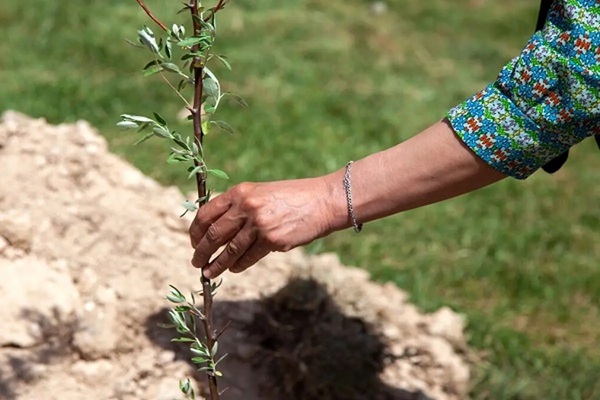
A one-year-old sapling is in a critical growth stage. During this window, it works hard to expand its roots and push out vegetative growth. At this age, any nutrient shortage weakens development and reduces the plant’s ability to handle environmental stress. On the other hand, over-fertilizing can also damage and cause sapling dry out. The timing and method for fertilizing a one-year-old sapling depend on the type of tree, local climate conditions, soil type, and the specific fertilizer being used.
Pre-Planting Soil Preparation (Fall or Early Winter)
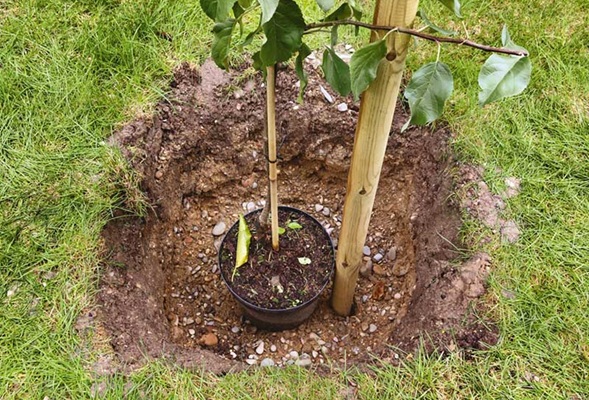
The best fertilizing one-year-old saplings program begins before the tree goes into the ground. This step builds a rich, well-structured planting environment that will feed young roots for months.
- Humic acid: Mix 50 to 100 grams of humic acid into the backfill soil for each planting hole. This material enhances nutrient uptake, improves soil water-holding capacity, and stimulates beneficial microbial activity around developing roots.
- Well-rotted organic matter: Replace 30 to 50 percent of the soil volume in the hole with fully decomposed compost, vermicompost, or aged cattle or sheep manure. Never use fresh manure; it can burn tender roots and introduce harmful pathogens.
- Base NPK: If a soil test reveals general deficiencies, blend 50 to 100 grams of a balanced complete fertilizer (such as 10-10-10) per hole into the surrounding soil mix. Always follow label instructions and soil test guidance.
A crucial rule when fertilizing one-year-old saplings at planting time: never place concentrated chemical fertilizers, especially phosphorus and potassium, directly against the roots. This can cause serious root burn. Instead, incorporate them evenly throughout the backfill. You can learn more about planting seedlings correctly, in our guide.
Spring Growth Kick-Start (Late Winter to Early Spring)
As buds swell and the first leaves appear, the young tree demands accessible nitrogen for vegetative explosion and phosphorus to fuel root expansion.
- Nitrogen and phosphorus feed: Apply a nitrogen-rich fertilizer together with phosphorus. An NPK product with a higher first number (for example, 20-10-10) works well, or separate nitrogen and phosphorus sources timed together. This is the moment when fertilizing one-year-old saplings produces its most visible impact on top growth.
- Humic acid or seaweed extract: A complementary dose of humic acid or liquid seaweed further stimulates root function and stress tolerance during the spring transition.
Apply these first nutrients as soon as the soil can be worked and the sapling shows clear signs of life.
Late Spring Boost (Mid to Late Spring)
By late spring, the sapling is in full vegetative swing. Shoots are lengthening, new leaves are expanding, and the central stem is thickening. Continue fertilizing one-year-old saplings with a blend that supports structural strength and deep greening.
- Nitrogen, potassium, and micronutrients: A feed containing nitrogen, potassium, and essential trace elements, iron, zinc, manganese, and boron, keeps leaves deeply green and stems sturdy. Potassium helps regulate water movement and reinforces cell walls, while micronutrients prevent hidden hungers that limit overall quality.
- Spacing between applications: Space granular or liquid feeds four to eight weeks apart throughout the growing season, adjusting for rainfall, soil type, and how the sapling responds to the previous application.
Autumn Hardening (September to October)
In fall, the purpose of fertilizing one-year-old saplings shifts completely from growth to preparation. The tree needs help storing reserves and hardening off for winter.
- Phosphorus and potassium: These two elements encourage deeper root penetration, strengthen woody tissues, and significantly improve frost resistance. A low-nitrogen autumn formula (such as 5-15-15) is ideal.
- Organic top-dressing: A layer of well-rotted compost or aged manure slowly releases nutrients and insulates the soil over the cold months.
- Time it right: Apply autumn fertilizer at least three to four weeks before the first hard frost. Late nitrogen applications at this stage are dangerous; they push soft new growth that will be killed by freezing temperatures, setting the tree back badly.
How Much Fertilizer Should You Use When Fertilizing One-Year-Old Saplings?
Young root systems are extremely delicate. The golden rule when fertilizing one-year-old saplings is to slightly under-dose and observe carefully rather than risk burning. The following amounts are safe, research-backed starting points for a single one-year-old sapling, divided across the season into multiple small feedings:
- Nitrogen (N): 20 to 30 grams total annually
- Phosphorus (P₂O₅): 10 to 20 grams total annually
- Potassium (K₂O): 15 to 25 grams total annually
These figures assume moderate soil fertility. On poor, sandy soils, move toward the higher end; on rich, loamy soils, stay conservative. Fruiting saplings often benefit from slightly more nitrogen, while ornamental types thrive on a more balanced ratio. Always water deeply after each granular application to dissolve the fertilizer and carry it into the root zone without concentrating it against the tender bark.
10 Practical Tips for Safely Fertilizing One-Year-Old Saplings
- Start with a soil test. You cannot know your soil’s pH or nutrient reserves without one. Testing guides every decision when fertilizing one-year-old saplings and prevents wasteful, damaging over-application.
- Adjust pH if needed. Most saplings grow best in a near-neutral pH of 6.0 to 7.0. Alkaline soils lock up iron, zinc, and manganese. Using a sulfur-containing fertilizer becomes a strategic advantage in these conditions.
- Never fertilize a stressed sapling. If the young tree is wilting, heat-stressed, frost-damaged, or battling pests, resolve the stress first. Adding fertilizer to a struggling plant only adds pressure and can cause further decline.
- Keep fertilizer away from the trunk. Spread nutrients evenly across the root zone, which extends roughly to the drip line of the expanding canopy. Concentrating granules at the base can scorch the bark.
- Water deeply after feeding. This dissolves nutrients fully and prevents harmful salt buildup near sensitive root tips.
- Apply foliar sprays during cool hours. If using foliar micronutrients, spray in the early morning or late evening for maximum absorption and zero leaf burn.
- Observe growth indicators regularly. Leaf color, shoot length, and overall vigor reveal how well your fertilization program is working. Pale leaves or sluggish growth may signal a need for adjustment.
- Start with less. When in doubt about the exact amount, always begin at the lower end of the recommended range. You can gradually increase based on the sapling’s response.
- Mulch to support fertilization efforts. A two- to three-inch layer of organic mulch around the tree conserves moisture, moderates soil temperature, and suppresses weeds that compete for nutrients.
- Keep records. Note what you apply, when, and how the sapling reacts. Over time, this diary becomes your most valuable tool for perfecting your approach to fertilizing one-year-old saplings.
Turning Young Saplings into Giants Year After Year
Successful fertilizing one-year-old saplings is not complicated, but it rewards those who handle the details with care. Prepare the soil before planting, feed strategically with nitrogen and phosphorus in spring, reinforce strength with potassium and micronutrients in late spring, and switch to hardening nutrients in the fall. Keep amounts conservative, water them in thoroughly, and always pay attention to what the tree is communicating through its growth and leaf color.
When you look back a few years from now at a vigorous, high-yielding tree, you will be able to trace its success directly to the thoughtful nutrition you provided during that critical first season. Give your sapling the foundation it deserves, and it will repay you with decades of powerful, healthy growth.