Ammonium Sulfate vs. Potassium Sulfate for Soil Amendment
Every growing season, farmers face a critical decision: which fertilizer will deliver the best results for their soil, their crop, and their bottom line. Among the many options, two sulfate-based fertilizers stand out for their versatility and proven performance, ammonium sulfate and potassium sulfate. The debate of Ammonium Sulfate vs. Potassium Sulfate is not about one being universally better; it’s about understanding their completely different roles in the field. Both names share the word “sulfate,” and both supply essential sulfur, but they serve fundamentally different purposes. One is a nitrogen powerhouse that also corrects alkaline soil; the other is a premium potassium source that elevates fruit quality and stress resistance.
In this guide, we’ll settle the Ammonium Sulfate vs. Potassium Sulfate question by comparing them side by side, explaining exactly what each one does, and helping you determine when to use which—or, more often, how to use both in a balanced fertility program. Whether you’re managing field crops, orchards, or vegetable fields, a clear understanding of these two fertilizers will sharpen your decision-making and boost your yields.
What Are Sulfates, and Why Do They Matter in Agriculture?
In chemistry, a sulfate is any compound containing the sulfate anion (SO₄²⁻)—a central sulfur atom surrounded by four oxygen atoms. Sulfates occur naturally as mineral salts and can also be manufactured through controlled chemical reactions. They fall into several categories: inorganic sulfates (like ammonium sulfate and potassium sulfate), metallic sulfates (like copper sulfate and iron sulfate), and organic sulfates found in biological molecules.
Sulfates have wide industrial use, but in agriculture, they are prized for a specific set of jobs. Sulfate fertilizers dissolve readily in water, making their nutrients immediately available to crops. They provide sulfur—an essential plant nutrient—and, depending on the partner cation, they also deliver nitrogen, potassium, calcium, or magnesium. Additionally, some sulfate fertilizers influence soil pH, which is a game-changer in regions where alkaline soils lock away vital nutrients.
Potassium Sulfate Fertilizer: Features and Agricultural Uses
Potassium sulfate (K₂SO₄) is a concentrated potassium source, typically containing around 50 percent potassium (K₂O equivalent) and 18 percent sulfur. Potassium is a macronutrient that regulates water movement, activates enzymes, and orchestrates the transport of sugars and starches within the plant. When you apply potassium sulfate, you’re investing directly in crop quality and resilience.

Key uses of potassium sulfate in the field include:
- Enhancing crop quality: Potassium drives sugar accumulation in fruit, improves color development, and firms up texture. For high-value orchard crops, grapes, tomatoes, and melons, adequate potassium is non-negotiable for premium market quality.
- Building stress tolerance: Potassium controls the opening and closing of stomata, helping plants conserve water during drought and cope with salinity and temperature extremes.
- Strengthening natural defenses: A well-potassium-fed plant produces thicker cell walls and more robust defensive compounds, making it naturally less susceptible to fungal diseases and insect attack.
- Ideal for chloride-sensitive crops: Many plants—potatoes, tobacco, tea, citrus, stone fruits, and various vegetables—are sensitive to chloride. Potassium sulfate supplies potassium without the chloride that can damage these crops, unlike potassium chloride (muriate of potash).
- Suitable for alkaline and saline soils: While its pH effect is neutral to only mildly acidic, potassium sulfate does not add chloride or sodium to the soil profile, making it a smarter choice than potassium chloride in salinity-prone areas.
Potassium sulfate shines during the reproductive phase. It is applied around flowering and throughout fruit development to maximize size, sweetness, storage life, and marketable yield.
Ammonium Sulfate Fertilizer: Features and Agricultural Uses
Ammonium sulfate ((NH₄)₂SO₄) is a dual-nutrient fertilizer containing 21 percent nitrogen in the ammonium form and 24 percent sulfur. In many farming systems, it is the go-to material for jump-starting vegetative growth and for correcting soil pH in alkaline and calcareous fields.
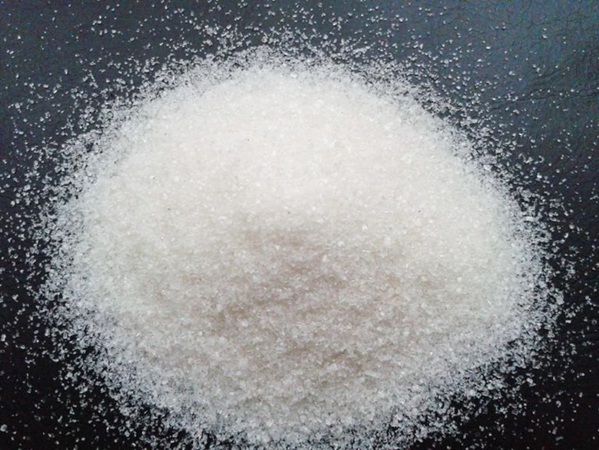
Primary uses of ammonium sulfate include:
- Driving vegetative growth: The ammonium nitrogen is readily taken up by roots and fuels rapid leaf expansion, shoot elongation, and deep greening. This makes ammonium sulfate ideal for early-season application in cereals, corn, leafy vegetables, and young orchards.
- Correcting alkaline and calcareous soils: Many agricultural regions—especially those with a Mediterranean or arid climate—have soils with a pH above 7.5. In such conditions, phosphorus, iron, zinc, and manganese become chemically locked and unavailable to plants, even when they are present in the soil. Ammonium sulfate, through the biological oxidation of ammonium to nitrate, releases hydrogen ions that lower the pH in the root zone, unlocking these tied-up nutrients. This acidifying effect is one of ammonium sulfate’s most valuable properties and a critical tool for improving fertilizer efficiency on alkaline ground.
- Supplying sulfur to high-demand crops: Canola, onions, garlic, legumes, brassicas, and many fruit trees have a high sulfur requirement. Ammonium sulfate meets that need while simultaneously feeding nitrogen, simplifying the nutrition program.
- Boosting fertility on depleted soils: As a fast-acting nitrogen source, ammonium sulfate revives nutrient-starved fields quickly, giving crops the immediate lift they need to establish a healthy canopy.
For farmers who rely on ammonium sulfate as a strategic input, quality and consistency matter.
Ammonium Sulfate vs. Potassium Sulfate: A Detailed Comparison
The core of the Ammonium Sulfate vs. Potassium Sulfate decision lies in what your crop needs most at a given time. Though both fertilizers belong to the sulfate family and both add sulfur to the soil, their primary nutritional roles and effects on soil chemistry are entirely different. The table below distills these differences into a clear, side-by-side view.
| Feature | Ammonium Sulfate | Potassium Sulfate |
|---|---|---|
| Primary nutrient | Nitrogen (21%) | Potassium (approx. 50% K₂O) |
| Sulfur content | 24% | 18% |
| Main function | Vegetative growth, soil pH correction | Fruit quality, stress resistance |
| Application timing | Early growth stages (pre-plant, early vegetative) | Flowering and fruit development stages |
| Effect on soil pH | Strong acidifying effect (lowers pH) | Neutral to very mildly acidic; minimal pH change |
| Best for | Alkaline soils, high-sulfur crops, quick green-up | Chloride-sensitive crops, fruiting and quality stages |
In short, the choice of Ammonium Sulfate vs. Potassium Sulfate is really a choice between “vegetative growth and soil amendment” on the one hand, and “crop quality and stress resilience” on the other. If your goal is to deepen green color, push strong early growth, and correct an alkaline soil problem, ammonium sulfate is your best tool. If your goal is to increase fruit weight, sugar content, color, and storability—and to help your plants withstand drought, heat, and disease—potassium sulfate is the essential choice.
The Common Thread: Sulfur as a Shared Essential Nutrient
For all their differences, ammonium sulfate and potassium sulfate converge on one indispensable element: sulfur. Sulfur is the sixth essential plant nutrient, ranking right behind nitrogen, phosphorus, and potassium in quantity required. It is a building block of amino acids (cysteine, methionine), vitamins, and enzymes, and it plays a central role in protein synthesis, oil formation, and chlorophyll function.
In many areas, particularly the alkaline, calcareous soils prevalent across Iran and similar regions, sulfur deficiency has become a documented and growing problem. Years of applying high-analysis nitrogen fertilizers for soil nutrition (like urea) without accompanying sulfur have depleted soil reserves. When a plant absorbs plenty of nitrogen but lacks sulfur, it cannot convert that nitrogen into proteins, resulting in poor-quality produce and wasted fertilizer. Both ammonium sulfate and potassium sulfate help close this sulfur gap, making them critical tools in modern, balanced fertility programs.
How Ammonium Sulfate Lowers Soil pH — and Why Potassium Sulfate Does Not
One of the most important distinctions in the Ammonium Sulfate vs. Potassium Sulfate discussion is their effect on soil acidity. Farmers working with alkaline soils often ask: “Both contain sulfate, so why does only ammonium sulfate lower pH?”
The answer lies not in the sulfate ion itself, which is chemically neutral in terms of acidity, but in the companion cation. In ammonium sulfate, the sulfate is paired with ammonium (NH₄⁺). When soil bacteria convert ammonium to nitrate through nitrification, they release hydrogen ions (H⁺) into the soil solution. It is these hydrogen ions that acidify the root zone and drive down pH. The sulfate ion simply provides sulfur nutrition without contributing to acidity.
In potassium sulfate, the sulfate is paired with potassium (K⁺). Potassium uptake by plants and its behavior in soil chemistry do not generate hydrogen ions. Therefore, no acidification occurs, and the soil pH remains essentially unchanged. This makes potassium sulfate a neutral potassium source, suitable for soils that already have an optimal pH but need a potassium and sulfur boost.
So, if your primary objective is to lower the pH of a calcareous or alkaline soil, ammonium sulfate is the clear choice. If you need to supply potassium and sulfur without altering pH, reach for potassium sulfate.
Building a Balanced Fertilization Plan with Both Sulfate Fertilizers
The most productive farming systems rarely choose one side of the Ammonium Sulfate vs. Potassium Sulfate equation exclusively. Instead, they combine both fertilizers at different stages of crop development, guided by soil tests and plant needs.
Early in the season, when roots are establishing and the canopy is forming, ammonium sulfate provides the rapid nitrogen necessary for strong vegetative growth. At the same time, it begins the gentle, gradual process of acidifying the root zone, which unlocks phosphorus and micronutrients that young plants desperately need. This early correction can set the stage for season-long nutrient availability. You can take a look at our guide to Ammonium Sulfate in Phosphorus and Potassium uptake for more information.
As the crop transitions into flowering and fruiting, potassium sulfate becomes the priority. It supplies the potassium required for sugar translocation, fruit filling, and color development, while topping up sulfur levels without pushing excess nitrogen that could delay maturity or dilute quality.
This staged approach—ammonium sulfate early, potassium sulfate later—captures the strengths of both fertilizers while avoiding their limitations. It requires discipline and observation, but the payoff in yield, quality, and soil health is substantial.
Practical Tips for Using Ammonium Sulfate and Potassium Sulfate Together
- Always start with a soil test. The only way to know your baseline pH and nutrient levels is through a laboratory analysis. This determines whether you need the acidifying power of ammonium sulfate, the potassium punch of potassium sulfate, or both.
- Apply ammonium sulfate in split doses for nitrogen-sensitive crops. Dividing the total nitrogen application into two or three smaller feedings reduces leaching and prevents the lush, weak growth that can attract pests.
- Time potassium sulfate with your crop’s peak demand. For most fruiting crops, the window from flowering through fruit fill is when potassium uptake is highest. Applying potassium sulfate just ahead of this window ensures it is available when needed.
- Use ammonium sulfate for pre-plant soil correction. In strongly alkaline soils, incorporating ammonium sulfate into the soil a few weeks before planting gives the nitrification process time to begin lowering pH in the root zone.
- Monitor plant response. Leaf color, vigor, and fruit quality are living indicators. Keep notes each season to refine your rates and timing.
Why Quality Matters: Choosing a Trusted Ammonium Sulfate Source
Not all ammonium sulfate is created equal. Impurities, inconsistent granule size, and poor solubility can reduce its effectiveness and even harm sensitive crops. That’s why many farmers turn to Barno crystalline ammonium sulfate for their fertility programs. Manufactured by Barsava Sepehr Pars Chemical Industrie, a company backed by the decades-long industrial expertise, Barno ammonium sulfate delivers consistent 21-0-0 analysis with 24 percent sulfur in a highly soluble crystalline form. The company’s modern production facility, with its 90,000-ton annual capacity, ensures a reliable supply for bulk buyers and smallholders alike. For farmers who depend on ammonium sulfate to correct alkaline soils and fuel vigorous growth, a high-purity product means fewer variables to worry about and better, more predictable results in the field.

Ammonium Sulfate vs. Potassium Sulfate: The Bottom Line
Ammonium sulfate and potassium sulfate are not competitors; they are complementary partners in a complete plant nutrition strategy. The entire Ammonium Sulfate vs. Potassium Sulfate debate resolves itself once you recognize that each plays a distinct part. Ammonium sulfate excels at building the vegetative engine of the crop and at reforming hostile alkaline soils into productive ground. Potassium sulfate takes the baton later in the season to ensure that all that healthy growth translates into high-quality, marketable produce.
The most successful growers are those who understand the strengths of each, align their applications with crop growth stages and soil conditions, and never lose sight of the shared sulfur that makes both fertilizers so valuable. Feed the soil what it needs, when it needs it, and the plants will reward you with a fuller, richer harvest.