Fruit Tree Doesn’t Bear Fruit? Causes and Solutions
Few things are more disheartening for a gardener than tending to orchard trees for months or even years—watering, feeding, pruning—only to reach harvest time and find very little fruit, or none at all. Trees that look perfectly healthy and green yet remain barren are one of the most stubborn challenges in any fruit garden. Why does this happen? What makes a tree flower but never set fruit, or not flower at all? In this guide, we walk you through every major reason a fruit tree doesn’t bear fruit and, for each one, provide clear, practical steps to turn the situation around. Whether you’re dealing with a single backyard tree or managing an entire orchard, understanding these factors will help you restore productivity and get the harvest you’ve been waiting for.
1. The Tree Hasn’t Reached Bearing Age
Fruit trees can’t produce fruit until they reach physiological maturity. This isn’t a problem, it’s just nature. An apple tree typically starts bearing 3 to 5 years after planting; a walnut may need 5 to 8 years. If your tree is still young, be patient. During this establishment phase, the tree should channel all its energy into building a strong root system and healthy branches. Premature flowering actually does more harm than good because it diverts resources away from structural growth. If a very young sapling does bloom, it’s better to remove the flowers by hand. That lets the tree invest its energy where it belongs, setting the stage for heavy crops later on.
2. Unbalanced Nutrition – Too Much or Too Little of the Right Nutrients
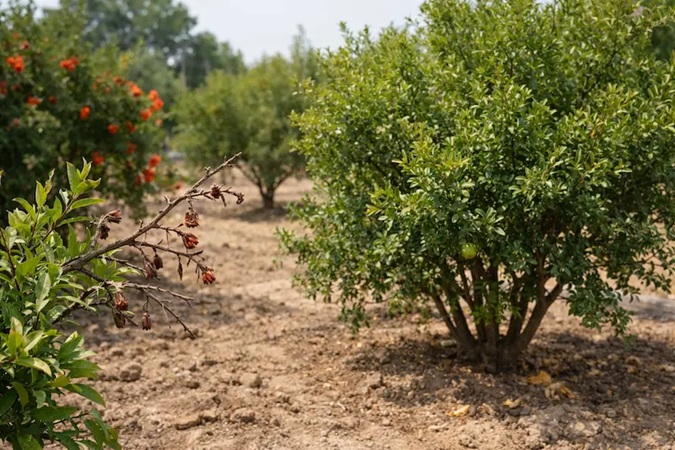
When a fruit tree doesn’t bear fruit despite flowering well, unbalanced nutrition is often the culprit. A tree needs a precise mix of nutrients to turn blossoms into fruit. Elements like boron, zinc, potassium, and phosphorus play starring roles in fruit set. If the soil is deficient in any of them, you might see plenty of flowers that simply drop without forming fruit. Early blossom drop is another telltale sign of these hidden hungers.
How to fix it:
Preventing this problem means giving trees the right nutrients at the right time. Here’s a targeted nutritional strategy to boost fruit set:
- Before flowering: Apply a foliar spray containing boron and zinc. These two micronutrients are critical for pollen viability and flower strength.
- After fruit set: Shift to a high‑potassium and phosphorus fertilizer to support fruit development and sizing.
Imbalance can also work the other way. If a grower applies too much nitrogen fertilizer, the tree puts all its energy into lush leaves and vigorous shoots. The canopy looks fantastic—deep green and thriving—but the formation of flower buds is suppressed. In this situation, the tree appears perfectly healthy but refuses to bear fruit, or yields are extremely low.
Nitrogen management:
Nitrogen is most useful during the early stages of growth, from late winter until just before flowering. Once bloom begins, nitrogen applications should usually stop, unless a specialist recommends otherwise. This shift tells the tree to stop growing leaves and start focusing on reproduction.
A note on complete nutrition:
Fruit trees need a full spectrum of nutrients, including nitrogen, potassium, phosphorus, calcium, magnesium, and a suite of micronutrients. The best way to know exactly what your trees need is to conduct a soil test before you start any fertilizer program. Collect small soil samples from different spots in your orchard, mix them, and send the composite sample to a reliable soil lab. The results will reveal which nutrients are lacking and which are already abundant, letting you tailor fertilization precisely. Adding nitrogen and potassium at the right time can stimulate healthy growth and flower production, while potassium and phosphorus become most critical during fruit formation to increase both yield and fruit quality. Always base application rates on soil test results and tree needs—over‑fertilizing damages trees and harms the environment.
3. Tree Doesn’t Bear Fruit Due to Poor Soil pH and Drainage
Soils that are compacted, poorly drained, or have the wrong pH can cripple root health and drastically reduce fruit production. If roots can’t breathe or absorb nutrients, the entire tree suffers. Low soil pH (generally below the 5.5–6.5 range) reduces the availability of calcium and magnesium, often causing leaf yellowing and poor fruit set. On the other hand, high pH soils (above the optimal range) lock up essential micronutrients like iron and zinc, leading to deficiencies that directly impair fruiting.
What to do:
Make sure your soil drains well. If water puddles for hours after rain or irrigation, consider amending the soil with organic matter or installing drainage. Test the pH. If the soil is too acidic, incorporating agricultural lime can raise the pH gradually. For alkaline soils, adding elemental sulfur helps lower pH into the sweet spot. Adjusting soil pH takes time, so plan ahead—and always follow product recommendations based on your soil test.
4. Improper Watering – Both Under and Over
Water stress, whether from too little or too much water, disrupts flowering and fruit set. A fruit tree needs consistently even moisture to successfully convert flowers into fruit. When water is scarce, the tree sheds its blooms as a survival mechanism, sacrificing the crop to keep vital tissues alive. On the flip side, heavy, waterlogged soil suffocates the roots. Without oxygen, roots cannot function, and flowers drop just as they would in a drought.
Solutions:
- Water trees on a regular schedule. Avoid wide swings between bone‑dry and saturated soil.
- Prevent waterlogging. If the soil tends to stay wet, improve drainage or reduce irrigation frequency.
- Drip irrigation is a game‑changer. It delivers water directly to the root zone, deeply and slowly, while minimizing evaporation and runoff. The soil stays evenly moist without becoming soggy.
- Apply a layer of organic mulch around the base of the tree, keeping it a few inches from the trunk. Mulch conserves soil moisture, moderates soil temperature, and reduces weed competition.

5. Tree Doesn’t Bear Fruit Due to Temperature Stress
Every fruit tree variety has a temperature range it can tolerate, especially during the sensitive flowering period. When temperatures stray outside that comfort zone, flowers suffer. Scorching heat during bloom can sterilize pollen, causing blossoms to wither and drop without setting fruit. Even if some fruit forms, the crop will be sparse. Conversely, late spring frosts, hailstorms, or prolonged cold snaps can kill flower buds outright, preventing any fruiting that season.
How to manage temperature stress:
- In hot climates, time your irrigation to keep the soil cool and consistent. Deep watering in the morning helps the tree cope with heat.
- For small gardens, temporary shade cloth during extreme afternoon heat can protect blossoms.
- The most effective long‑term strategy is to plant tree varieties that are adapted to your local climate. A well‑adapted tree is far more resilient to temperature swings.
- Strengthen trees with potassium and calcium applications. These nutrients improve cell wall strength and help trees handle environmental stress more effectively.
6. Incorrect Pruning
Pruning mistakes are a leading cause of low fruit yield. Inexperienced gardeners sometimes accidentally cut off the very branches that would have borne fruit. Many fruit trees produce on spurs or older wood, and removing those wipes out the next season’s crop. At the same time, never pruning at all is just as damaging. A dense, unpruned canopy blocks sunlight from reaching the interior of the tree. Flower buds need ample light to develop. In deep shade, buds never form or are too weak to open, so fruiting occurs only at the outermost tips of branches, leaving the tree’s center empty and unproductive.
- Learn the basics of pruning your specific type of fruit tree. If you’re unsure, hire an experienced arborist or consult with your local extension service.
- Always prune during the dormant season, ideally in late winter before new growth begins. If you prune heavily in spring or summer, the tree goes into shock. It diverts energy to healing wounds and producing vigorous vegetative shoots. Those new shoots are typically non‑fruiting and won’t bear flowers until at least the following year.
- Aim for a light, balanced thinning that opens the canopy to sunlight and air, removes dead or crossing wood, and preserves the fruiting wood.
7. Tree Doesn’t Bear Fruit Due to Pests and Diseases
A hidden infestation or disease outbreak can quietly strip a tree of its crop. Certain pests attack flowers directly—thrips, aphids, and mites are common culprits. They damage blossoms to the point where fruit cannot set. Fungal diseases, especially in wet or humid conditions, can cause severe flower and fruit drop. Even if the tree looks reasonably healthy, the reproductive parts are ruined.

How to protect your trees:
- Space trees properly when planting to ensure good air circulation. This reduces humidity around the canopy and makes conditions less favorable for fungal diseases.
- Monitor your trees regularly. A weekly walk through the orchard to inspect leaves, blooms, and developing fruit helps you catch problems early.
- Use yellow sticky traps to detect and reduce flying pests like aphids and thrips before they explode in numbers.
- Maintain good garden hygiene. Remove fallen leaves and mummified fruit that harbor disease spores.
- When absolutely necessary, apply appropriate chemical controls according to label directions, preferably targeting the specific pest or disease identified.
8. Alternate Bearing (Biennial Cropping)
Some fruit trees fall into a cycle called alternate bearing, where they produce a massive crop one year and almost nothing the next. The overload in the heavy year exhausts the tree’s stored energy, leaving too little reserve to form flower buds for the following season. This pattern is common in certain apple, pear, and nut tree varieties when management isn’t optimized.
Breaking the cycle:
- In the heavy‑crop year, thin the fruit early—when they’re marble‑sized—so that the tree carries a moderate load. This prevents energy drain and encourages the formation of next year’s flower buds.
- After harvest, give the tree a recovery boost with a balanced fertilizer and adequate water. Replenishing spent nutrients helps build reserves.
- Practice consistent, moderate pruning each year instead of severe, sporadic cuts. This stabilizes the tree’s vigor and cropping pattern.
9. Incomplete Pollination or Lack of a Pollinizer Variety
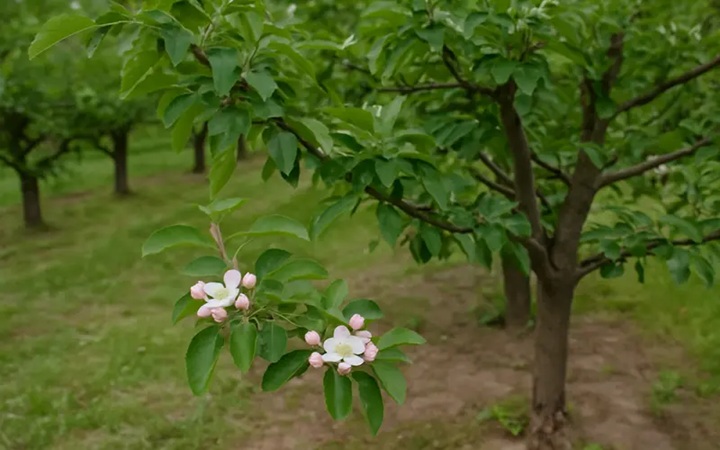
One of the most important reasons a tree flowers profusely but bears no fruit is incomplete pollination. Clear signs of pollination trouble: the tree is covered in blooms, yet no fruit forms; the flowers simply drop. Alternatively, small fruit may start to develop but then fall off prematurely. The underlying cause is lack of fertilization. For fruit to form, pollen must transfer from the male parts of a flower to the female parts—often between different varieties.

Why pollination fails and how to fix it:
- Missing pollinizer tree: Many fruit trees are not self‑fertile. They require a different, compatible variety planted nearby that blooms at the same time. Without it, pollination can’t happen. Research your main variety and plant the right pollinizer within about 50 feet.
- Poor weather during bloom: Rain, cold, or extreme heat can keep bees and other pollinators away and reduce pollen viability. While you can’t control the weather, you can support pollination by placing honeybee hives in the orchard during bloom—one or two hives can dramatically increase fruit set.
- Boron deficiency: As mentioned, boron is crucial for pollen tube growth. A pre‑bloom foliar spray of boron helps even when pollinating insects are scarce.
- In a small home orchard, you can manually transfer pollen with a soft brush, moving from the flowers of the pollinizer to the flowers of the main tree. This takes time but is effective.
- Avoid insecticides during bloom. Even products labeled “safe” can harm bees and other beneficial pollinators. If you must spray, do it in the evening when bees are less active.
When a fruit tree doesn’t bear fruit, it’s sending you a message. That message is almost always rooted in one or more of the factors above—youth, nutrition, water, soil, temperature, pruning, pests, bearing pattern, or pollination. By carefully observing your trees, running a soil test, and adjusting your care routine accordingly, you can solve the mystery of the barren tree and bring back abundant harvests. The earlier you identify and correct the cause, the sooner you’ll fill your baskets with homegrown fruit.