Hydroponic Farming: The Future of Agriculture
As the global population surges toward an estimated 9.7 billion by 2050, the agricultural sector faces unprecedented challenges. Climate change, soil degradation, and most critically, the escalating scarcity of fresh water, threaten our ability to feed the world. Traditional farming methods, while responsible for sustaining humanity for millennia, are often inefficient in their use of resources. In this context, hydroponic farming emerges not just as an alternative, but as a necessary evolution in agricultural science. Often hailed as the next generation of cultivation, hydroponics offers a sustainable, high-yield solution that bypasses many of the limitations of traditional soil-based agriculture.
What is Hydroponic Farming?
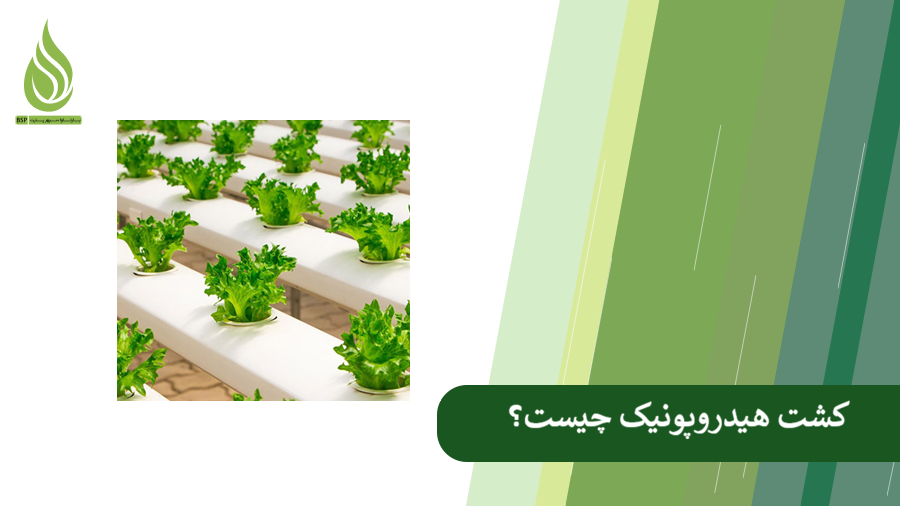
Hydroponics is a method of growing plants without soil, a term derived from the Greek words hydro (water) and ponos (labor). Essentially, it is “water working.” In this innovative system, plant roots are suspended directly in a nutrient-rich solution or supported by an inert medium while being bathed in a carefully balanced mixture of water and essential minerals. This technique encompasses everything from small-scale home herb gardens to massive, industrial-scale vertical farms that supply supermarkets with fresh produce year-round.
The fundamental principle behind hydroponics is straightforward: plants require three primary elements to survive and thrive—water, nutrients, and sunlight (or artificial light). In traditional agriculture, the soil acts as a reservoir for water and nutrients, but it also serves as a buffer and a potential source of pathogens. In hydroponics, the soil is removed from the equation. The roots are exposed directly to oxygen, water, and nutrients, allowing the plant to expend less energy on root expansion and more energy on vegetative growth and fruit production.
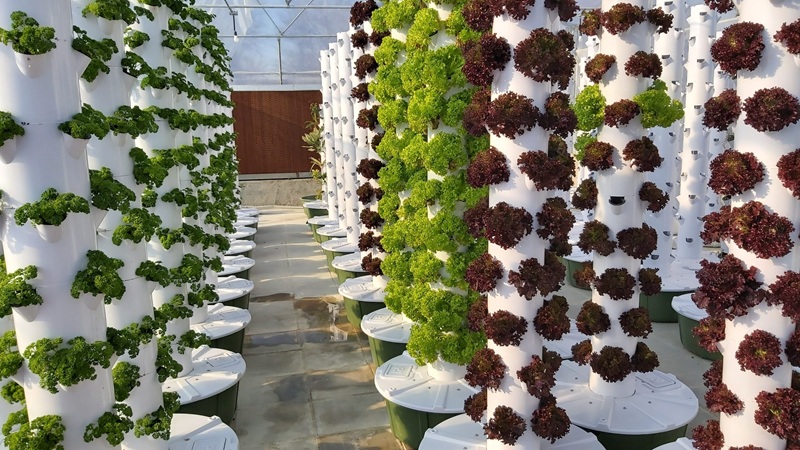
This method is incredibly versatile. A wide variety of crops thrive in hydroponic systems. Leafy greens such as lettuce, spinach, basil, and mint are among the most common due to their fast growth cycles and high market value. However, the scope extends far beyond greens; vine crops like tomatoes, cucumbers, peppers, and strawberries flourish in these controlled environments. Even high-value crops like saffron can be cultivated hydroponically with precision. Generally, bush-type plants and those with shallow root systems are ideal candidates. Conversely, crops like corn, wheat, or large trees with deep, complex root systems are currently less suitable for standard hydroponic setups due to structural support requirements and space constraints.
The Core Components of a Hydroponic Farming System
To understand how hydroponics functions, one must look at its essential components. Unlike open fields where nature provides the ecosystem, a hydroponic farming system is a constructed environment where every variable is managed. The key elements include:
- Water with Balanced pH: The lifeblood of the system. Since the roots are immersed in water, the pH level must be meticulously monitored (usually between 5.5 and 6.5) to ensure nutrient uptake is not blocked.
- Oxygen: Vital for root respiration. In soil, air pockets provide oxygen; in water, oxygen must be actively introduced using air stones or diffusers to prevent root rot.
- Growing Medium (Substrate): While soil isn’t used, plants often need a medium to anchor their roots. Common inert substrates include vermiculite, perlite, coconut coir (coco peat), and rockwool. These materials do not provide nutrients but support the plant and retain moisture.
- Nutrients: A complete blend of macro-nutrients (Nitrogen, Phosphorus, Potassium) and micro-nutrients (Calcium, Magnesium, Iron, etc.) dissolved in the water.
- Light: In indoor setups, high-intensity discharge (HID) lamps, LEDs, or fluorescent lights mimic the solar spectrum, allowing for 24-hour growth cycles if desired.
- Trays and Channels: Usually made of opaque materials like PVC or black plastic to block light from the nutrient solution, thereby preventing the growth of algae which can compete with plants for oxygen and nutrients.
Hydroponic Farming vs. Traditional Agriculture
The shift towards hydroponic farming is driven by its distinct advantages over conventional farming, particularly in the realms of efficiency and sustainability.
- Water Conservation: This is perhaps the most significant benefit. Agriculture currently consumes approximately 70% of the world’s accessible freshwater resources. Hydroponic farming systems are closed-loop, meaning water is recirculated rather than lost to evaporation or runoff. Consequently, hydroponics uses up to 90% less water than traditional soil farming. For arid regions and countries facing severe water stress, this statistic is a game-changer.
- Space Efficiency and Higher Yields: Hydroponic systems allow for much higher planting density. Plants can be spaced closer together because they don’t need to compete for soil resources. Furthermore, by optimizing conditions, growth rates are significantly accelerated. It is not uncommon for hydroponic yields to be 5 to 20 times higher per acre than traditional farming. Lettuce that might take 60 days to mature in a field can often be harvested in 30 days or less in a hydroponic setup.
- Reduced Chemical Use: Controlled environments minimize exposure to weeds and pests, drastically reducing or eliminating the need for herbicides and pesticides. This results in cleaner, healthier produce and less environmental contamination.
- Labor and Soil Conservation: Traditional farming requires heavy labor for tilling, plowing, and weeding. Hydroponics automates many of these processes. Additionally, it combats soil erosion and degradation, preserving arable land for future generations.
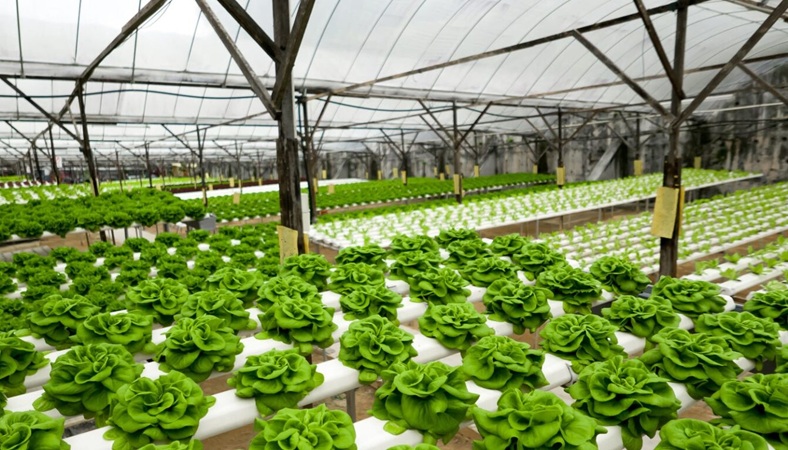
- Climate Independence: Hydroponic farms are often housed in greenhouses or indoor vertical farms. This decouples food production from weather patterns, enabling fresh produce to be grown year-round, even in deserts or during freezing winters. This can move us towards increasing agricultural productivity.
- pH Control: In soil, balancing pH can be difficult due to the complex composition of the earth. In hydroponics, the pH of the water solution can be adjusted instantly and precisely, ensuring plants always have access to the nutrients they need.
The Challenges and Disadvantages
Despite its promise, hydroponic farming is not without hurdles. Potential adopters must consider the following drawbacks:
- High Initial Capital: Setting up a hydroponic greenhouse or indoor farm requires a significant investment in infrastructure, including lighting, climate control systems, pumps, and structures. This entry barrier can be prohibitive for small-scale farmers in developing regions.
- Technical Expertise Required: Unlike traditional farming, which relies on accumulated generational knowledge, hydroponics requires a solid understanding of chemistry, engineering, and plant physiology. Growers must be able to diagnose nutrient deficiencies, manage electrical conductivity (EC), and troubleshoot mechanical failures.
- Energy Dependence: While water use is low, energy consumption can be high. Indoor farms rely heavily on artificial lighting and climate control systems. A power outage can be catastrophic, potentially killing crops within hours if pumps and aerators stop working.
- Constant Monitoring: The system is sensitive. Nutrient levels and pH must be checked daily. In soil, nature acts as a buffer; in hydroponics, an error in nutrient mixing can affect plants almost immediately.
- Taste Perceptions: While hydroponic produce is often crisp and visually perfect, some critics argue that the terroir—the unique taste imparted by soil minerals—is missing. However, advances in nutrient blending are rapidly closing this gap, allowing growers to tailor the flavor profile of their crops.
Exploring the Six Main Types of Hydroponic Farming Systems
There is no “one size fits all” in hydroponics. Different crops and scales require different systems. Here are the six primary types:
1. Wick System
The Wick system is the simplest form of hydroponics, often used by beginners and in educational settings. It is a passive system, meaning it has no moving parts. The plants are housed in a growing medium (such as coco coir or perlite) above a reservoir of nutrient solution. One or more wicks (often made of cotton or nylon) run from the reservoir into the growing medium. Through capillary action, the nutrient solution travels up the wick to the roots.
- Pros: Extremely cheap, easy to build, and low maintenance.
- Cons: It is not suitable for large or water-hungry plants (like tomatoes or peppers) because the wick cannot deliver water fast enough to keep up with the plant’s consumption. It is best reserved for leafy greens and herbs.
2. Deep Water Culture (DWC) / Water Culture
In a DWC system, the plant roots are suspended directly into the nutrient solution. An air pump with an air stone oxygenates the water, creating bubbles that keep the roots submerged yet breathable. Usually, a floating platform (like a Styrofoam raft) holds the plants.
- Pros: Simple setup, excellent for fast-growing, water-loving plants like lettuce and basil. It is arguably the most cost-effective system for small-scale leafy green production.
- Cons: It is difficult to stabilize the pH in large bodies of water. Furthermore, if the air pump fails, the roots will drown due to lack of oxygen very quickly. It is also not ideal for large plants as the roots can tangle.
3. Flood and Drain
This system works by temporarily flooding the grow tray with nutrient solution from a reservoir and then draining it back into the reservoir. A submersible pump connected to a timer controls this cycle. When the timer turns the pump on, the tray floods; when it turns off, gravity drains the water back.
- Pros: It offers great flexibility regarding the growing medium (can use clay pebbles or rockwool). The cycle exposes the roots to both nutrients and air, preventing rot. It can support larger plants than the Wick or DWC systems.
- Cons: It relies heavily on the timer and pump. If the pump sticks in the “on” position, it can cause flooding; if it sticks “off,” the plants dry out. It also requires more maintenance to prevent salt buildup in the growing medium.
4. Drip System
The Drip system is perhaps the most widely used hydroponic method globally, often seen in large commercial operations. A timer controls a submersible pump, which drips nutrient solution onto the base of each plant via a small drip line. In a “Recovery” system, the runoff is collected back into the reservoir; in a “Non-Recovery” system, the excess runoff is drained away.
- Pros: Highly efficient and scalable. Each plant gets individual attention, and the waste is minimal. It works well for a wide variety of plants, including larger vegetables.
- Cons: The drip emitters are prone to clogging due to mineral deposits or debris from the growing medium. This requires regular maintenance and flushing of the lines.
5. Nutrient Film Technique (NFT)
NFT is a highly efficient system where a continuous, thin stream of nutrient solution flows through a channel or gully. The plants are placed in holes in the channel with their roots dangling down into the stream. The “film” of water ensures the roots are moist but also have access to atmospheric oxygen.
- Pros: Very efficient use of water and nutrients. It requires no growing medium (other than a small starter plug), reducing costs. It is excellent for lightweight, fast-growing crops like lettuce and strawberries.
- Cons: Because there is no growing medium to hold moisture, the roots are extremely vulnerable. If the pump fails or the flow stops, the plants can dry out and die within minutes. It is also not suitable for plants with large, heavy root systems that might block the channel.
6. Aeroponics
Aeroponics is the high-tech cousin of hydroponics. In this system, the roots hang suspended in the air (usually in a dark chamber) and are misted with a nutrient solution at regular intervals (usually every few minutes) using high-pressure misting nozzles.
- Pros: Maximum oxygenation of roots leads to incredibly fast growth rates. It uses the least amount of water of any system.
- Cons: It is the most expensive and complex system to build. The misting nozzles clog easily, and like NFT, the plants have no water buffer. A power outage or pump failure can result in total crop loss very quickly.
Essential Equipment for Building a Hydroponic Greenhouse
To establish a successful hydroponic operation, specific hardware is essential regardless of the system chosen:
- Growing Trays and Channels: To hold the plants and direct the flow of nutrients.
- Reservoir: A large, opaque tank to hold the nutrient solution. It must be opaque to prevent algae growth.
- Submersible Water Pump and Air Pump: To move the nutrient solution and oxygenate the water.
- Delivery System: PVC tubing, vinyl hoses, and drip lines or emitters.
- Growing Medium: Rockwool cubes, clay pebbles (hydroton), perlite, or coco coir.
- Digital Meters: Essential tools for measuring pH (potential of Hydrogen) and EC (Electrical Conductivity/TDS). Without these, maintaining a balanced nutrient solution is impossible.
- Climate Control: Fans, exhaust systems, heaters, and chillers to maintain optimal air temperature and humidity.
- Grow Lights: If operating indoors, full-spectrum LED or HID lights are necessary for photosynthesis.
- Timers and Controllers: To automate watering and lighting cycles.
The Global Future of Hydroponic Farming Systems
Hydroponic technology has existed for over seven decades, but its adoption has accelerated exponentially in the last ten years. Countries with limited arable land, such as Singapore, Israel, and the Netherlands, have become pioneers in this field, using vertical farming and hydroponics to achieve food security.
As we look toward the future, the expansion of hydroponics is inevitable, particularly in regions suffering from severe drought and desertification. The technology allows nations to turn barren deserts into productive agricultural hubs. Furthermore, the rise of “urban farming” brings food production directly into cities, reducing the carbon footprint associated with transporting food over long distances (“food miles”).
In Iran, similar to many other nations facing water scarcity challenges, the adoption of hydroponic agriculture is gaining momentum. The government and private sector are increasingly investing in greenhouse technologies to reduce water usage in the agricultural sector, which is the largest consumer of water in the country. This shift is not just an economic decision but a strategic necessity for survival and growth in a changing climate.
Conclusion
Hydroponic farming represents a paradigm shift in how we interact with nature to produce food. By decoupling agriculture from the soil, we gain the ability to control the variables that dictate plant life. While the initial costs and technical requirements are significant, the long-term benefits—water conservation, higher yields, reduced pesticide use, and year-round production—make it an indispensable part of our agricultural future. As technology advances and becomes more accessible, hydroponics is poised to move from niche markets to the mainstream, becoming a cornerstone of global food security and environmental stewardship.