What is Quick-Release Fertilizer and When Should We Use It?
When selecting the appropriate fertilizer for crops, the type of nutrient element is not the only factor that matters. The speed of release and the availability of the nutrient to the plant are equally critical. For this reason, fertilizers are categorized into two distinct groups based on the speed of nutrient release: quick-release (fast-release) and slow-release fertilizers. In this guide, we will examine what quick-release fertilizer is, its specific applications, and its defining characteristics. We will also explore the fundamental differences between slow-release and quick-release fertilizers. Understanding these concepts is essential for farmers and orchardists to effectively manage the fertilization of gardens and fields. Join us as we delve into the science of plant nutrition.
What is Quick-Release Fertilizer?
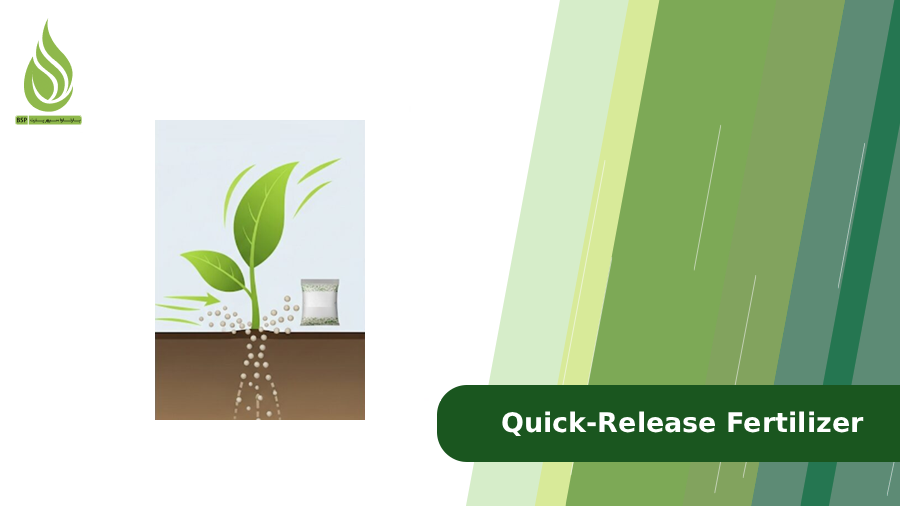
Quick-release fertilizer refers to a type of fertilizer where the nutrients contained within it become available to the plant in a very short period after application. These fertilizers possess high solubility, meaning they dissolve rapidly in water. As a result, the plant can quickly absorb the essential nutrients it requires through its roots or leaves (foliar application).
Virtually all types of fertilizers—including Nitrogen, Phosphorus, Potassium, and micronutrients—can be manufactured in a quick-release form. Therefore, “quick-release” is not a term exclusive to specific nutrients; rather, it relates to the speed of release and the absorption of the nutrient substance.
When using quick-release fertilizers, the primary objective is to stimulate a rapid increase in the vegetative growth of the plant.

How Do Quick-Release Fertilizers Work?
Quick-release fertilizers function in a way that allows them to liberate nutrients much faster than other fertilizers upon contact with water. To trigger this release, these fertilizers must come into contact with moisture or irrigation water. Once hydrated, the nutrients are freed, and the plant absorbs them within a short timeframe.
The effects of fertilization with this form of fertilizer are rapidly visible. For this reason, quick-release fertilizers are highly practical in situations where the plant has an urgent need for nutrition, often referred to as a “corrective” action.
Applications of Quick-Release Fertilizers
Quick-release fertilizers are most beneficial in the following scenarios:
- Acute Nutrient Deficiency: When a plant is suffering from a severe lack of specific nutrients, visible through symptoms like chlorosis (yellowing leaves) or stunted growth.
- Start of the Growing Season: At the beginning of the season, when a rapid nutritional “shock” is needed to wake the plant up and jumpstart growth.
- Short-Term Crops: For crops with a short life cycle that do not require long-term feeding.
- Rapid Vegetative Growth: When the specific goal is to quickly increase leaf and stem mass.
- Fertigation Systems: When it is possible to dissolve the fertilizer in irrigation water (fertigation) or spray it on leaves.
- Need for Immediate Results: When the farmer requires a quick visual response or recovery.
In summary, quick-release fertilizers are used when the speed of impact is more important than the longevity of the nutrients in the soil.
Is the Term “Quick Release” Only Used for Nitrogen Fertilizers?
The term “quick release” refers to the speed at which a nutrient is released from the fertilizer, not the type of element itself. Therefore, it can be applied to all nutrients, including Nitrogen (N), Phosphorus (P), Potassium (K), and micronutrients (Iron, Zinc, Manganese, etc.). Scientifically, if a fertilizer dissolves rapidly in water and immediately places the nutrient at the plant’s disposal, it is considered “quick-release.”
Examples of quick-release fertilizers widely used in agriculture include:
- Quick-Release Phosphorus:
- Monoammonium Phosphate (MAP)
- Diammonium Phosphate (DAP)
- Quick-Release Potassium:
- Potassium Nitrate
- Soluble Potassium Chloride (Muriate of Potash)
- Quick-Release Micronutrients:
- Water-soluble chelated fertilizers
- Liquid micronutrient solutions
However, the concept of “release speed” is less controversial regarding Phosphorus and Potassium. Phosphorus primarily suffers from “fixation” or “lock-up” in the soil (becoming unavailable to plants) rather than issues with release speed. Similarly, Potassium is either highly soluble or fixed in the soil’s clay particles. Therefore, the term “quick-release” is used less frequently for these elements, even though it is scientifically accurate.
In practical agricultural literature, the term “quick release” is most frequently associated with nitrogen fertilizers. There is an important reason for this: Nitrogen is the most mobile element in the soil. It is absorbed quickly by plants but is also lost quickly through leaching or volatilization. Consequently, the speed of its release becomes critically important.
Nitrogen leaching can occur due to irrigation or rainfall, and volatilization can occur when surface-applied urea converts to ammonia gas. Therefore, managing the release speed of nitrogen is vital, which is why the concepts of quick-release vs. slow-release are most prominently discussed for this element.
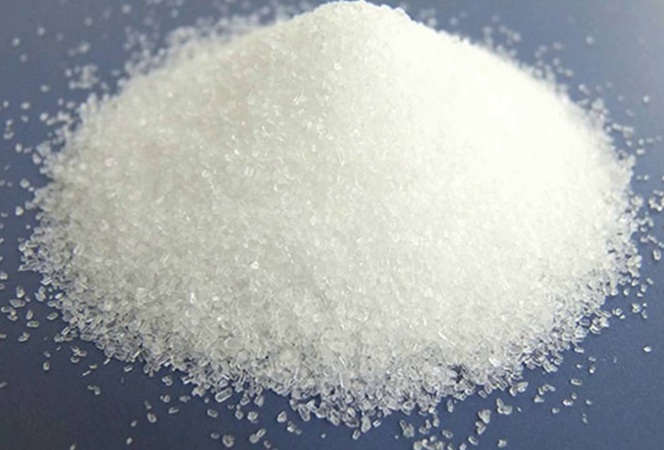
Common nitrogen fertilizers that are naturally quick-release include Urea, Nitrates (like Calcium Nitrate), and crystalline Ammonium Sulfate. These fertilizers are inherently fast-acting, and comparing their release rates is standard practice.
To clarify: scientifically, “quick-release fertilizer” applies to any fertilizer that provides nutrients to the plant in a short time. However, in practice, the term is predominantly used for nitrogen fertilizers because nitrogen is absorbed and lost from the soil so rapidly that managing its release timing is paramount.
Advantages of Using Quick-Release Fertilizer
Utilizing quick-release fertilizer offers several significant benefits:
- Rapid and Visible Effects: Results are often seen within days.
- Easy Absorption: The high solubility makes nutrients readily available for plant uptake.
- Suitable for Critical Conditions: Ideal for rescuing plants from acute stress or deficiency.
- Simple Application: Easy to apply via standard irrigation or spraying equipment.
- Cost-Effective: In many cases, they are more economical per bag compared to coated slow-release alternatives.
Disadvantages and Limitations of Quick-Release Fertilizer
Alongside the advantages, there are limitations that must be managed:
- Low Persistence: Nutrients do not remain in the soil for long; they are used up or washed away quickly.
- Risk of Nutrient Leaching: There is a high probability of nutrients washing away (leaching) during heavy irrigation or rainfall, wasting money and polluting groundwater.
- Precision Required: Careful attention is needed regarding the dosage and timing of application to avoid waste.
- Risk of Plant Stress: Over-application can cause “fertilizer burn,” damaging roots and leaves due to high salt concentrations.
Comparison of Quick-Release and Slow-Release Fertilizers
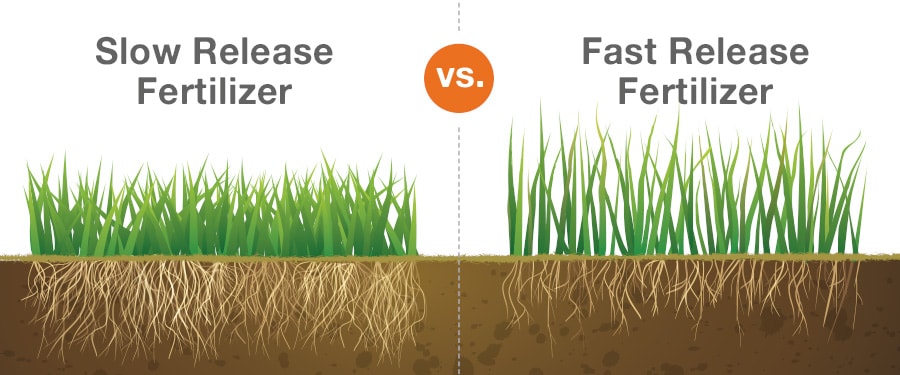
So far, we have familiarized ourselves with quick-release fertilizers and their pros and cons. Another category of fertilizers exists known as slow-release fertilizers. Slow-release fertilizer is defined as a fertilizer that releases nutrients gradually over an extended period of time.
These fertilizers typically possess a special coating (such as sulfur or polymer coatings) or chemical compositions that control the rate of nutrient release. The primary goal of slow-release fertilizer is to provide stable nutrition to the plant, reduce nutrient losses, and decrease the frequency of fertilization.
Below, we have compared the characteristics of slow-release and quick-release fertilizers in a table. The choice of which type a farmer selects depends entirely on their specific conditions and fertilization goals.
| Feature | Quick-Release Fertilizer | Slow-Release Fertilizer |
|---|---|---|
| Release Speed | High (Rapid) | Gradual |
| Initial Impact | Fast | Slow/Gentle |
| Persistence in Soil | Low | High |
| Risk of Loss | Higher (Leaching/Volatilization) | Lower |
| Application Frequency | More frequent | Less frequent |
| Best For | Urgent needs, short-term crops | Long-term nutrition, labor reduction |
In summary, quick-release fertilizer is suitable for situations where the plant has an urgent nutritional need and deficiencies must be corrected immediately. Conversely, slow-release fertilizer is appropriate when the plant requires continuous, long-term nutrition, and the goal is to minimize the frequency of fertilization applications. In soils where the risk of leaching is high (such as sandy soils), or where soil structure cannot be easily amended, slow-release fertilizers should be used to ensure nutrients are not washed away before the plant can use them.
Neither quick-release nor slow-release fertilizers are absolutely “better” than the other. The correct choice depends on:
- Crop Type: Different crops have different feeding habits.
- Growth Stage: Seedlings may need gentle feeding, while established crops might need a boost.
- Soil and Water Conditions: Sandy soils leach quickly; clay soils hold nutrients longer.
- Fertilization Goal: Are you trying to fix a problem or maintain health?
In many professional agricultural systems, the intelligent and combined use of both quick-release and slow-release fertilizers yields the best results. For instance, using a slow-release base fertilizer with periodic quick-release “boosters” during peak growth.
Crystalline vs. Granular Ammonium Sulfate: Two Forms with Different Nutritional Behaviors
Ammonium sulfate is one of the most common nitrogen fertilizers. Depending on its physical form (crystalline or granular), it can exhibit different behaviors regarding the speed of nitrogen release.
Crystalline Ammonium Sulfate falls into the category of quick-release nitrogen fertilizers. Due to its fine crystal structure and high solubility, it dissolves rapidly in soil moisture after application. The ammoniacal nitrogen and sulfur are made available to the plant in a short period. Consequently, the effects are visible quickly. This form is suitable for correcting immediate nitrogen deficiencies.
Granular Ammonium Sulfate, due to its larger particle size, dissolves more gradually in the soil. This results in a slower, more uniform, and controllable release of nitrogen compared to the crystalline form. The key characteristics of this fertilizer include its gradual dissolution, uniform nitrogen release, and a reduced risk of leaching compared to the crystalline form. This makes it highly suitable for broadcasting (spreading over the surface) and standard soil application.
Barsava Sepehr Part Company – High-Quality Producer of Granular and Crystalline Ammonium Sulfate
Barsava Sepehr Part Chemical Industries Company is one of the prominent manufacturers in the chemical fertilizer industry in Iran. Under the commercial brand “Barno,” the company specializes in the production of both crystalline and granular ammonium sulfate. Utilizing modern technologies and adhering to international standards, the company produces products of global quality that compete effectively not only in the Iranian market but also in export markets across other countries.
For bulk purchases of crystalline and granular ammonium sulfate from Sepehr Barthava Part, please contact the company through the listed phone numbers. For retail purchases, these products can be found at reputable agricultural supply stores.