A Comparison of Iranian, Chinese, and Turkish Ammonium Sulfate
Ammonium sulfate is one of the most widely used nitrogenous fertilizers in agriculture. It serves not only as a crucial source of nitrogen but also as an important supplier of sulfur. This fertilizer is particularly effective for supplying nitrogen in alkaline and calcareous soils and is extensively used in field crops, orchards, and greenhouses. In the Iranian market, ammonium sulfate is available both through domestic production and via imports (primarily from China and Turkey). Many buyers often hesitate when choosing between Iranian and foreign varieties. In this article, we will conduct a detailed comparison of Iranian ammonium sulfate with its Chinese and Turkish counterparts to help farmers and distributors make informed decisions.
What is Ammonium Sulfate and What Are Its Characteristics?
Ammonium sulfate is one of the most common fertilizers globally. Chemically represented as (NH₄)₂SO₄, it typically contains about 21% nitrogen and 24% sulfur. Due to its sulfur content, ammonium sulfate helps reduce the alkalinity of agricultural soils. In essence, this fertilizer possesses a mild soil-acidifying property. Today, a significant portion of agricultural soils in Iran and across the world are alkaline. For this reason, the importance of ammonium sulfate has become more pronounced compared to other nitrogen fertilizers like urea.
Other positive characteristics of ammonium sulfate include its suitable solubility in water and the fact that the nitrogen does not volatilize (escape into the air) as easily as some other nitrogen sources. Generally, ammonium sulfate fertilizer can be produced in several forms:
- Granular ammonium sulfate
- Crystalline ammonium sulfate
- Powdered ammonium sulfate
- Liquid ammonium sulfate
These chemical characteristics are largely consistent across ammonium sulfate produced in different countries. However, the differences are primarily observed in purity, granule uniformity, moisture content, impurities, and the production process. Factors such as the uniformity of granulation, moisture levels, scent, and color play a significant role when comparing different ammonium sulfate products.
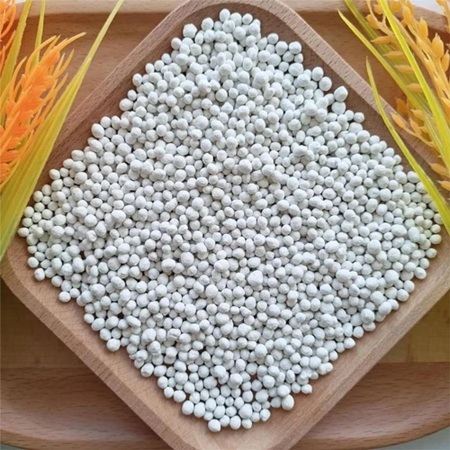
Characteristics of Iranian Ammonium Sulfate
The features of Iranian ammonium sulfate can be summarized as follows:
- Acceptable and Standard Purity: Official Iranian manufacturers produce ammonium sulfate in accordance with industrial standards, ensuring the nitrogen percentage is close to the nominal value (21%).
- High Compatibility with Iranian Soils: Because manufacturers are familiar with the conditions of alkaline soils in Iran, this fertilizer demonstrates very suitable performance in reducing local pH and supplying sulfur.
- Reasonable Price: Due to the elimination of import costs, sea freight, and customs duties, the price of Iranian ammonium sulfate is generally more economical than similar foreign samples.
- Rapid Access and Stable Supply: Domestic fertilizers are more accessible than imported ones. They are not dependent on currency exchange rate fluctuations and can be easily procured directly from the manufacturing plant or authorized sales representatives.
Important Note: The quality of Iranian ammonium sulfate can vary among different manufacturers. It is crucial to ensure that you purchase from reputable and licensed companies. Naturally, not all fertilizers produced in Iran share the same level of quality. The uniformity of the fertilizer granules, the color and scent of the fertilizer, and other qualitative factors must be checked to ensure you are buying the best quality Iranian ammonium sulfate.
Characteristics of Chinese Ammonium Sulfate
China is one of the largest producers and exporters of chemical fertilizers in the world, holding a significant share of the global market in ammonium sulfate production. A large portion of Chinese ammonium sulfate is exported to Asian, African, and Middle Eastern countries, with Iran being a frequent import destination over the years.
One of the most important characteristics of Chinese ammonium sulfate is the immense variety of factories and manufacturing brands. This diversity results in varying quality of products available in the market regarding uniformity, purity, moisture content, and even packaging type. In reality, among Chinese samples, one can find both high-quality, export-standard products and samples of average or lower quality. Therefore, verifying the analysis and the credibility of the supplier is of great importance when purchasing this product.
One of the reasons for the widespread presence of Chinese ammonium sulfate in global markets is its competitive price. Mass production, widespread access to raw materials, and low production costs allow this product to be offered at a more affordable price than many international competitors. However, it should be noted that a lower price may sometimes be accompanied by less granule uniformity or higher moisture content. For this reason, we advise against making comparisons based solely on price. When comparing Iranian and Chinese ammonium sulfate, prioritize the physical and chemical quality of the fertilizer.
Chinese ammonium sulfate is supplied through imports, meaning its price is dependent on exchange rates, sea freight costs, and international trade conditions. During periods when shipping costs rise or trade restrictions occur, the final price of this product in the Iranian market will increase.
Characteristics of Turkish Ammonium Sulfate
Turkey is an active country in the region regarding the production and trade of chemical fertilizers, including ammonium sulfate. Due to its suitable geographical location and access to European, Middle Eastern, and Central Asian markets, Turkey plays a key role in regional exports. The annual production capacity of ammonium sulfate in Turkey is significant, with a portion exported to various countries in addition to meeting domestic needs.
In recent years, various brands of Turkish ammonium sulfate have been offered in the Iranian market. These products are usually imported in granular and crystalline forms, and in terms of analysis, their nitrogen percentage is close to the standard amount (about 21%). Some imported Turkish samples exhibit good quality in terms of granule uniformity and physical appearance, garnering attention from Iranian farmers for orchard and greenhouse use.
On the other hand, Iran itself is considered one of the important producers of ammonium sulfate in the region. The import of ammonium sulfate from Iran to Turkey has often been part of the trade exchanges between these two countries. This indicates that the ammonium sulfate market in the region is a two-way market, with trade exchanges between countries based on price, quality, and seasonal demand.
In terms of price, Turkish ammonium sulfate is generally higher than the Iranian sample due to transportation costs, customs tariffs, and dependence on exchange rates. Therefore, when exchange rates rise, the price gap between the Iranian and Turkish products widens.
Overall, Turkish ammonium sulfate stands at an acceptable and standard quality level. However, the choice between the Iranian and Turkish samples depends more on factors such as daily price, product uniformity, supply conditions, and consumer needs. For bulk buyers, examining the laboratory analysis, granule uniformity, and moisture content of the product prior to purchase is of particular importance.
Technical Comparison Table of Iranian, Chinese, and Turkish Ammonium Sulfate
| Comparison Index | Iranian Ammonium Sulfate | Chinese Ammonium Sulfate | Turkish Ammonium Sulfate |
|---|---|---|---|
| Nitrogen Percentage (N) | About 21% (Compliant with export standards) | About 21% (Close to nominal value) | About 21% (May vary slightly by brand) |
| Sulfur Percentage (S) | About 24% | About 24% | About 24% |
| Product Purity | Acceptable and standard (Dependent on manufacturer) | Variable; depends on the manufacturing factory | Variable; depends on the manufacturing factory |
| Moisture Content | Controlled in reputable brands | In some shipments, higher than ideal | Usually controlled |
| Brand and Manufacturer Variety | Medium | Very High | Medium |
| Quality Stability Between Shipments | Stable (In reputable Iranian brands like Barno) | Relatively stable (In reputable brands) | Relatively stable (In reputable brands) |
| Final Price in Iranian Market | Economic and competitive | Dependent on exchange rate and shipping | Higher than Iranian sample |
| Dependence on Exchange Rates | Low | High | High |
| Suitability for Alkaline Soils of Iran | Very Suitable | Suitable | Suitable |
| Purchase Risk | Lower (If bought from a reputable manufacturer) | Medium to High (If analysis is not checked) | Medium to High (If analysis is not checked) |
Which is the Better Choice? (Comparing Iranian, Chinese, and Turkish Ammonium Sulfate)
To answer this question accurately, we must first define what “better” means. If the comparison is made purely on technical and structural grounds, it is necessary to examine all three products based on indicators such as moisture levels, seed uniformity, percentage of crushing (fines), apparent color, unnatural odor, impurity levels, and packaging quality. Furthermore, studying the technical analysis—including the exact percentage of nitrogen and sulfur, potential heavy metal content, and solubility—is essential for a scientific and professional comparison.
The reality is that chemically, ammonium sulfate produced in Iran, China, and Turkey shares no fundamental difference. All are produced within global standard ranges (about 21% nitrogen and 24% sulfur), provided they are sourced from reputable and verified brands.
Now, assuming that all three products (Iranian, Chinese, and Turkish) are procured from reputable, experienced brands with appropriate quality control, the decision-making criteria shift, and the following factors gain importance:
- Final market price
- Rapid accessibility
- Stability of supply throughout the year
- Risk of currency fluctuations
- Possibility of direct purchase from the manufacturer
If the priority is rapid access, stable pricing, and secure supply, Iranian ammonium sulfate is the more logical choice.
From this perspective, Iranian ammonium sulfate holds a distinct advantage in many situations. This product is easily accessible in the domestic market, and in most cases, direct purchase from the factory or an official representative is possible. The elimination of sea freight costs, customs duties, and lower dependence on exchange rates allows the price of Iranian ammonium sulfate to remain more stable. Additionally, in situations where imports face restrictions, securing domestic product supply carries less risk.
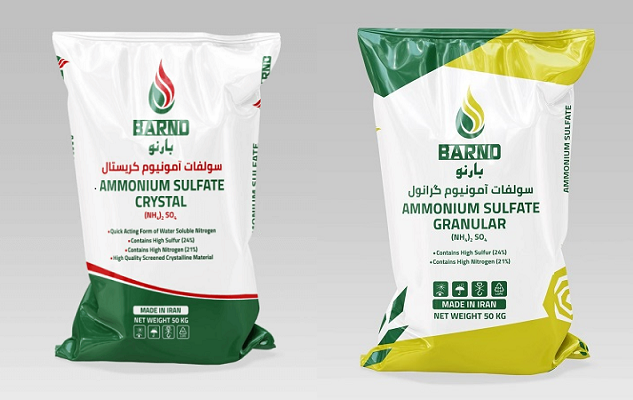
Our recommendation is Barno Ammonium Sulfate. This company is one of the most reliable manufacturers of Iranian ammonium sulfate. The products of Barsava Sepehr Part Company (trading as Barno) are sold in Iran and countries such as Turkey, Brazil, India, and Iraq, meeting international quality standards and satisfying the needs of diverse agricultural sectors.