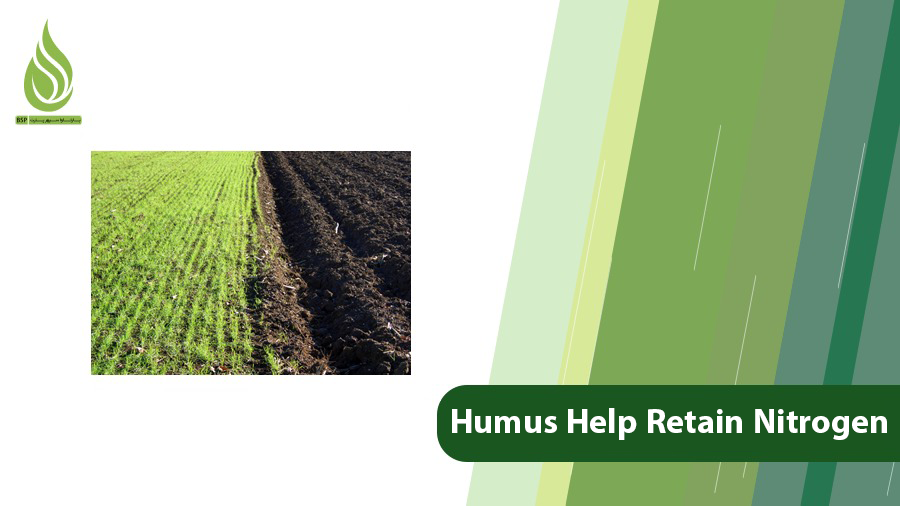
How Does Humus Help Retain Nitrogen in Soil?
Humus is a natural and organic substance whose presence in agricultural and orchard soils leads to improved plant growth and higher productivity. This material provides numerous benefits for both soil and plants. One of humus’s most important functions is its role in retaining nitrogen in the soil. Soils that contain an adequate amount of humus are able to hold nitrogen more effectively and prevent its rapid loss. As a result, fertilizer efficiency increases and plants are able to access nitrogen over a longer period of time. In this article, we will thoroughly examine the properties of humus and explain in detail how humus contributes to nitrogen retention in soil.
What Is Humus and What Are Its Characteristics?
Humus is a dark-colored, decomposed, and nutrient-rich organic material that forms as a result of the complete decomposition of plant and animal residues over a long period of time. The chemical composition of humus consists primarily of carbon, along with smaller but important amounts of nitrogen, phosphorus, and sulfur.
Animal carcasses and plant residues that accumulate on the soil surface gradually decompose and become part of the soil. When these residues reach the highest level of decomposition, humus is formed. In agricultural soils, humus functions as a natural fertilizer and plays a key role in nutrient availability.

One of the most important properties of humus is its ability to absorb and retain mineral elements and gradually release them to plant roots. This slow-release mechanism prevents sudden nutrient losses and supports steady plant growth.
Considering that soil quality has declined in many regions of the world over recent decades, due to intensive agriculture, erosion, and improper management, the efficient use of humus is a practical and sustainable approach to preserving natural resources and maintaining long-term soil productivity.
The Role of Humus in Nitrogen Retention in Soil
Humus is primarily located in the topsoil layer, where biological activity is highest and where plant roots are most concentrated. This position allows humus to play a direct role in nutrient exchange, water retention, and root development. Several environmental factors influence the formation of humus, including:
- Temperature
- Soil moisture
- Soil type
- Type of vegetation cover
Therefore, both the quantity and quality of humus formed in soil depend on multiple interacting conditions.
The Process of Humus Formation
The formation of humus occurs through the following stages:
- Decomposition of plant and animal residues
Organic materials such as leaves, roots, stems, and animal remains begin to break down under the influence of microorganisms. - Decomposition of simple compounds
Simple organic compounds such as carbohydrates and proteins are broken down into smaller molecules. - Reaction of these simple compounds with minerals and complex organic substances
As decomposition progresses, stable compounds such as humic acids, fulvic acids, and humin are formed. - Binding of stable compounds to soil mineral particles
These stable organic compounds attach to the surfaces of soil particles, forming the final structure of humus. This stabilization occurs through strong chemical bonds between organic matter and mineral particles.
Some people mistakenly consider humus and compost to be the same material, but this is incorrect. Compost represents an earlier stage of organic matter decomposition, whereas in humus, organic compounds have been fully decomposed and stabilized.

What Are the Benefits of Humus in Agriculture?
Humus provides numerous benefits that significantly improve soil quality and crop performance:
- Increased soil porosity
Humus increases soil pore space, allowing water and oxygen to move more easily between soil particles and reach plant roots. - Improved water-holding capacity
Humus acts like a sponge, absorbing and retaining water. It can hold up to 90% of its own weight in moisture, which is especially valuable in dry and semi-arid regions. - Reduced soil erosion
Organic compounds in humus help soil particles bind together, reducing erosion caused by wind and water. - Nutrient storage and gradual release
Humus stores essential nutrients such as nitrogen and phosphorus and releases them slowly, preventing sudden nutrient losses. - Increased cation exchange capacity (CEC)
Due to its colloidal structure, humus enhances the soil’s ability to retain and exchange cations such as calcium and magnesium. - Improved soil temperature regulation
The dark brown or black color of humus allows soil to absorb and retain more heat. - Overall soil structure improvement
Humus improves aggregation, reduces compaction, and enhances root penetration.
Despite these advantages, it is important to note that humus contains lower nutrient concentrations than fresh organic or animal manures. The quality of humus depends greatly on its source material and the degree of decomposition it has undergone.

Nitrogen Leaching from Soil and the Role of Humus in Nitrogen Retention
Nitrogen leaching refers to the process by which nitrate ions (NO₃⁻) are transported downward through the soil profile by moving water and eventually enter groundwater. When this occurs, nitrogen moves out of the plant root zone.
This process leads to:
- Reduced efficiency of nitrogen fertilizers
- Decline in plant growth and greenness
- Financial losses for farmers
- Contamination of surface and groundwater resources
Nitrogen leaching is one of the most serious challenges in modern agriculture, especially in regions with high rainfall, sandy soils, or low organic matter content.

Humus, as one of the most important components of soil organic matter, plays a key role in nitrogen conservation and management. Reducing nitrogen leaching significantly improves agricultural productivity while also protecting environmental health.
Mechanisms Through Which Humus Retains Nitrogen
Humus contributes to nitrogen retention through several mechanisms:
1. Increasing Cation Exchange Capacity (CEC)
Due to its high humus content, soil organic matter has a high CEC. This allows humus to strongly attract and retain positively charged ions such as ammonium (NH₄⁺), which is one form of nitrogen.
By retaining ammonium on organic matter surfaces, nitrogen becomes less susceptible to leaching compared to soils with low organic matter. We also suggest you to take a look at our guide to soil leaching.
2. Reducing Excessive Soil Permeability
Humus improves soil structure by increasing porosity, reducing compaction, and enhancing water-holding capacity. These improvements cause water to move more gradually through the soil, reducing rapid nitrate movement to deeper layers.
3. Increasing Microbial Activity and Regulating the Nitrogen Cycle
Beneficial soil microorganisms become more active in the presence of organic matter. These organisms regulate critical processes such as:
- Nitrogen mineralization
- Nitrogen immobilization
- Nitrogen transformation
As a result, nitrogen is released gradually rather than all at once, making it more available to plants over time. You can also plant nitrogen fixing plants to make it right.
4. Preventing Nitrate Loss to Groundwater
In soils lacking organic matter, water quickly carries nitrate to deeper layers. In contrast, humus-rich soils retain nitrate longer in the upper soil layers, allowing plants to absorb it before it is lost.
Comparison of Humus-Rich and Humus-Poor Soils
| Characteristic | Humus-Poor Soil | Humus-Rich Soil |
|---|---|---|
| CEC | Low | High |
| Nitrogen storage | Low | High |
| Nitrogen leaching | High | Low |
| Microbial activity | Limited | High |
| Nitrogen fertilizer efficiency | Low | High |
Methods for Increasing Humus in Agricultural Soils
When sufficient humus is present in soil, nitrogen is retained more effectively, and nutrient losses through volatilization and leaching are reduced. Adequate humus also improves nitrogen uptake by plants, increasing fertilizer efficiency and reducing production costs.
1. Application of Well-Decomposed Organic Fertilizers
The use of fully decomposed organic fertilizers is the fastest and most effective way to increase humus content. These materials are rich in organic carbon and gradually transform into stable humus after being incorporated into soil.
2. Cover Cropping
Cover crops protect soil during fallow periods, reduce erosion, and minimize nitrate leaching. Leguminous cover crops can also fix atmospheric nitrogen and improve soil fertility.
3. Retaining Crop Residues in Crop Rotation
Leaving crop residues such as stems, leaves, and roots in the field rather than burning them plays a major role in humus formation. These residues provide food for microorganisms and increase soil biodiversity.
4. Avoiding Deep and Frequent Tillage
Deep tillage accelerates organic matter decomposition and reduces humus reserves. Conservation tillage practices help preserve humus and maintain soil structure.
5. Proper Irrigation Management
Excessive irrigation and waterlogging are common agricultural mistakes. Managing irrigation volume and timing, especially using drip irrigation, reduces nitrogen movement to deeper soil layers.

Optimal Integration of Humus, Organic Fertilizers, and Chemical Fertilizers
In this article, we examined the role of humus in nitrogen retention. However, the presence of humus in agricultural soils does not eliminate the need for organic or chemical fertilizers.
Humus helps retain nitrogen, but it cannot compensate for all nutrient deficiencies. Organic fertilizers and humus improve soil structure, increase water and nutrient-holding capacity, and create a favorable environment for beneficial microorganisms.
When chemical fertilizers are applied accurately and based on plant needs, humus helps stabilize these nutrients and release them gradually to plant roots. This synergy reduces nutrient loss and improves nitrogen uptake efficiency.
Additionally, humus reduces the negative effects of excessive chemical fertilizer use and maintains soil nutritional balance. The result is:
- Uniform plant growth
- Healthier root systems
- Improved crop quality
- Reduced need for frequent fertilizer applications
Ultimately, this integrated approach increases farm productivity while guiding agriculture toward sustainable and efficient resource management.