A Complete Fertilization Guide for Green Peas
Green peas (Pisum sativum L.) are among the most widely consumed and economically important legume crops in the world. Valued for their high nutritional content, pleasant flavor, and versatility in fresh, frozen, and processed forms, green peas play a vital role in both human nutrition and sustainable agricultural systems. This comprehensive guide explains the botanical characteristics, environmental requirements, and nutritional needs of green peas, with a strong focus on fertilization management from planting to harvest.
Rich in plant-based protein, dietary fiber, vitamins (especially A, C, and B-complex), and essential minerals such as potassium, phosphorus, and iron, green peas are an integral part of diets across Europe, Asia, the Middle East, and North America. Beyond food production, peas also contribute significantly to soil fertility, crop rotation systems, and environmental sustainability.
By following a scientifically balanced fertilization program, supported by soil testing, growers can achieve higher yields in green peas, better pod quality, and healthier soils, while avoiding unnecessary fertilizer costs or environmental damage.
Botanical Characteristics of Green Peas
Green peas belong to the legume family (Fabaceae), one of the most important plant families in global agriculture. This family is distinguished by its unique ability to form a symbiotic relationship with nitrogen-fixing bacteria, primarily Rhizobium species, which live in nodules on plant roots.
Green peas are cultivated worldwide and consumed in multiple forms:
- Fresh (snap peas and shelling peas)
- Frozen
- Canned
- Dried (for split peas and animal feed)
They are grown not only for human consumption, but also for:
- Livestock feed
- Green manure and soil improvement
- Crop rotation and disease suppression
Root System and Nitrogen Fixation
Green peas develop a deep taproot system, which can extend up to 1 meter (3 feet) into the soil under favorable conditions. This deep rooting improves water and nutrient uptake and enhances soil structure.
The roots host Rhizobium bacteria, which convert atmospheric nitrogen (N₂) into plant-available forms. While this biological nitrogen fixation reduces dependence on synthetic nitrogen fertilizers, it does not eliminate the need for nitrogen entirely, especially during early growth stages or in poor soils.
Climate Adaptability and Varieties
Green peas are considered cool-season crops and are relatively tolerant of cold temperatures, making them well suited for fall planting and early spring cultivation.
Common commercial varieties include:
- Alaska
- German pea varieties
- Servo
- Sugar snap and snow pea types (for fresh markets)
Each variety has slightly different nutrient and climate requirements, which should be considered when designing a fertilization program.
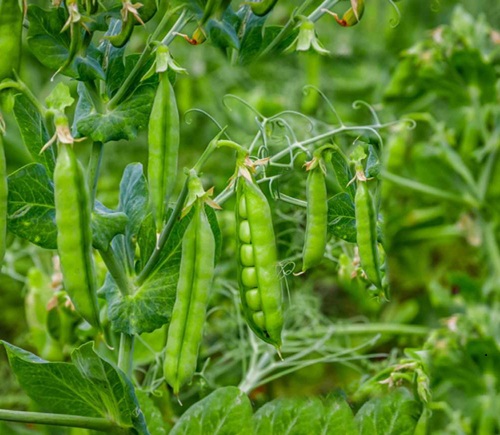
Optimal Growing Conditions for Green Peas
Successful pea production depends on matching the crop’s biological needs with appropriate environmental and soil conditions.
Soil Type and pH
Green peas perform best in:
- Light to medium-textured soils
- Loamy or sandy loam soils
- Well-drained conditions
Optimal soil pH ranges from 6.0 to 7.5. Poor drainage, heavy clay soils, or extreme pH levels can severely reduce root development, nutrient uptake, and nitrogen fixation.
Sunlight Requirements
Peas require full sunlight for optimal photosynthesis:
- Minimum:
6hours of direct sunlight per day - Ideal:
8hours or more
Insufficient light leads to weak vegetative growth, poor flowering, and reduced pod formation.
Temperature
Green peas thrive in cool weather:
- Minimum soil temperature for planting:
10°C (50°F) - Ideal air temperature for growth:
13–20°C (55–68°F)
Temperatures above 25°C (77°F) can:
- Halt vegetative growth
- Reduce flowering
- Decrease pod quality and yield
Moisture and Humidity
While peas require consistent moisture, excess humidity is harmful. High moisture levels promote:
- Fungal diseases
- Excessive vegetative growth
- Lodging (plants falling over)
Moderate irrigation combined with good air circulation is essential.
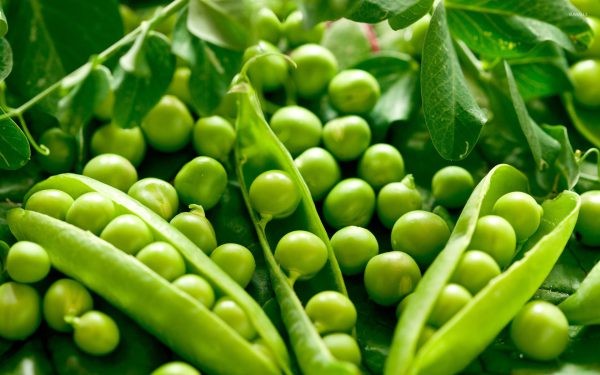
Why Soil Testing Is Essential for Green Peas Fertilization
One of the most common mistakes in agriculture is either under-fertilizing or over-fertilizing. Both practices reduce yield, waste money, and harm soil health.
A soil test is the foundation of any effective fertilization program, especially for green peas.
Benefits of Soil Testing
Conducting a soil test before planting allows growers to:
- Accurately determine nitrogen (N), phosphorus (P), and potassium (K) needs
- Identify deficiencies in micronutrients such as manganese, iron, zinc, and boron
- Measure soil pH and salinity
- Select the most effective fertilizer type and application method
- Reduce fertilizer costs and environmental risks
Without soil testing, fertilization becomes guesswork, increasing the risk of:
- Nutrient imbalance
- Poor nodulation
- Lower yields and reduced quality
General Fertilization Requirements of Green Peas
Although green peas are legumes, they still require a balanced nutrient supply throughout their growth cycle.
Key nutrients include:
- Nitrogen (N) – for early growth and chlorophyll formation
- Phosphorus (P) – for root development and flowering
- Potassium (K) – for stress tolerance and pod quality
- Secondary nutrients – calcium, sulfur, magnesium
- Micronutrients – iron, manganese, zinc, boron
The exact amounts depend on soil fertility, climate, and production goals.
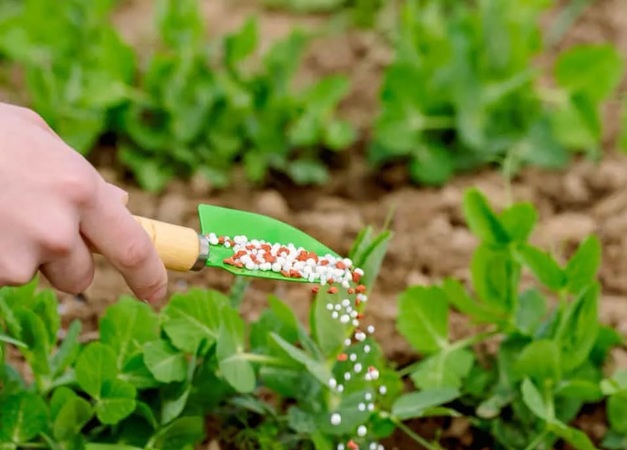
Fertilization Program for Green Peas by Growth Stage
Land Preparation and Pre-Plant Fertilization
Land preparation typically begins 2–3 weeks before planting.
Objectives at This Stage
- Improve soil structure
- Enhance root development
- Establish nutrient reserves for early growth
Organic Matter
Incorporating well-decomposed organic matter (such as compost or aged manure) is highly recommended. Organic matter:
- Improves soil aeration and water retention
- Enhances microbial activity
- Increases nutrient availability
Phosphorus Application
Phosphorus is critical at planting because it:
- Stimulates early root growth
- Improves nutrient uptake
- Supports uniform seedling establishment
Apply phosphorus fertilizers (based on soil test results) and incorporate them into the soil before planting.
Potassium (If Needed)
In potassium-deficient soils, applying potassium before planting:
- Improves plant resilience
- Enhances disease resistance
- Prepares the plant for reproductive growth
Early Vegetative Growth (Stem and Leaf Development)
Approximately 2–3 weeks after planting, seedlings emerge and begin active vegetative growth.
Nitrogen Management
Although peas fix nitrogen, they may benefit from a small starter dose of nitrogen, especially in:
- Poor soils
- Cold conditions
- Fields with no recent legume history
Ammonium sulfate fertilizer is an excellent nitrogen source at this stage, particularly in:
- Alkaline soils
- Saline conditions
Benefits of ammonium sulfate:
- Provides readily available nitrogen
- Supplies sulfur, an essential nutrient
- Helps slightly acidify alkaline soils, improving nutrient uptake
Excess nitrogen should be avoided, as it can suppress root nodulation.
Micronutrients at the 2–4 Leaf Stage
At this sensitive stage, peas respond strongly to micronutrients:
- Iron – supports chlorophyll production
- Calcium – strengthens cell walls
- Manganese – essential for photosynthesis and enzyme activity
Manganese deficiency is particularly common in alkaline soils and should be corrected early.
Flowering Stage
Flowering usually occurs 4–6 weeks after planting and marks the transition to the reproductive phase.
Increased Potassium Demand
Potassium plays a central role in:
- Flower formation
- Pollination success
- Carbohydrate transport
Adequate potassium improves:
- Flower retention
- Pod set
- Final yield
Calcium and Manganese
Calcium at flowering:
- Improves flower strength
- Reduces flower drop
- Enhances pod integrity
Manganese supports:
- Successful fertilization
- Uniform pod development
Foliar applications may be particularly effective at this stage.
Pod Formation and Filling
During pod filling, nutrient demand peaks.
Key nutrients:
- Potassium – improves pod size and seed quality
- Calcium – prevents pod deformation and shriveling
- Micronutrients – maintain metabolic activity
Adequate nutrition at this stage directly influences market quality and yield consistency. We suggest you also take a look at our guide to legume fertilization.
Fertilization Before Harvesting Green Peas
Approximately 2–3 weeks before harvest, targeted micronutrient applications can enhance final quality.
Recommended nutrients:
- Zinc – supports enzyme systems
- Iron – maintains green color and nutritional value
Foliar spraying is the most efficient method during this late stage.
Nitrogen Requirements of Green Peas

Green peas require less nitrogen than most crops, but not zero nitrogen.
Understanding Nitrogen Fixation
Nitrogen fixation depends on:
- Presence of effective Rhizobium strains
- Soil temperature and moisture
- Soil pH and fertility
Excess nitrogen fertilizer:
- Reduces root nodulation
- Promotes excessive leaf growth
- Delays maturity
- Reduces pod formation
When Nitrogen Is Beneficial
A low, carefully managed nitrogen dose is useful:
- At early growth stages
- In soils with low organic matter
- Where nodulation is weak
Ammonium sulfate is particularly suitable because:
- It provides controlled nitrogen availability
- Supplies sulfur, which supports protein synthesis
- Helps manage alkaline soil conditions
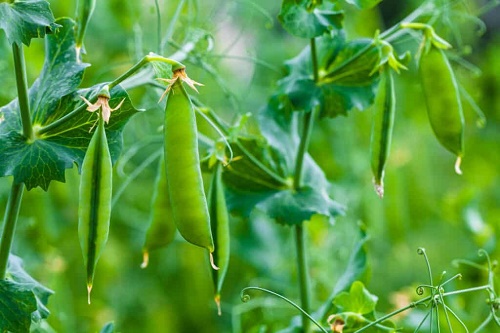
Why Green Peas Are Ideal for Crop Rotation
Green peas are one of the best crops for rotation systems.
Key benefits:
- Improve soil nitrogen levels
- Increase organic matter after harvest
- Break pest and disease cycles
- Reduce fertilizer needs for subsequent crops
They are especially effective when rotated with:
- Cereals (wheat, barley)
- Vegetable crops
Their moderate water requirement also makes them suitable for semi-arid and water-limited regions.
Final Thoughts
Successful production of green peas depends on balanced nutrition, proper soil management, and precise fertilization timing. While peas offer natural nitrogen benefits through biological fixation, they still require thoughtful nutrient management to reach their full yield and quality potential.
By:
- Conducting soil tests
- Using fertilizers responsibly
- Applying nitrogen sources like ammonium sulfate where appropriate
- Paying attention to micronutrients
Growers can achieve higher yields, better-quality pods, and healthier soils, while supporting long-term agricultural sustainability.