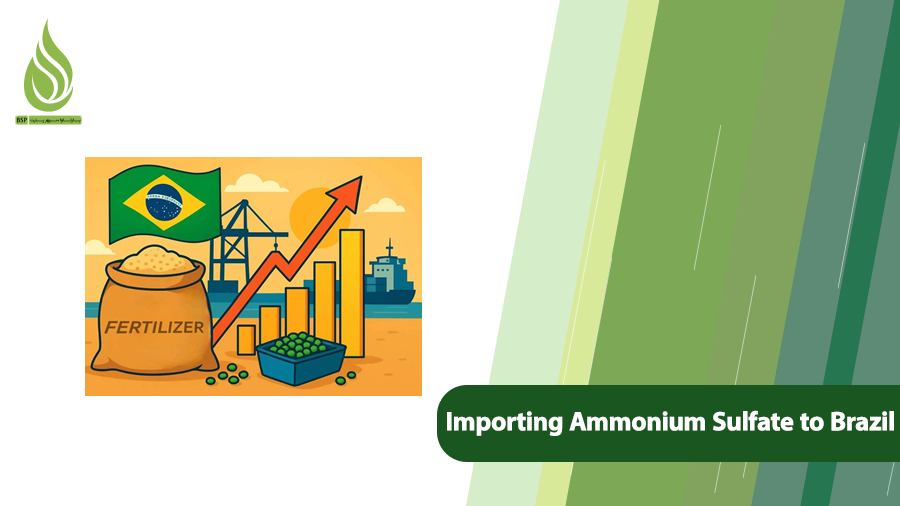
A Guide to Importing Ammonium Sulfate from Iran to Brazil
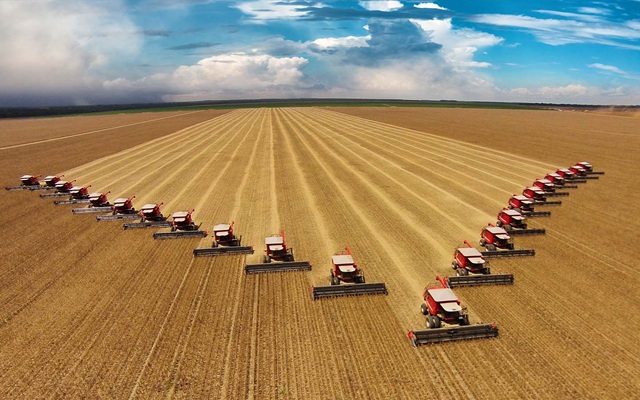
Brazil is one of the great agricultural powers of the world. The country holds a prominent position in the production and export of commodities such as soybeans, corn, sugarcane, coffee, and meat, with the agricultural sector serving as the main pillar of its economy. Given the massive scale of its agriculture and livestock industries, Brazil meets a significant portion of its requirement for agricultural fertilizers through imports. In recent years, Iran has emerged as one of the important producers of nitrogen fertilizers globally, and its exports have expanded into markets such as Brazil. In this article, we examine the conditions for importing ammonium sulfate from Iran to Brazil. We also explain why importing ammonium sulfate from Iran offers distinct advantages for the Brazilian government and traders.
Iran’s Position in Fertilizer Exports and Trade Status with Brazil
Iran is one of the largest producers of nitrogen fertilizers in the world. The total value of Iran’s fertilizer exports has reached several billion dollars annually in recent years, with the bulk of it consisting of nitrogenous fertilizers.
In the sector of agricultural chemical fertilizers, Brazil supplies up to 80% of its needs through imports. One of the countries from which Brazil purchases its required fertilizers is Iran.
In 2022, the value of fertilizer exports from Iran to Brazil was estimated at approximately $136 million. Trade has continued in the years since, although annual figures have varied depending on global market conditions and trade policies. In addition to agricultural fertilizers, the import of products such as petrochemicals and polymers, industrial equipment, construction materials, pistachios, pharmaceuticals, and saffron from Iran is attractive to the Brazilian market.
Iran and Brazil have a suitable barter arrangement to meet each other’s needs. In exchange for products imported into Brazil, Iran imports products such as tableware, marble, meat, leather, and more from Brazil.
Technical Specifications of Interest in Ammonium Sulfate
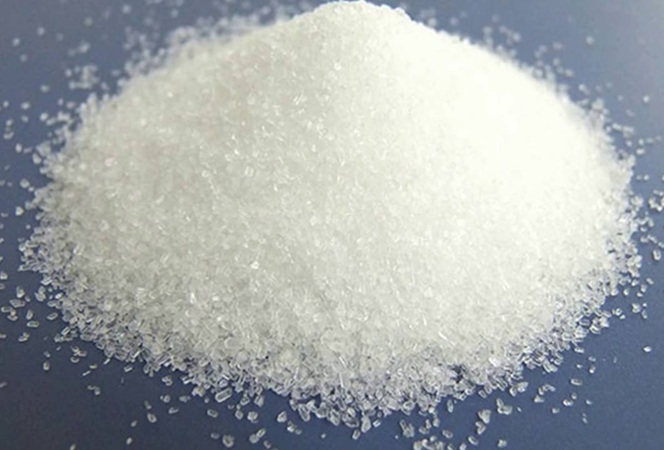
Ammonium Sulfate is a chemical fertilizer with the formula (NH₄)₂SO₄. This fertilizer supplies nitrogen and sulfur for arable land, orchards, and greenhouses. Nitrogen is a key element in vegetative plant growth, leaf formation, and yield increase. Many agricultural soils in Brazil, especially in areas with very high rainfall, suffer from sulfur deficiency. Ammonium sulfate, in addition to nitrogen, is considered a suitable source of absorbable sulfur for plants.
The country of Brazil is most interested in ammonium sulfate that has the following characteristics:
- Produced in high-quality crystalline or granular form.
- Contains 21% nitrogen and 24% sulfur.
- Has safe and standard packaging to prevent damage during transit.
- Is free of impurities such as chlorine or heavy metals.
- Possesses the necessary quality standards.
Advantages of Importing Iranian Ammonium Sulfate
Importing Iranian ammonium sulfate to Brazil offers several important advantages:
- Diversification of Supply Sources: Brazil supplies a large part of its fertilizer needs from a few specific countries. Adding Iran to the basket of suppliers reduces the risk of dependence on one or two main sources and increases supply chain flexibility.
- High Quality: The standard purity of Iranian ammonium sulfate is in line with global market requirements.
- Competitive Pricing: Given that Iran has access to cheap natural gas feedstock, the cost of producing nitrogen fertilizer in this country is lower. This can reduce the final cost of imports for Brazilian buyers.
- Strengthening Food Security: Reducing fluctuations in fertilizer supply leads to stability in agricultural production. For a country like Brazil, which is one of the main players in global food security, reliable access to inputs is of strategic importance. Imports from Iran can provide this assurance.
- Economic Benefits for Brazilian Traders: Diversification in commercial contracts increases the bargaining power of importers and prevents severe price shocks.
- Supply Stability: Iranian manufacturers have high production capabilities and can meet customer needs even during peak fertilizer consumption seasons.
Routes for Importing Ammonium Sulfate from Iran to Brazil
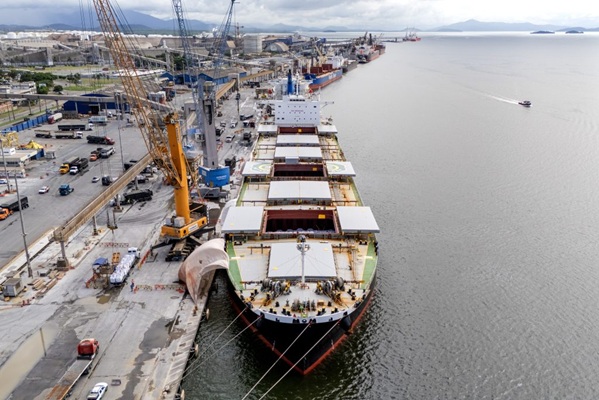
There are two routes for transporting fertilizer from Iran to Brazil: sea and air. The sea route is more common due to its lower cost.
- Direct Sea Route: The most common and economical method for transporting fertilizer from Iran to Brazil is direct sea freight. Cargo is loaded from the southern ports of Iran in the Persian Gulf and transferred via the Indian Ocean, around the Cape of Good Hope, or via ocean routes to major Brazilian ports such as Santos, Paranaguá, or Rio Grande. This method is used for high volumes.
- Sea Route with Stopovers at Intermediate Ports: In conditions of banking or shipping restrictions, the cargo may first be transferred to an intermediate port in the Middle East or the Mediterranean region and then sent to the final destination in Brazil by another ship. This method creates more flexibility but increases the cost and time of transport.
- Air Freight: Occasionally, depending on conditions, air freight may be necessary. However, the cost of this method is high and it is only recommended in special circumstances.
Stages of Importing Ammonium Sulfate into Brazil
Once the Brazilian importer is sure that the Iranian manufacturer produces the desired ammonium sulfate, they must establish contact and conclude a contract. This requires going through several stages:
- Obtaining an Import License for Ammonium Sulfate: The fertilizer importer must ensure that the Brazilian government allows the import of ammonium sulfate from Iran.
- Market Research and Identifying Sellers: The Brazilian importer must identify top Iranian manufacturers and review the technical specifications of their products. Purity percentage, type of packaging, delivery conditions, and order volume are among the factors that are important in selecting the manufacturing company.
- Negotiation with the Manufacturer and Contract Drafting: The fertilizer importer must contact the manufacturer and state the conditions for purchasing the fertilizer. The Iranian product must pass relevant tests regarding plant health (SPS), TBT permits (related to technical specifications), etc. Negotiations must also take place regarding price, payment terms, delivery time, and other details.
- Contract Conclusion: After agreement between the buyer and seller, a contract must be concluded between them specifying the delivery time, price, insurance mechanism, method of cargo transfer, etc.
- Obtaining Export Permits in Iran: The Iranian exporter must obtain the necessary permits from relevant authorities, prepare the customs declaration, and complete the formalities for the exit of goods from the country. Also, product analysis certificates and quality documents must be prepared.
- Transportation and Insurance Coordination: Selecting the shipping line, booking the ship, issuing the bill of lading, and insuring the cargo against transport risks are vital stages in this section. For long-term intercontinental transport, comprehensive insurance coverage is particularly important.
- Packaging and Loading: This stage is performed by the Iranian party.
- Clearance in Brazil: At the destination, the importer must present transport documents, commercial invoice, certificate of origin, and quality certificates to customs authorities. After review and payment of potential duties, the goods receive permission to enter the domestic market.
In the past, when internet communications were not as developed as they are today, merchants had to meet in person to make deals. However, today in the age of technology, companies correspond with the manufacturing company through reputable websites, LinkedIn, or phone calls to purchase their desired products.
Main Challenges in Importing Iranian Ammonium Sulfate
- The long distance between Iran and Brazil increases transportation costs.
- The imported fertilizer must comply exactly with Brazilian technical and environmental regulations. Any discrepancy in chemical composition or labeling can cause delays or even return of the cargo.
- Language differences can create problems in commercial communications and contracts.
- Exchange rate fluctuations can affect the profitability of the trade.
- Money transfers, letters of credit, and international payment mechanisms can become complicated due to political and banking conditions.
Despite these challenges, trade between Brazil and Iran remains profitable for both sides. Past commercial transactions between the two countries are proof of this. Major Brazilian traders and importers know the mechanisms of trading with Iran. For example, transferring money to the account of the Iranian seller is challenging, but solutions exist to solve this problem:
- Using international exchange houses in the UAE or Oman.
- Bartering goods with the Iranian party.
- Using bank accounts of intermediary companies.
The remaining challenges can also be solved if both parties agree. Newly established and smaller companies are better off cooperating with commercial intermediary companies for imports to avoid problems in the import process from Iran.
Purchasing Ammonium Sulfate from Barthava Sepehr Part Company
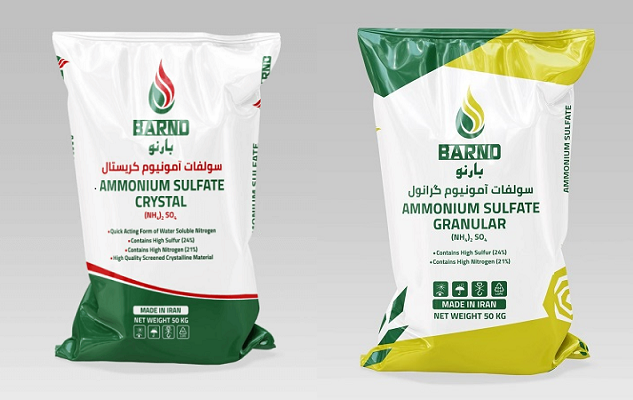
Iranian-produced ammonium sulfate holds a special place in trade due to its suitable quality and competitive price. Among reputable manufacturers of ammonium sulfate, the name of Barthava Sepehr Part Company is always on the list. This company has always been able to attract the attention of buyers by offering superior features. These features include:
- Professional and Resistant Packaging: The use of moisture-proof bags ensures that the product maintains its quality during transportation and storage and reaches the buyer without loss of quality.
- Variety in Supply Form: Barno ammonium sulfate is produced in three types: granular, crystalline, and powdered. This diversity makes the product suitable for various methods of consumption and distribution in farms and greenhouses.
- Standard Chemical Composition: Barno product contains 21% nitrogen and 24% sulfur, and its quality is consistent with reputable global standards.
- Free of Pollution and Impurities: In the production process of this fertilizer, quality control is carefully carried out so that the final product is free of heavy metals and any unwanted compounds.
- Economic Efficiency for Buyers: The final price of Barno ammonium sulfate is much lower than similar European models, even though there is no difference in quality.