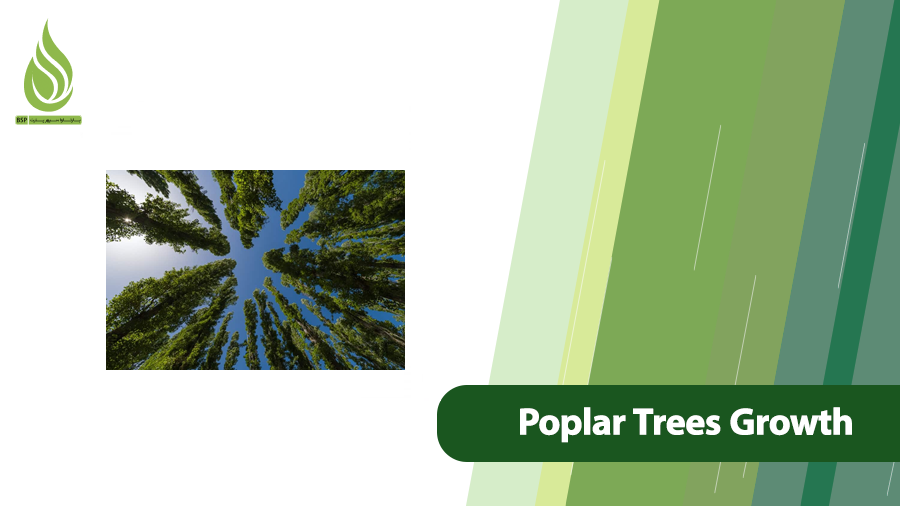
Key Strategies for Rapid Growth in Poplar Trees
Poplar trees are a powerhouse in the wood and paper industries, offering tremendous potential for economic profitability when cultivated properly. Whether you’re a farmer, landowner, or investor looking to capitalize on sustainable forestry, understanding the key strategies for fostering the rapid growth of poplar trees is crucial. Achieving rapid growth and high productivity requires precisely meeting the tree’s nutritional, environmental, and management needs. This comprehensive guide provides practical, science-backed advice for anyone aiming to accelerate poplar tree development.
Introduction to Poplar Trees and the Benefits of Planting Them
Poplar trees (genus Populus) are renowned for their fast growth rates, making them a favorite in commercial forestry worldwide. Native to temperate regions, poplars thrive in diverse climates, from North America’s vast plantations to Europe’s hybrid forests and Asia’s intensive cultivations. In Iran, they’re commonly grown in northern, northeastern, and northwestern areas, but globally, species like hybrid poplars are planted in places such as the United States (e.g., Pacific Northwest), Canada, China, and India for timber production.
Under ideal conditions, poplars can grow 6 to 10 feet (2 to 3 meters) annually, far outpacing many other hardwoods. However, in poor soil or suboptimal environments, growth may dwindle to less than 2 feet (50 cm) per year. With proper care, trees can reach harvest maturity in just 7 to 10 years, compared to 20-30 years for oaks or maples.
Cultivating poplars offers numerous advantages:
- Versatile Applications: Poplar wood is used in paper manufacturing, furniture, construction, pallets, and even biofuels. Global demand remains steady; for instance, poplar plantations contribute to over 10% of the world’s industrial roundwood in some regions, ensuring strong financial returns.
- Soil Protection: Their extensive root systems prevent soil erosion, stabilizing riverbanks and agricultural lands. Poplars reduce runoff by up to 30% in erosion-prone areas.
- Biodiversity Boost: Poplar groves provide habitats for diverse wildlife, including birds, insects, and mammals, enhancing ecosystem health.
- Short Rotation Cycle: Unlike slower-growing species, poplars mature quickly, allowing for multiple harvests in a landowner’s lifetime.
- Environmental Benefits: They excel at carbon sequestration, absorbing CO2 and releasing oxygen. A single hectare of poplar can sequester up to 20 tons of carbon annually, aiding climate change mitigation.
Poplars come in various species and hybrids, with fast-growing varieties like Eastern cottonwood (Populus deltoides), black poplar (Populus nigra), and hybrids such as Populus × canadensis or Populus trichocarpa × deltoides. These are ideal for timber, urban greening, and commercial projects. In the U.S., hybrids developed by the University of Washington’s Poplar Research Program have shown growth rates exceeding 15 feet per year in trials.
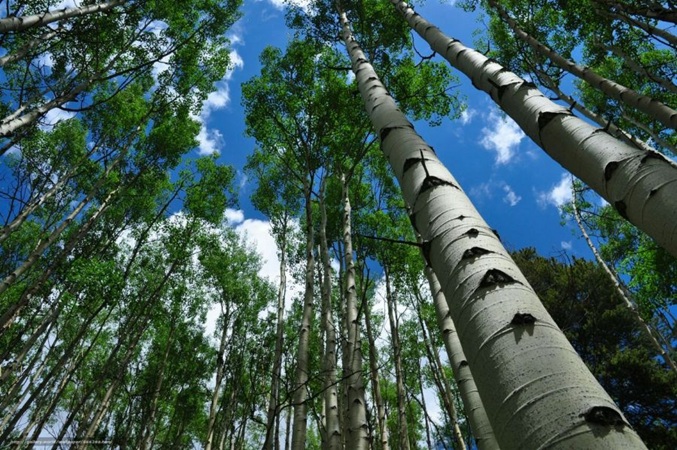
Key Strategies for Accelerating the Growth of Poplar Trees
Mastering the cultivation of poplar trees can multiply growth rates while minimizing maintenance costs. By focusing on essentials like variety selection, soil preparation, strong seedling planting, proper watering, fertilization, pruning, and pest control, you can achieve tall, thick-trunked trees in record time. Recent global research emphasizes that integrated management can boost yields by 50-100%.
Soil Assessment and Preparation
Selecting the right poplar variety is foundational; opt for locally adapted ones like Eastern cottonwood in the U.S. or hybrid poplars in Europe and Asia. Soil quality profoundly influences the growth in poplar trees. Poplars prefer loamy to sandy soils with excellent drainage to prevent root rot. The ideal pH range is 6.0 to 7.5. Conduct a soil test to measure nutrient levels; kits are available from agricultural labs worldwide.
If soil falls short, amend it:
- Add organic matter like compost to improve structure and fertility.
- Adjust pH with sulfur (to lower) or lime (to raise), aiming for gradual changes.
- Till the land to aerate and incorporate amendments.
Proper soil can triple growth rates for poplar trees. In regions like China’s Yangtze River Basin, soil amendments have increased poplar biomass by 40%.
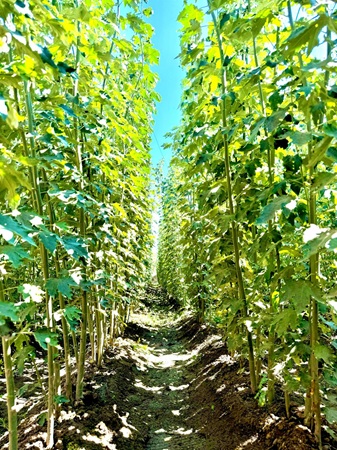
Optimal Irrigation Practices
Young poplars demand consistent moisture, especially in the first few years. Drip irrigation is the gold standard, conserving water by 30-50% compared to flood methods. It delivers water evenly to roots, reducing evaporation and weed competition.
In hot, dry seasons with low rainfall, irrigate every 7-10 days. For the first two years, weekly watering is recommended; some experts suggest twice-weekly in year one for establishment. By year six, extend to every 10-14 days. Irrigate early morning or evening to minimize loss; studies show up to 20% less evaporation during these times.
In arid areas like California’s Central Valley, advanced sensors monitor soil moisture, optimizing water use and boosting growth by 25%. Overwatering risks fungal diseases, so balance is key.
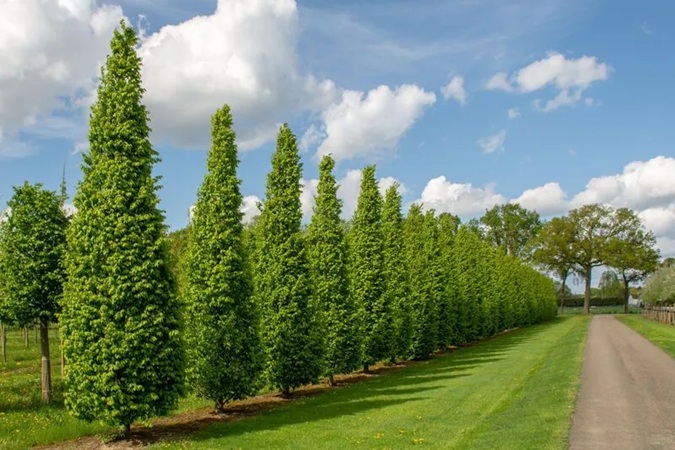
Effective Fertilization: The Path to Rapid Growth of Poplar Trees
Nutrition is pivotal for the explosive growth of the poplar trees. Poplars require macronutrients like nitrogen (N) for height, phosphorus (P) for roots, and potassium (K) for trunk strength. Micronutrients such as iron, zinc, boron, and manganese support leaf health and photosynthesis.
A timed fertilization schedule, adapted from IPC recommendations:
| Growth Period | Fertilizer Type | Purpose |
|---|---|---|
| Early Spring | Nitrogen-rich + Humic Acid | Kickstart rapid growth |
| Mid-Spring | Complete NPK | Strengthen trunk and foliage |
| Late Summer | High-Potassium | Enhance trunk diameter and resilience |
| Fall | Organic Compost | Soil enrichment for next season |
Tailor based on tree age, soil tests, and climate; consult local agronomists. Organic fertilizers, like manure or compost, release nutrients slowly, improving soil over time. In addition to chemicals, organics like vermicompost enrich microbial activity, increasing nutrient uptake by 15-20%.
Influence of Light, Temperature, and Climate on Growth of Poplar Trees
Poplars thrive with full sun; at least 6-8 hours daily. Shade reduces growth by up to 50%. Ideal temperatures range from 59°F to 86°F (15-30°C), with poplars favoring temperate climates with warm summers and cold winters for dormancy.
They tolerate cold down to -4°F (-20°C) depending on variety. High humidity and adequate rainfall (20-40 inches annually) are optimal; in drier areas, supplemental irrigation is essential.
Plant spacing of 8-10 feet (2.5-3 meters) prevents competition for light and nutrients. In global plantations, optimal spacing has yielded 20-30 tons of biomass per hectare yearly.

Pruning Techniques to Boost Growth Speed
Proper pruning directs energy to vertical growth, increasing trunk diameter and overall vigor. Remove weak, damaged branches and root suckers annually, especially in years 1-2 for shaping. Tools like sharp shears prevent disease entry. Pruning can enhance wood quality and growth by 20%. Avoid over-pruning, which stresses trees.
Managing Pests and Diseases
Pests like aphids, leaf beetles, and bark borers, plus diseases such as poplar rust or canker, can halve growth if unchecked. Early detection via regular scouting is vital.
Natural predators, traps, and targeted pesticides. The EPA and EU guidelines promote biological controls to minimize chemical use. In the U.S., Bacillus thuringiensis (Bt) effectively manages caterpillars without harming beneficial insects. Climate change has increased pest pressures; an FAO report notes rising incidences in Asia, recommending resistant hybrids.
Ammonium Sulfate Granular: The Top Fertilizer for Poplar Trees
Ammonium sulfate, a nitrogen-rich fertilizer (21% N, 24% S), is ideal for poplars, promoting new leaves, height gains, greener foliage, enhanced photosynthesis, and faster cell production. Unlike urea, it has low leaching, ensuring sustained availability, crucial in rainy climates.
In alkaline soils common in the Middle East and parts of the U.S. Midwest, its sulfur content lowers pH gently, improving nutrient absorption. Granular form offers:
- Uniform distribution around trees
- Gradual nitrogen release
- Reduced loss in irrigation
- Longer soil persistence
- Fewer applications needed
In flood or heavy watering, it outperforms urea by retaining nitrogen. For poplars, apply 100-200 lbs/acre in spring, based on soil tests.
We recommend Barno Ammonium Sulfate Granular, produced in professional labs and exported to India, Pakistan, Iraq, Turkey, and beyond. Its high purity ensures optimal results, making it a staple for commercial growers worldwide.
Summary and Checklist for the Rapid Growth of Poplar Trees
To achieve rapid growth:
- Suitable soil with good drainage
- Deep, regular irrigation
- Principled fertilization
- Ample sunlight
- Appropriate pruning
- Pest control
- Region-adapted varieties
Additional Tips for Increasing Trunk Diameter and Height
- Use mulch to retain moisture and suppress weeds, reducing water needs by 20%.
- Stake young trees against wind damage.
- Minimize environmental stresses like drought or pollution.
- Incorporate vermicompost for soil vitality, boosting growth by 15% in trials.
These enhance yields noticeably.
Harvesting Poplar Wood
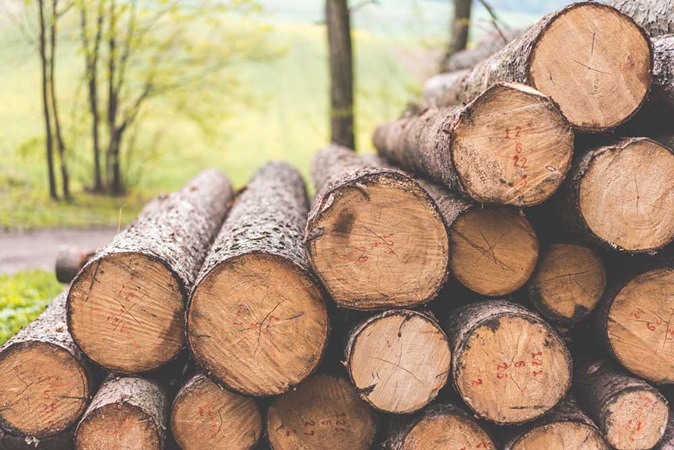
Poplars are harvest-ready in 7-10 years, yielding 660-770 lbs (300-350 kg) per tree on average, varying by variety and conditions. Harvest in fall or winter for lower moisture content, easing drying. Post-harvest, air-dry wood to prevent cracking. Replant sites promptly for continuous production. Globally, sustainable harvesting in places like Sweden’s poplar farms supports long-term profitability. In conclusion, with these strategies, poplar cultivation can be highly rewarding. For the best results, prioritize quality inputs like ammonium sulfate fertilizer to fuel the growth of poplar trees.