What Are the Ways of Increasing Agricultural Productivity?
Generally speaking, agricultural productivity refers to the efficiency with which we utilize available resources, such as water, soil, human labor, and modern technology, to produce greater quantities of higher-quality crops. As the global population surges toward an estimated 10 billion by 2050, the pressure on the agricultural sector to produce more food with fewer resources has never been more intense. Here, we’ll introduce the most important strategies for increasing agricultural productivity, ensuring that these methods are applicable.
The Concept of Productivity in Agriculture
Agricultural resources are finite. To increase productivity, it is imperative that we extract the maximum utility from the resources currently at our disposal. In the context of productivity, both the quantity and the quality of products are of paramount importance. Essentially, our goal must be to produce the highest volume of crops with superior quality by utilizing resources in an optimized and managed manner.
Today, with the depletion of water reserves and the escalating crisis of climate change, countries worldwide, from the United States and Brazil to nations in the Middle East and Asia, are facing significant agricultural limitations. These limitations include declining groundwater tables, lack of necessary infrastructure (such as storage facilities and roads), inappropriate cropping patterns, and the continued use of outdated equipment. Shortages inevitably lead to the wastage of resources. Therefore, it is essential to compensate for these deficits by increasing productivity, thereby enhancing both the quality and quantity of agricultural output.
What Factors Cause a Decrease in Productivity?
Although many regions possess a high potential for agriculture due to their climate and arable land, productivity often falls short of the ideal. Unfortunately, many farmers, despite investing significant time and capital, do not achieve a satisfactory return on investment. In some instances, reduced productivity can be attributed to uncontrollable environmental factors such as floods, droughts, or unexpected storms. However, more often than not, the issue stems from farm management practices.
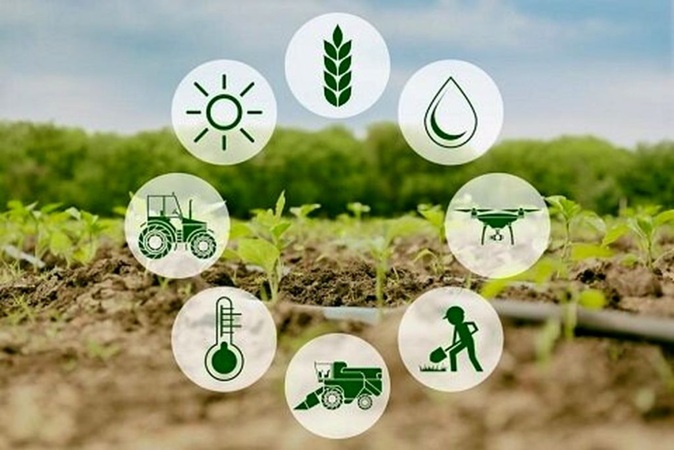
The primary factors that negatively influence farm productivity include:
- Adverse Weather Conditions: Phenomena such as prolonged droughts, unexpected frosts, heatwaves, and environmental pollution.
- Soil Issues: Nutrient deficiencies and high soil salinity, which inhibit plant growth.
- Pests and Diseases: Infestations by insects and fungal, bacterial, or viral diseases that devastate crops.
- Improper Irrigation Management: This includes both over-irrigation (which leads to waterlogging and root rot) and under-irrigation (which causes drought stress).
- Excessive Chemical Use: The overuse of chemical fertilizers or pesticides, which can degrade soil health and lead to resistance in pests. This is one of the most common fertilization mistakes.
- Reactive Decision Making: Making spontaneous decisions without a precise, long-term plan for cultivating plants and trees.
- Lack of Soil Analysis: Failing to test soil, leading to blindly application of fertilizers that may not be needed.
To improve these conditions and increase farm productivity, it is essential to employ a trained workforce. Effective management of agricultural activities, combined with the adoption of modern tools and technologies, plays a decisive role in enhancing the efficiency of farms worldwide.
Methods for Increasing Agricultural Productivity
1. Comprehensive Management of Water, Soil, and Environment
To improve productivity, farmers must fundamentally review how they manage their farms and orchards. Traditional methods, which often rely on intuition rather than data, are no longer sufficient to meet modern demands. Therefore, we must align ourselves with contemporary changes and scientific advancements. Comprehensive farm and orchard management involves the control and optimization of the following sectors:
- Appropriate Cropping Patterns: Selecting crops that are compatible with the specific climatic conditions, water availability, and soil type of the region. For instance, planting water-intensive crops in arid regions is inherently unproductive.
- Soil Health: Maintaining soil fertility is crucial. This involves preventing the destruction of soil structure (such as compaction), preserving organic matter through composting, implementing crop rotation to break pest cycles, and avoiding the indiscriminate use of chemical fertilizers.
- Water Management: Utilizing modern and efficient irrigation methods, such as drip irrigation and sprinkler systems, which deliver water directly to the plant roots. It also involves monitoring soil moisture levels to prevent drought stress, preventing waterlogging (which suffocates roots), and adjusting the acreage of cultivation based on available water resources.
- Plant Nutrition: Conducting periodic soil tests to diagnose specific deficiencies. Fertilization should be based strictly on the actual needs of the plant, determined by scientific data. Regular use of organic fertilizers (like manure and bio-fertilizers) alongside controlled mineral fertilizer use is essential.
- Pest and Disease Management: Implementing Integrated Pest Management (IPM) which includes weed control, biological controls (using natural predators), chemical controls, and mechanical controls to prevent outbreaks before they cause economic damage.
- Environmental Conservation: Protecting the environment and preserving natural resources for future generations. This includes crop rotation, responsible fertilizer use, optimized irrigation, reducing soil pollution, and controlling the consumption of pesticides to prevent runoff into waterways.
- Planting Suitable Crops: Cultivating varieties that are genetically adapted or bred to be resistant to local stresses (such as drought or salinity) and using certified, improved seeds.
Principled management of water and soil, combined with the selection of the right crop for cultivation, contributes significantly to improving both the quantity and quality of products.
2. Utilization of Modern Technologies (Smart Farming)
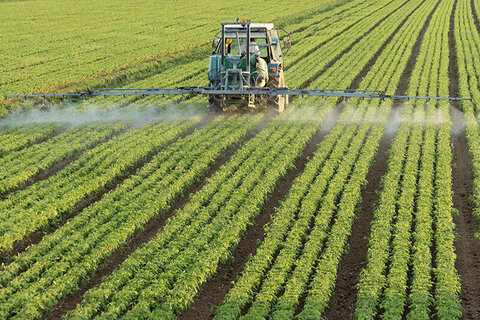
Modern technologies have a dramatic impact on agricultural productivity, a concept often referred to as “Agriculture 4.0” or “Smart Farming.” The Internet of Things (IoT) has enabled farmers to monitor environmental factors with extreme precision and take control of them. Some of the key technologies available for increasing agricultural productivity on a global scale include:
- GPS Technology: Used for precision guidance of tractors and machinery, reducing overlap in seeding and spraying, thereby saving fuel and chemicals.
- Smart Irrigation Systems: These systems use weather data and soil moisture sensors to optimize water usage, delivering exactly the right amount of water at the right time.
- Farm Management Software: Digital platforms for fertilization calendars, spraying schedules, and machinery maintenance logs.
- Remote Sensing Data: Satellite imagery and drone data to monitor crop health across large areas.
- Sensors: Ground sensors placed in fields to measure real-time temperature, humidity, and soil nutrient levels.
- Artificial Intelligence (AI): Algorithms that analyze vast amounts of data to predict yields, detect pest outbreaks early, and optimize planting schedules.
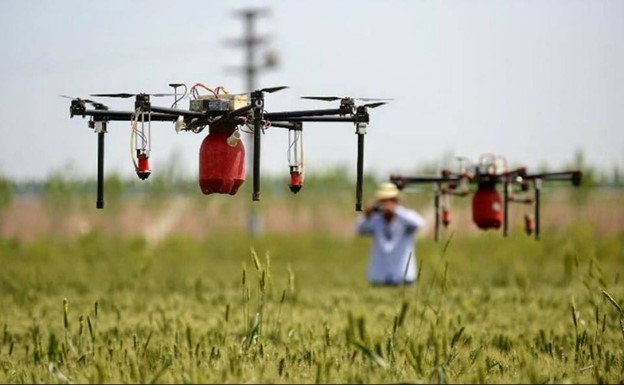
- Drones (UAVs): Equipped with multispectral cameras to help diagnose pests, diseases, and nutritional deficiencies from the air, or used for targeted spraying and fertilizing, which reduces chemical usage.
With the help of technology, moisture, soil conditions, and ambient light can be examined with far greater accuracy than ever before. The data received from these tools allows for better decision-making in planting, irrigation, fertilization, and pest control. Consequently, this leads to a significant reduction in resource wastage and a lower environmental footprint.
3. Education and Human Resource Awareness
To achieve higher productivity in agriculture, farmers and industry employees must receive appropriate training. Agriculture is a science as much as it is an art, and continuous education is vital. Holding new training courses and practical workshops is essential for upgrading the sector. Farmers need access to specialized consulting services (such as agricultural extension agents) to correctly face the challenges of modern farming, which are becoming increasingly complex due to climate change and market pressures.
Furthermore, the development and revitalization of rural areas play a crucial role. Improving infrastructure, internet access, and living standards in rural communities motivates the younger generation and the workforce to remain in the countryside rather than migrating to cities. This “brain drain” is a significant issue in many countries; keeping skilled young people in agriculture ensures a future of innovation and productivity.

4. Increasing Agricultural Productivity through Government Support
Positive government measures and policies are powerful stimulants for agricultural productivity. Government support in the form of subsidies for agricultural automation helps farmers adopt new technologies that might otherwise be prohibitively expensive. Additionally, providing financial facilities, low-interest loans, and crop insurance encourages farmers to invest in their land and increase production. Policies that stabilize market prices also protect farmers from volatility, allowing them to plan for the long term.
5. Promoting Greenhouse Cultivation
Greenhouse agriculture (controlled environment agriculture) is a proven method for controlling costs and increasing productivity. By growing various products in a greenhouse environment, farmers can supply these products throughout the year, independent of seasonal weather changes. Greenhouses allow for precise control over temperature, humidity, and light, leading to significantly higher yields per square meter compared to open-field farming. Supporting farmers in the construction of greenhouses, through grants or technical assistance, will greatly contribute to increased productivity in the production of vegetables, fruits, and ornamental plants.
6. Controlling Production Costs
As previously mentioned, financial support from the government is a major motivator. However, another critical strategy is the control of production costs. These costs include seeds, fertilizers, water, pesticides, fuel, and labor. Inflation and the rising price of inputs (such as fertilizer and fuel) can erode profit margins, causing farmers to reduce the acreage they plant or abandon farming altogether.
To combat this, governments and industry leaders must leverage the country’s macro-capacities and facilities to stabilize input costs. This could involve investing in domestic fertilizer production to reduce reliance on imports, improving supply chains to reduce post-harvest losses, and investing in renewable energy for farms to lower operational costs. By making farming economically viable, we ensure the security of the food supply chain.
Conclusion
Increasing agricultural productivity is not just about producing more; it is about producing smarter. By integrating comprehensive resource management, cutting-edge technology, continuous education, and supportive policies, we can overcome the limitations of finite resources and a changing climate. The future of agriculture lies in the balance between respecting traditional ecological principles and embracing the efficiency of modern science. Through these concerted efforts, we can ensure food security for the current population without compromising the ability of future generations to feed themselves.